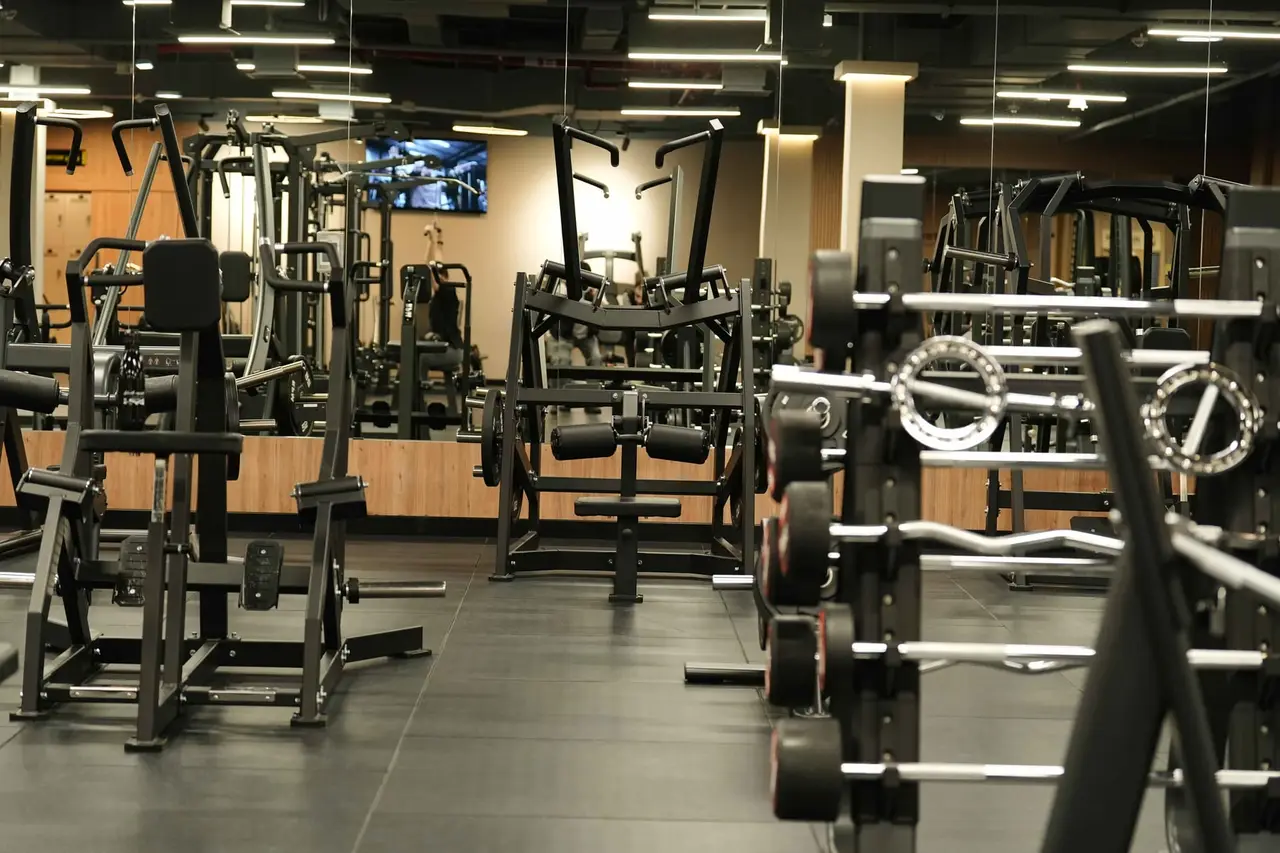
What the machine is and which muscles it works
Picture the inner thigh machine turned inside out. There is a seat and backrest, foot bars and two padded arms, but here the pads rest against the outside of your knees and you drive them apart. A cable connects the arms to a pin-loaded stack, a lever sets the start position, and handles at the sides keep you planted. On a combined inner and outer thigh machine you switch between the two exercises by flipping or moving the pads. You will also hear it called the outer thigh machine or simply the abductor.
Pushing the knees apart is the job of the gluteus medius and minimus, the smaller glutes high on the side of the hip, helped by the upper part of the gluteus maximus and a small muscle at the front of the hip. Day to day, those muscles keep your pelvis level each time you stand on one leg and stop the knees caving inwards when you squat, land or climb stairs. That makes the machine a useful supporting exercise. It is not the main way to build the glutes, which grow most from thrusts, hinges, squats and lunges, as the glute exercise guide explains.
Setting up the seat and pads
- Sit back with your hips in the corner of the seat and your feet on the foot bars, knees roughly level with your hips.
- Use the start lever to bring the arms in until the pads rest on the outside of your knees with your legs a little apart, not squeezed together.
- Check the contact point: knees or lower thighs. Pads on the shins turn the push into a twist through the knee joint.
- Choose your trunk position before the first rep: upright against the backrest, or leaning forward with a flat back and your hands on the handles.
- Pin a weight you could push out twenty times with control. This exercise suits moderate loads and higher reps.
How to do a rep
- Press your knees outwards while your hips stay down on the seat and your feet stay on the bars.
- Go as wide as you can with a still pelvis; for most people that is well short of the machine's full range.
- Hold the widest point for a second, and you will feel the burn high on the side of the hip.
- Bring the arms back in over two to three seconds, stopping before the stack touches down.
- Keep every rep at that pace. If you need to swing your trunk to finish one, the weight is too heavy.
Push with the knees, not the feet. When the feet drive the pads, the thighs roll inwards and the side of the hip does less. A steady tempo with a short hold at the widest point is what makes the set work.
Mistakes to fix first
| Mistake | What it looks like | The fix |
|---|---|---|
| Throwing the pads out | Fast reps with the stack bouncing at both ends | Lower the pin and hold for a second at the widest point |
| Rocking the hips | The pelvis lifts or tilts to squeeze out extra width | Stop at the widest point your hips stay still for |
| Pads on the shins | Pressure below the knee and a twisting feel in the joint | Reset the pads to the outside of the knees |
| Making it the main glute lift | Set after set of abduction and no thrusts, hinges or squats | Use it after the big movements, not instead of them |
| Changing trunk angle mid-set | Leaning forward as you tire to grind out the last reps | Pick upright or leaning before the set and hold it |
Hip, groin or lower back pain during the movement, or pain that travels down the leg, is a reason to stop. Get it checked by a doctor or physiotherapist rather than pushing on.
Variations: trunk angle, cable and band
Each version still moves the leg out to the side. Trunk angle changes which part of the glutes works hardest; the cable and the band change the equipment.
Leaning forward vs sitting upright
Upright, the gluteus medius and minimus do most of the work. Leaning forward bends the hips, and many people then feel the effort further back on the buttocks, which is why coaches use the lean to bring in more of the gluteus maximus. Neither is wrong, and some programmes do a set of each. Keep your back flat when you lean, and expect to use a little less weight.
Cable hip abduction
Stand side-on to a low pulley with an ankle strap on the leg further from the stack, hold the frame, and lift that leg out to the side and slightly back before lowering it slowly. It trains one side at a time, while the glutes of your standing leg hold you level, so both hips get some work. Keep your trunk upright; leaning away from the stack turns it into a side bend.
Banded side steps (lateral walk)
Put a loop band above the knees or around the ankles, sit back into a quarter squat and step sideways, keeping the band taut and your toes pointing forward. The load is light, so use it as a warm-up before squats or as a finisher, not as the main work.
If the machine is taken, a cable kickback or a glute bridge with a band above the knees keeps the session moving.
Sets, reps and where it fits
| Goal | Sets × reps | How hard |
|---|---|---|
| Learning the movement | 2 × 15–20 | Stop with three or four reps left |
| Building the side glutes | 2–4 × 12–20 | Finish each set with one or two reps left, holding the widest point |
| Warm-up before squats | 1–2 × 15–20 | Light; just enough to feel the side of the hip |
Rest about a minute between sets. The burning that builds at the end of a set is normal and fades within moments.
Two sessions a week fit easily, usually at the end of a lower-body day. Progress by holding the widest point longer, then by adding reps, then load. With small muscles, a big jump on the stack often costs range, so add weight in the smallest steps the machine offers.
How it compares with other glute exercises
Many glute plans pair the abduction machine with one or more of these, and each does a different job.
| Exercise | Main job | Choose it when |
|---|---|---|
| Hip abduction machine | Side of the hip, moderate loads | You want simple, focused work for the gluteus medius |
| Hip thrust | Gluteus maximus, heavy, at the top of hip extension | You want the most load on the big glute |
| Cable kickback | Gluteus maximus, one leg at a time | You want a precise finisher on a cable station |
| Clamshell | Side of the hip, lying down, very light | You are warming up or training at home with a band |
| Hip adduction machine | Inner thighs, the opposite movement | You want to train the inside of the thigh as well |
The hip thrust and hip adduction machine pages cover those two in full.
The abduction machine at RPM
RPM's floor photos of Al Manhal do not show a hip abduction machine, so check what the Mixed and Ladies sections have on your free tour. They do show the multi-station cable towers, and cable abduction needs nothing beyond an ankle strap, which is worth asking about at the same time. For help fitting side-hip work into a glute plan, book personal training or a female personal trainer.
Questions, answered.
What muscles does the hip abduction machine work?
Mainly the gluteus medius and minimus on the side of the hip, with the upper gluteus maximus helping, especially when you lean forward.
Does the hip abduction machine make your glutes bigger?
It can add a little size high on the side of the hips, but most glute growth comes from heavier hip extension: hip thrusts, Romanian deadlifts, squats and lunges. Use the machine as a supporting exercise alongside them.
What is the hip abduction machine also called?
The abductor machine, the outer thigh machine or the hip abductor. On a combined machine, the same seat with the pads switched to the inside becomes the adductor, or inner thigh, machine.
Can I use the abduction machine if I have sciatica?
Whether any exercise suits sciatic pain depends on its cause, which a doctor or physiotherapist needs to assess. If the machine brings on pain, tingling or numbness down the leg, stop and get it checked.
What is a good hip abduction alternative at home?
Side-lying leg raises, clamshells with a band, banded side steps and a side plank all train the side of the hip with no machine. Slow the reps and hold the top position to keep them challenging.