What the wide stance changes
Widening the feet and turning the toes out changes where your hips can go. Instead of folding forward between the knees, the pelvis drops straight down between the heels, so the torso stays fairly upright and the knees travel out more than forward. The quads still straighten the knees and the glutes still drive the hips up, but the adductors on the inner thigh take a much bigger share, especially the large adductor magnus, which helps extend the hip out of the bottom. Depth is limited mainly by how open your hips are, not by your ankles.
That makes it a good first loaded squat for people whose ankles stop them sitting deep in a narrow stance, an easy one to load with a single weight, and a regular in programmes that want more inner-thigh and glute work. The plié squat is the same exercise under its ballet name. Use it as the main lift on a dumbbell day, as a second squat after a heavier one, or to prepare for wide-stance pulls such as the sumo deadlift. The leg training guide shows where it sits among the other leg patterns.
Setting your stance and holding the weight
- Stand with your heels roughly one and a half shoulder-widths apart. Wider is not automatically better: the right stance lets your knees point over your toes at the bottom.
- Turn your toes out, roughly to ten-to-two on a clock face. Your knees will follow them, so set the angle where your hips feel comfortable.
- Hold one dumbbell upright by its top end, both hands cupped under the head, arms long so it hangs between your legs. With a kettlebell, hold the handle in both hands and let the bell hang.
- Choose a weight you could squat twelve times but stop at ten. Most people can hold more here than in a goblet squat, because the arms only have to hang on.
- Brace your trunk, lift your chest and look straight ahead before the first rep.
How to do a rep
- Breathe in and brace, then start the descent by pushing your knees out over your toes.
- Sit straight down between your heels, chest up, with a slight forward lean from the hips.
- Let the weight travel straight down beneath your shoulders and close to your body.
- Stop when your thighs are about parallel, when the weight is about to touch the floor, or just before your lower back starts to round, whichever comes first.
- Drive up by pressing the floor away and slightly apart, and squeeze your glutes as you finish tall without leaning back.
The cue most people need is 'knees over toes, both of them'. If the knees drift in while the toes point out, the twist lands on the knee. Take about two seconds down, pause briefly at the bottom, and breathe out once you are past the hardest part on the way up. Pain in the knees, hips or groin during the movement is a reason to stop and have it checked by a doctor or physiotherapist.
Mistakes to fix first
| Mistake | What it looks like | The fix |
|---|---|---|
| Knees caving in | The knees roll inward while the toes stay turned out | Push the knees out over the toes; narrow the stance slightly if they still cave |
| Stance wider than your hips allow | The feet roll onto their inner edges and you cannot get down | Bring the feet in until you reach depth with the whole foot flat |
| Folding forward | The chest drops and the weight swings out in front of the knees | Lift the chest and let the weight hang straight below your shoulders |
| Bouncing the weight off the floor | The dumbbell taps down and rebounds into the next rep | Stop just above the floor, or raise your feet on two low steps for more room |
| Quarter reps | You bend a little and stand straight back up | Use a lighter weight and sink until the thighs are near parallel |
Variations: the hold, the bar and the stance
The pattern stays the same across these versions: wide feet, toes out, hips straight down. What changes is how you hold the load, and so how much of it you can use.
Kettlebell or dumbbell held between the legs
Both hang in the same place. A kettlebell sits low on its handle and is easy to grip; a dumbbell held upright by one end lets you go heavier in smaller steps. With a big dumbbell the bottom end can reach the floor before your thighs reach parallel. Then stand with each foot on a low, stable step of the same height so the weight has room to sink, which turns it into a deficit sumo squat.
Barbell sumo squat
Take the bar on your upper back from a squat rack, as for a back squat, and set your feet wide with the toes out. It allows far more load than any dumbbell and keeps the inner-thigh bias, but it needs more hip mobility and the full rack set-up: hooks around chest height and safety arms just below your lowest point. Move to it once the dumbbell version is solid and the heaviest dumbbell you can hold no longer challenges your legs.
Stance width and toe angle
Wider feet and more turned-out toes give the inner thighs more to do and reduce how far the knees bend; a narrower stance with the toes nearer forward hands work back to the quads. There is no single right width, because hip shape varies from person to person. Test with bodyweight: the stance that lets you reach depth with your knees tracking your toes and your heels flat is yours.
Sumo squat vs goblet squat
In a goblet squat the weight sits at your chest and the stance is about shoulder-width, so you stay very upright and the quads and upper back work harder. In a sumo squat the weight hangs low and the feet are wider, so the inner thighs work more and your arms only have to hold on. Many people learn to squat with the goblet version and use the sumo version for inner-thigh and glute emphasis.
If the dumbbells you need are in use, the lateral lunge trains the inner thighs one side at a time, and the leg press with the feet wide and high on the platform keeps a similar bias on a machine.
Sets, reps and progression
| Goal | Sets × reps | How hard |
|---|---|---|
| Learning the stance | 2–3 × 10 | Bodyweight or a light kettlebell, three or four reps left |
| Building muscle | 3–4 × 8–15 | One or two reps left, full depth on every rep |
| Heavier strength work | 3–4 × 5–8 | Barbell in a rack, two reps left |
Rest about a minute and a half between dumbbell sets and two to three minutes between heavy barbell sets.
Add reps until every set reaches the top of the range, then take the next dumbbell up. When the rack runs out of heavier dumbbells you can hold, slow the descent to three seconds, add a pause at the bottom, stand on low steps for a longer range, or move to the barbell.
Sumo squats at RPM
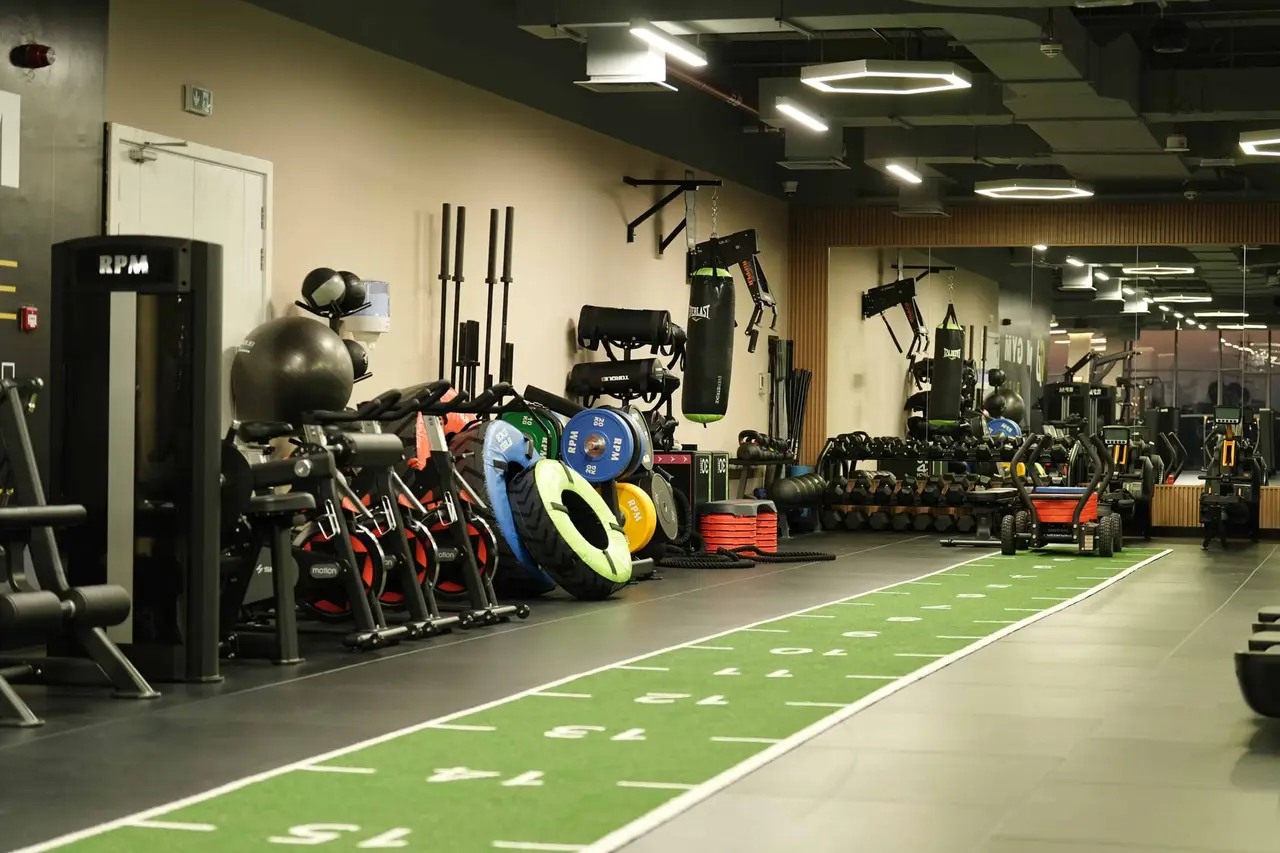
RPM's photos of the functional zone show a dumbbell rack and kettlebells, and the training floor has squat racks with barbells and colour bumper plates for the barbell version. A Smith machine is not in those photos, so ask on your free tour if you want a guided-bar sumo squat. A personal training session is the quickest way to find the stance that suits your hips.
Questions, answered.
What muscles does the sumo squat work?
The quads, the glutes and the adductors on the inner thigh, with the adductors doing noticeably more than in a narrow squat. Your trunk and upper back hold you upright and your grip holds the weight.
Is a plié squat the same as a sumo squat?
For practical purposes, yes. Plié comes from ballet and usually describes the bodyweight or light-dumbbell version with the toes turned out wide; gym programmes tend to call the loaded version a sumo squat.
Sumo squat or regular squat?
Neither wins overall. A shoulder-width squat lets most people bend the knees further and train the quads harder; the sumo stance moves work towards the inner thighs and glutes and keeps the torso more upright. Pick the one that matches your goal, or use both in a week.
Sumo squat vs sumo deadlift: what is the difference?
The stance is similar but the movement is not. In the sumo squat you start standing and sit down between your heels. In the sumo deadlift you start with a barbell on the floor and stand it up with a hinge, so the hamstrings and back work more and the load is far heavier.
Is there a sumo squat machine?
Not as a dedicated machine on most gym floors. People usually mean a wide-stance squat on a Smith machine, the leg press with the feet set wide and high, or a hack squat with a wide stance. Each keeps the inner-thigh bias on a fixed path; the Smith machine guide explains that bar.
What can I do instead if sumo squats bother my knees or hips?
Have the pain checked by a doctor or physiotherapist first, because the cause decides what suits you. A narrower stance, a shorter range or a machine such as the leg press are options to ask them about.