Two movements in one rep
A sit-up joins two actions. It starts like a crunch: the rectus abdominis and the obliques curl your ribs towards your pelvis until your shoulder blades leave the floor. From there the trunk can bend no further, so the hip flexors take over, mainly the iliopsoas deep in the hip and the rectus femoris at the front of the thigh, and they pull the whole curled torso up towards your knees. The stomach muscles keep working through the second half to hold the curve, but they are no longer the main movers.
That makes the sit-up neither a better nor a worse crunch. It trains a longer range and strong hip flexors, which matter to runners, to combat-sport athletes and to anyone facing a fitness test that counts sit-ups, while the crunch keeps the work in the stomach. Either can be one exercise in a core block after your main lifts, and the core training guide explains how a week of trunk work fits together.
Getting set on the mat
- Lie on your back on a mat with your knees bent to roughly a right angle and your feet flat, hip-width apart.
- Leave your feet loose on the floor to begin with. The anchored version, and when to use it, is covered further down.
- Place your arms. Reaching forwards past your knees is easiest, crossed on your chest is harder, and fingertips touching your ears is hardest. Never lace your fingers behind your head.
- Tuck your chin a little and let your lower back rest in its natural curve on the mat.
- If a full sit-up is out of reach, start at the top instead: sit up with a push from your hands, then lower yourself as slowly as you can. Five slow lowerings make a good first set.
Sitting up and rolling back down
- Brace your stomach lightly and start breathing out as you begin.
- Curl first: chin, then shoulders, then upper back come off the floor in that order.
- Keep curling as you rise. At around halfway your hips start to bend and you carry on until your chest is close to your thighs or your torso is upright.
- Reverse the order on the way down over about three seconds: lower back reaches the mat first, then the middle of your back, then your shoulders, and your head last.
- Touch your shoulder blades down lightly and go again, without flopping or resting on the floor.
The lowering is where most people cheat, by dropping through the last half. Taking three seconds over it makes the abdominals hold the curve against gravity, and it is the quickest way to make a set harder without adding weight. Breathe out on the way up and in on the way down.
Sit-up mistakes to fix first
| Mistake | What it looks like | The fix |
|---|---|---|
| Throwing the arms | The arms swing forwards to fling you upright | Cross them on your chest; if you cannot rise without the swing, use slow lowerings for now |
| Pulling on the neck | Hands behind the head drag the chin into the chest | Fingertips at the ears or arms crossed, the head following the curve of the spine |
| Rising with a flat back | The torso comes up in one stiff piece, lower back arching off the mat | Let the head, shoulders and upper back peel up before the hips bend |
| Feet flying up | Your feet lift as you sit up | Reach your arms forwards to shift your balance, or anchor your feet while you build strength |
| Dropping back down | The lowering takes half a second and ends with a thud | Three seconds down, rolling onto the mat from the bottom of the spine upwards |
| Racing for numbers | Fast, jerky reps with a different shape each time | Count only controlled reps; practise speed once those come easily |
Decline, butterfly and anchored sit-ups
Every version keeps the same two-part movement. What changes is how much the hip flexors can help, and how hard gravity pulls against you.
Decline sit-up
On a decline bench, feet locked under the rollers and head lower than your hips, you sit up against gravity through a longer range than on the floor. The anchored feet and the angle make the hip flexors work hard, so start on a shallow setting and lower slowly. When ten controlled reps feel comfortable, hold a light plate against your chest. A decline sit-up and a decline crunch use the same bench: the crunch stops at the shoulder blades, the sit-up comes all the way up.
Butterfly sit-up
Sit with the soles of your feet together and your knees falling out to the sides, then lie back with your arms overhead and sit up reaching for your feet. With the knees open, the hip flexors can help less, so your stomach does more. Many people put a folded mat under the lower back to start from a slight stretch. It is a common version in conditioning workouts and in fitness tests that count full-range reps.
Feet anchored or unanchored?
Anchored feet, under a bench pad or held by a partner, give the hip flexors something to pull against, so sitting up is easier and you can do more reps. Unanchored feet mean the abdominals must start every rep and the first half cannot be cheated. Learn the unanchored version first if you can, and anchor when you want more reps or move to a decline bench.
If you want the trunk curl without the hip flexors, go back to the crunch; if you want strong hip flexors without lying down, hanging knee raises train them from the other end.
Sets, reps and building up
| Goal | Sets × reps | How hard |
|---|---|---|
| Your first full sit-ups | 3 × 5 slow lowerings, or 3 × 5–8 full reps | Every rep controlled; end the set when the lowering speeds up |
| General core strength | 3 × 10–15 | Two or three controlled reps left in each set |
| Fitness test practice | 2 × one minute, plus a practice test every two weeks | Hard, but only with reps the test would count |
Rest about a minute between sets. On a decline bench or with a plate, drop to eight to twelve reps.
Two or three sessions a week is enough. Add difficulty in steps: anchored to unanchored feet, reaching arms to crossed arms, then a decline or a held plate. If you are preparing for a test, practise under its exact rules, such as hand position, how the feet are held and the range that counts, for a few weeks before it.
Sit-ups at RPM
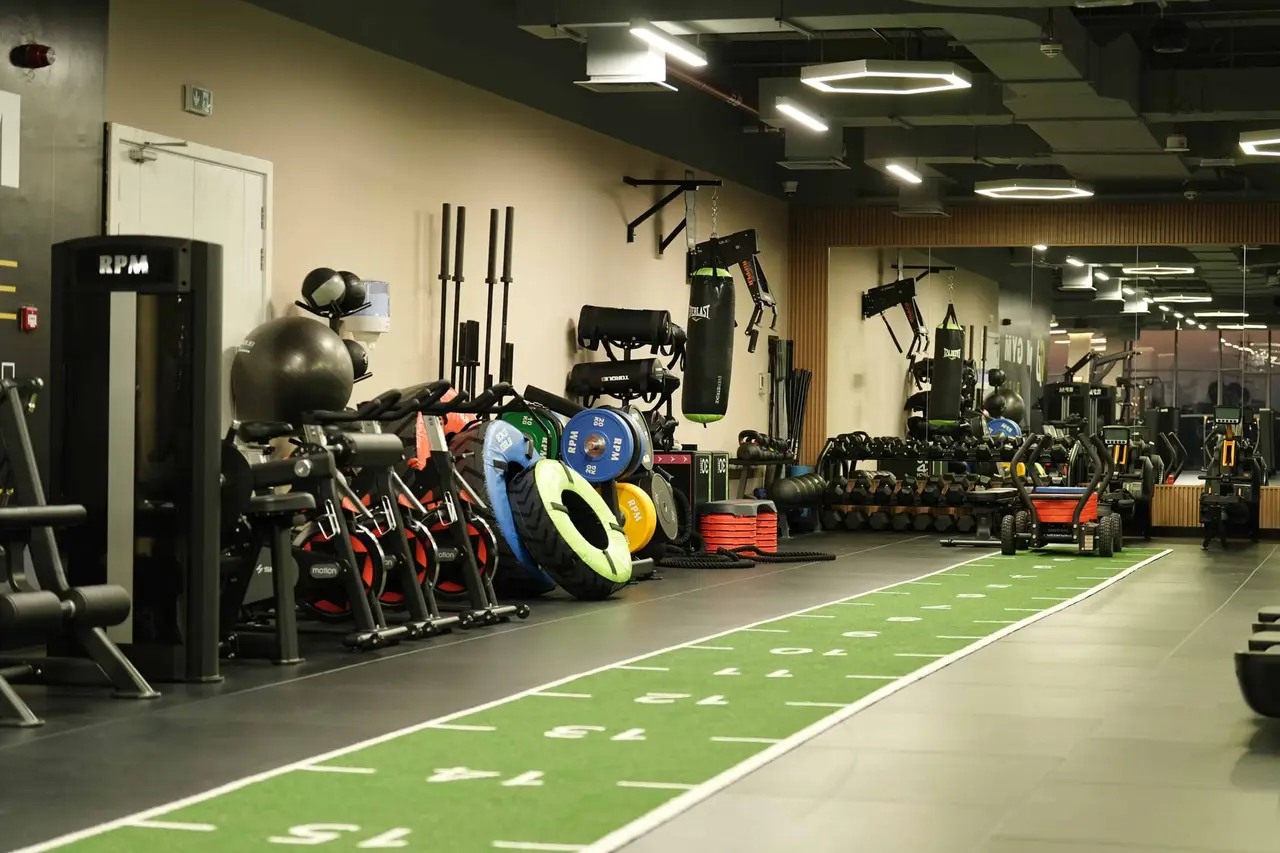
Floor sit-ups need only a mat, in either section. RPM's photos show flat benches and colour bumper plates for loaded sit-ups, but not a decline bench with foot rollers, so ask about one on your free guided tour. If you are training for a fitness test, a personal training session can turn its rules into a plan.
Questions, answered.
What is the difference between sit-ups and crunches?
The range, and which muscles finish the job. A crunch stops when your shoulder blades leave the floor and stays almost entirely in the abdominals. A sit-up continues until you are upright, so the hip flexors do much of the second half. The crunch page covers the shorter version.
What muscles do sit-ups work?
The front abdominal muscle and the obliques curl the trunk; the iliopsoas and the rectus femoris lift it the rest of the way; the deep abdominal muscles brace throughout. Expect to feel the fronts of your hips working as well as your stomach.
Will sit-ups give me a six-pack?
They build the abdominal muscles, but whether you can see them depends on the fat over them, and no exercise chooses where fat comes off. The crunch page describes a trial in which six weeks of near-daily ab work improved endurance but not stomach fat. Visible abs come from losing body fat overall through eating and activity, on top of the muscle.
Are sit-ups bad for your back?
For most people, controlled sit-ups in moderate numbers are an ordinary exercise; the debate among coaches is mostly about very high, fast reps. If sit-ups cause back pain, stop and have it checked by a doctor or physiotherapist rather than finding a workaround yourself. If you simply prefer not to curl your spine over and over, the dead bug trains the trunk without it.
What can I do instead of sit-ups?
Standing, a Pallof press at a cable tower or a one-handed suitcase carry works the trunk without lying down. Beginners can build up with slow lowerings from the top. If you are pregnant or postnatal, ask your doctor or midwife what suits you.