What the hanging leg raise trains
The rep has two phases. Raising your thighs to horizontal is done mainly by the hip flexors, the muscles that lift your knee when you climb stairs. The abdominal work comes after that, when you tilt your pelvis back and curl it towards your ribs, like a reverse crunch done in the air. The rectus abdominis is one long muscle, so there is no separate lower section to isolate, but because the movement starts from the pelvis, many people feel it low in the stomach. The obliques steady you against swinging, and your forearms, lats and shoulders hold you on the bar.
That grip and shoulder demand makes it an intermediate exercise. It suits people who can already hang from a bar for twenty to thirty seconds and do slow reverse crunches on the floor. It is one of the hardest ways to load trunk flexion with bodyweight, which is why it often closes the core block of a strength session. The core training guide shows how to balance it with holds and carries.
Getting on the bar
- Use a bar high enough that your feet clear the floor with your legs straight: a pull-up bar, the frame of a rack or a dedicated station.
- Take an overhand grip about shoulder-width apart, with your thumbs wrapped around the bar.
- Hang, then set your shoulders by drawing them slightly down away from your ears, so you are not dangling on the joints. Your arms stay straight.
- Press your legs together and tighten your stomach to kill any swing before the first rep.
- Choose your level: bent knees for your first sessions, and straight legs only once ten controlled knee raises with a pelvic curl feel easy.
A controlled rep
- Breathe out and lift your knees or legs in front of you, keeping your upper body still.
- As your thighs pass horizontal, keep going by curling your pelvis up towards your ribs, so your lower back rounds slightly and your hips come forwards.
- Pause at the top for a second, knees towards your chest, or feet at or above hip height for the straight-leg version.
- Lower over two or three seconds, uncurling the pelvis first and then the legs.
- Let your legs settle under you before the next rep. If you start to swing, wait in the hang until it stops.
At the top, think of showing the soles of your feet to the wall in front of you: that small pelvic curl is what makes the rep an abdominal exercise rather than a hip-flexor one. If hanging causes pain in your shoulders or lower back, stop and get it looked at by a doctor or physiotherapist.
Mistakes that turn it into a swing
| Mistake | What it looks like | The fix |
|---|---|---|
| Swinging | Each rep starts with a backward kick and the body sways like a pendulum | Pause in a still hang between reps and lower slowly |
| Legs only, no curl | The thighs reach horizontal and stop; the pelvis never moves | Bend the knees and add the pelvic curl before trying straight legs |
| Dropping the legs | The legs fall back down in under a second | Two or three seconds down, uncurling the hips first |
| Leaning back | The upper body tips backwards as the legs rise | Keep the shoulders set and the chest over the hands |
| Grip giving out first | The set ends because the hands fail, not the trunk | Use straps or the captain's chair, and train the hang on its own |
| Sagging shoulders | The ears sink between the arms | Draw the shoulders slightly down before the first rep |
Knee raises, the captain's chair and toes-to-bar
The movement has a clear ladder, from a knee raise on a supported station to the full toes-to-bar. Work at the step where you can still curl the pelvis at the top.
Hanging knee raise
Bend your knees and bring them up towards your chest, then curl the pelvis so the knees rise a little higher still. The shorter lever makes it far easier, so it is the right starting point for most people and a useful finisher for experienced lifters. Once three sets of ten with a pause feel controlled, straighten your legs a little more each week.
Captain's chair (vertical knee raise station)
A tall frame with a back pad and two forearm pads, so you hold yourself up on your elbows instead of hanging by your hands. It removes the grip limit and most of the swing, which makes it a good place to learn the knee raise and the pelvic curl. Keep your back against the pad and curl at the top rather than only lifting your thighs. Parallel dip bars can be used the same way without a back pad, so you control the swing yourself.
Toes-to-bar
Raise straight legs until your toes touch the bar between your hands. It takes more than abdominal strength: your lats pull your body slightly back under the bar and your hamstrings must stretch. A strict, slow version is a strength exercise; the fast, swinging version seen in conditioning workouts is a different skill. Build up through straight-leg raises to hip height first.
If no bar is available, lying leg raises or reverse crunches on a bench train the same movement from below, and the cable crunch gives you a load you can set on a stack.
Sets, reps and a progression
| Goal | Sets × reps | How hard |
|---|---|---|
| Learning, with knee raises or the chair | 3 × 8–10 | Pause at the top of every rep; end the set when the swing starts |
| Building strength | 3–4 × 6–12, legs straighter | Two clean reps left, with the pelvic curl still visible |
| Advanced | 3 × 5–8 toes-to-bar or slow straight-leg raises | Strict reps only, no kipping |
Rest a minute to ninety seconds, because your grip needs it. Pair the raises with a plank or a carry rather than another curling exercise.
Once or twice a week suits most people, as the grip and shoulders recover more slowly than the trunk. Move from bent to straight legs before adding reps, and hold a light dumbbell between your feet only after strict straight-leg raises feel easy. The hang itself improves alongside training for your first pull-up.
Hanging leg raises at RPM
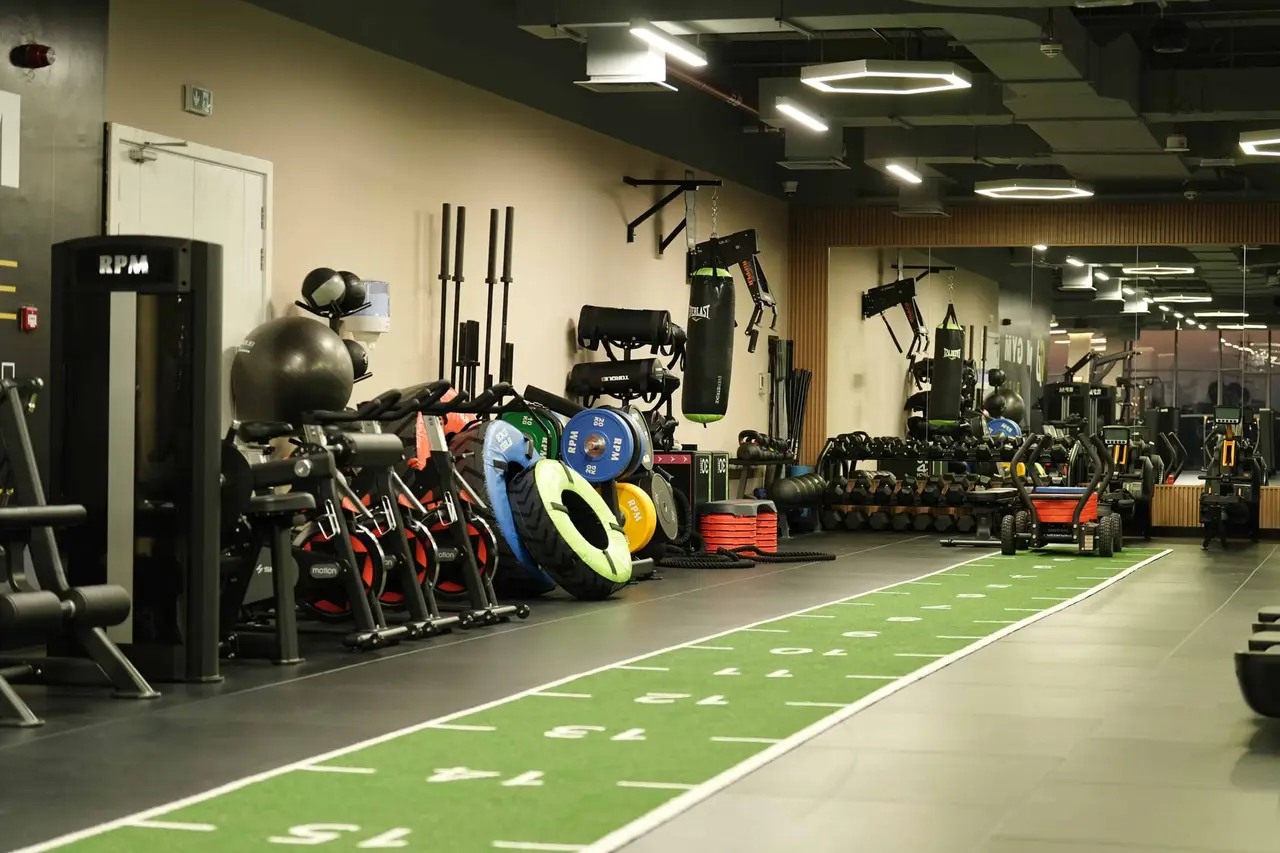
RPM's floor photos show cable towers and squat racks but do not confirm a pull-up bar or a captain's chair, so ask the team where to hang on your free guided tour. The lying and bench versions need only floor space or a flat bench, in either section, and a personal training session can find your starting step on the ladder.
Questions, answered.
What muscles do hanging leg raises work?
The hip flexors lift the legs, the rectus abdominis curls the pelvis at the top and the obliques steady the trunk. Your forearms, lats and shoulders work throughout to hold you on the bar.
Do hanging leg raises work the lower abs?
They work the whole rectus abdominis from the pelvis end. Many people feel them low in the stomach, but that muscle cannot be trained in sections, and no exercise removes fat from one area.
Hanging leg raise or lying leg raise?
The hanging version is harder: gravity resists the legs through a longer range and the pelvic curl at the top comes more naturally. The lying version suits beginners and home training, but it stays mostly hip-flexor work unless you finish each rep by lifting your hips slightly off the floor.
Hanging leg raise or ab wheel?
They train opposite jobs. The leg raise bends the trunk; the ab wheel rollout trains it to resist arching. A good core block often uses one of each.
What can I do instead of hanging leg raises?
Without a bar, reverse crunches or lying leg raises; with a machine, the captain's chair or a cable crunch. If the hang is what stops you, build your grip with timed hangs first and come back to the raises.