What a crunch trains, and where the work stops
The rectus abdominis runs from the lower ribs and breastbone down to the pubic bone. When it shortens, it pulls the ribcage and pelvis towards each other and rounds the spine forwards, and that is all a crunch asks of it. The range is small on purpose. Once your shoulder blades are clear of the floor, the stomach muscles have done most of their part, and lifting higher hands the work to the hip flexors at the front of your hips. That is the line between a crunch and a sit-up.
Because it needs no equipment and takes minutes to learn, the crunch is a sensible first exercise for bending the trunk, and it can stay in a programme as one item in a short core block after your main lifts. It covers one job out of several. The core training guide shows where it sits beside the holds, carries and lifts that train your trunk to resist movement rather than make it.
Setting up on the floor
- Lie on your back on a mat with your knees bent and your feet flat, roughly hip-width apart, heels a comfortable distance from your hips.
- Let your lower back rest in its natural curve, neither flattened hard into the floor nor arched off it. A flat hand should only just slide underneath.
- Choose your arm position, from easiest to hardest: arms crossed on your chest, fingertips resting lightly at your temples, or arms reaching straight back beside your ears.
- Leave about a fist's width between your chin and your chest and fix your eyes on the ceiling just above your knees. Your neck keeps that position for the whole set.
- Start with bodyweight only. If you cannot manage ten slow reps with a pause at the top, make each lift smaller and keep your arms crossed until you can.
Doing the rep
- Breathe in, then tighten your stomach as if bracing for a light poke.
- Breathe out as you curl: draw your lower ribs down towards your hips so your head, then your shoulders, then your shoulder blades peel off the floor.
- Stop when your shoulder blades are just clear. Your lower back stays in contact with the mat the whole time.
- Hold the top for a second and squeeze, as if trying to shorten the distance between your breastbone and your belly button.
- Lower over two or three seconds until your shoulder blades touch down, then begin the next rep without letting your head rest.
Your neck should feel almost nothing. If it aches, cradle your head in one hand and let that hand carry its weight without pulling, and press your tongue to the roof of your mouth, which stops many people straining forwards. Crunches that cause neck or back pain are a reason to stop and have it checked by a doctor or physiotherapist.
Crunch mistakes worth fixing
| Mistake | What it looks like | The fix |
|---|---|---|
| Pulling on your head | Hands laced behind the head yank the chin to the chest on every rep | Fingertips at the temples or arms crossed; the head rides along, it does not lead |
| Sitting all the way up | The rep carries on until your whole back leaves the floor | Stop at the shoulder blades; the full sit-up is a different exercise with a different job |
| Bouncing | Quick reps that use the rebound off the floor | A one-second pause at the top and a slow lowering on every rep |
| Feet hooked under something | Your hip flexors haul you up and your stomach does less | Leave your feet loose on the floor for crunches |
| Holding your breath | A red face and a strain by rep ten | Breathe out on the way up and in on the way down |
| Chasing big numbers | Sets of fifty with the last thirty done badly | Make each rep harder instead of the set longer, using the versions below |
Reverse, decline and weighted crunches
The floor crunch moves your ribs towards your pelvis. Its variations either reverse that, so the pelvis travels towards the ribs, or add resistance so you can stay in a moderate rep range instead of grinding out endless sets.
Reverse crunch
Lie with your hips and knees bent at right angles and your arms by your sides. Curl your knees towards your chest until your hips roll a little way off the floor, then lower them slowly. The movement comes from the pelvis tilting, not from swinging the legs. Many people feel it lower in the stomach; it is the same muscle, worked from the other end. It is also the floor version of the hanging leg raise and a good way to prepare for it.
Decline crunch
On a decline bench with your feet hooked under the rollers, your upper body starts below your hips, so gravity resists you through a longer arc. Keep the same short curl and slow lowering, and begin at a gentle angle, because it is harder than it looks. Hooked feet bring the hip flexors in, so lift by curling your ribs, not by pulling with your legs.
Weighted crunch
Once three sets of twenty slow reps feel easy, hold a light plate or dumbbell on your chest, or above your head for a longer lever. Add load in small steps. For heavier, measurable loading, the cable crunch and the ab crunch machine let you pick a weight on a stack.
If you would rather not bend your spine at all for a while, the dead bug trains the front of the stomach to hold still instead.
Sets, reps and when to make it harder
| Goal | Sets × reps | How hard |
|---|---|---|
| Learning the movement | 2–3 × 10–15 | Slow reps with a pause; end the set while your neck is still relaxed |
| Building the abdominal muscles | 3 × 12–20 | Finish with two or three slow reps you could still do |
| Loaded progression | 3 × 8–15, weighted or on a decline | Close to the last clean rep, never at the cost of your neck |
Rest thirty to sixty seconds between sets. Pair crunches with a hold such as the plank and you cover two of the trunk's jobs in a few minutes.
Two or three sessions a week is plenty; daily crunches add nothing the muscle needs. Progress in this order: slower reps, then a harder arm position, then a weight or a decline. Once twenty slow, paused reps stop being a challenge, the floor version has done its work and it is time to load it.
Crunches at RPM
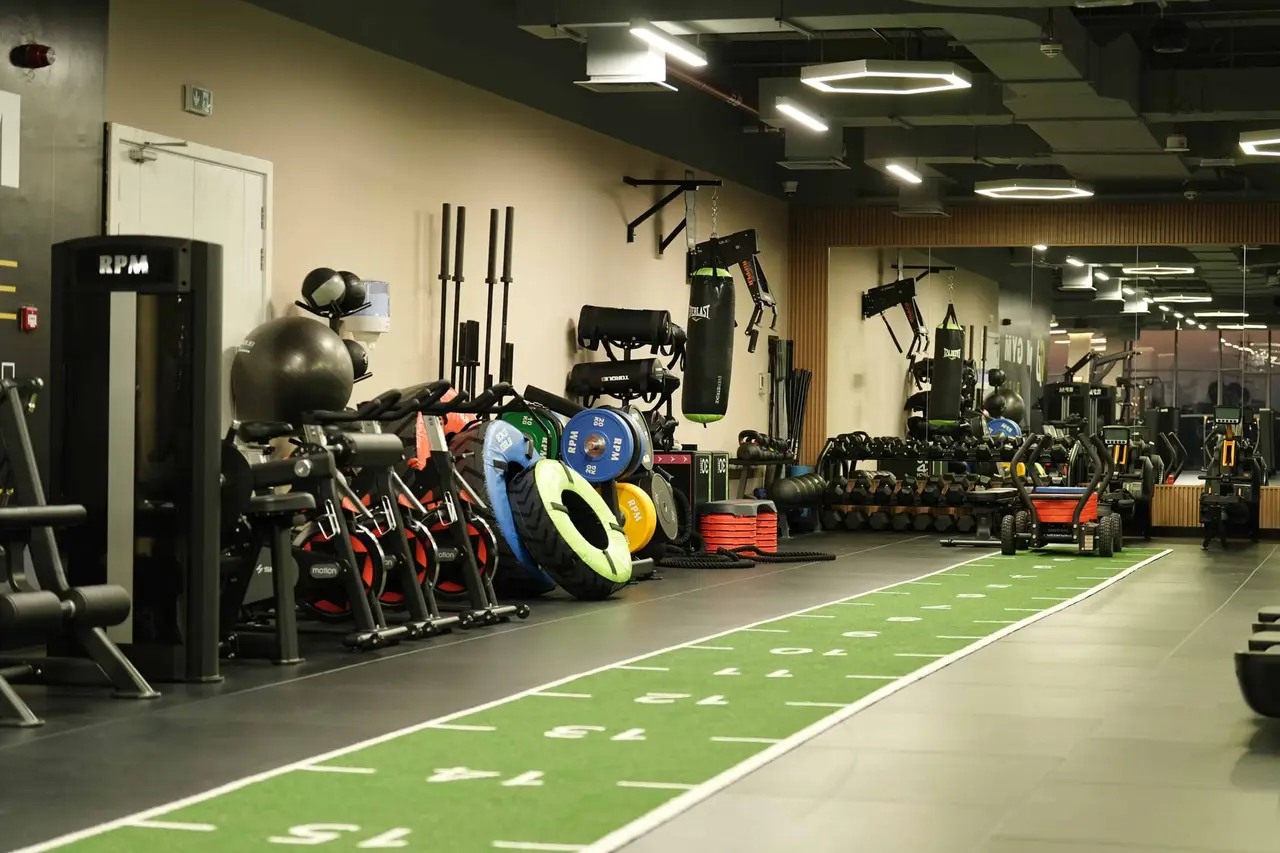
A crunch needs only a mat and a clear patch of floor, in the Mixed section or the women-only Ladies section. RPM's photos show flat benches, dumbbells and colour bumper plates for weighted versions, but not a decline bench, so ask about one on your free guided tour. For a coach to watch your neck and your range, book a personal training session.
Sources
Questions, answered.
Are crunches or sit-ups better for your abs?
They overlap more than they compete. A crunch stops when your shoulder blades leave the floor, so nearly all the work stays in the stomach muscles. A sit-up carries on until you are upright, and the second half is done mostly by the hip flexors. For the abdominal muscles alone, crunches are the more focused choice; the sit-up page explains what the longer range adds.
Do crunches burn belly fat?
Not from the belly in particular. In a small trial published in 2011, untrained adults did abdominal exercises five days a week for six weeks while keeping their diet steady. Their abdominal endurance improved, but their stomach fat and waist size showed no measurable change compared with a group that did no exercise. Stomach fat falls as overall body fat falls, through eating and total activity; crunches build the muscle underneath.
How many crunches should I do a day?
You do not need to do them every day. Two or three sets of ten to twenty slow reps, two or three times a week, is enough for most people. If you can rattle off fifty quick ones, slow them down or hold a weight rather than doing more.
Are crunches bad for your neck or back?
Done slowly, with a short range and the head supported rather than pulled, crunches are an ordinary training exercise for most people. Neck strain usually comes from yanking on the head. If crunches cause pain in your neck or back, stop and have it checked by a doctor or physiotherapist instead of pushing through.
What can I do instead of crunches?
The cable crunch does the same curl against a weight stack, and the dead bug and plank train the front of the stomach without bending the spine. If you are pregnant or have been told you have abdominal separation, ask your doctor or midwife which exercises suit you before choosing.