What the skull crusher trains, and where it goes in a session
Only the elbow moves. Lying on your back with the upper arms pointing up and slightly back, you bend the elbows to bring the weight towards your head and straighten them to push it away. All three heads of the triceps do that straightening. Because the upper arm is angled back past vertical, the long head, the part that also crosses the shoulder, works in a more stretched position than in a pushdown, though less than in a true overhead extension. That middle ground, plus the fact that a bar lets you load it well, is why the exercise has stayed in triceps programmes for decades.
It is rated intermediate for one reason: the elbows. Heavy lying extensions put a lot of strain through the joint, and the name is a reminder of what happens when the bar comes down fast and out of control. Do it after your pressing, as the main triceps isolation exercise of the day, with moderate loads and strict reps. The triceps guide shows how it combines with pushdowns and overhead work across a week.
Setting up: bar, grip and start position
- Choose the bar. An EZ bar, the one with the zigzag bends in the middle, lets your wrists sit at a slight angle, which most people find more comfortable than a straight bar. A fixed-weight EZ bar from the rack is the simplest start; pick one far lighter than you would curl.
- Sit on the end of a flat bench with the bar resting on your thighs, and grip it on the inner angled sections, hands a little narrower than shoulder width, palms facing away from you.
- Lie back, bringing the bar to your chest as you go, then press it to straight arms above your chest. With heavier bars, ask someone to hand it to you once you are lying down.
- Let your arms drift back slightly, so the bar sits above your eyes or forehead rather than over your chest. That angle keeps the triceps loaded at the top of each rep.
- Plant your feet flat, keep your lower back in its natural curve and your head on the bench.
How to do a rep
- With the upper arms fixed at that slight backward angle, bend only at the elbows and lower the bar over two to three seconds.
- Aim the bar for just above your forehead, or let it pass the top of your head if you use the behind-the-head version described below.
- Stop when your forearms are about level with the bench or a little below, without the bar touching your head and without the elbows drifting out.
- Straighten the elbows to bring the bar back along the same arc, finishing above your eyes, not over your chest.
- Keep the elbows pointing roughly towards your feet the whole time. Let them flare and the exercise turns into a press.
The lowering is the part that builds the triceps, and the part that looks after your head and elbows. Count it out, keep a firm grip, breathe in on the way down and out as you extend. If you cannot lower the bar slowly on the last reps, it is too heavy.
Mistakes to fix first
| Mistake | What it looks like | The fix |
|---|---|---|
| Elbows flaring | The elbows drift wide and the bar heads for the chin | Use a lighter bar, point the elbows towards your feet and keep them about shoulder width |
| Swinging the upper arms | The upper arms rock back and forth, mixing in a pullover and a press | Fix the upper arms at a slight backward angle; only the forearms move |
| Dropping the bar | A fast fall to the forehead and a bounce out of the bottom | Two to three seconds down, a brief stop, then extend |
| Locking out over the chest | The arms finish vertical and the triceps get a rest at the top | Finish with the bar above your eyes so the tension stays on |
| Bent-back wrists | The bar sits in the fingers and the wrists fold back | Grip in the heel of the palm on the angled part of the EZ bar |
| Lifting the head or arching | The head comes up to meet the bar and the lower back arches | Head down on the bench, feet planted, ribs down |
Elbow pain is the classic warning sign with skull crushers, especially when they follow heavy pressing. If an elbow aches during the set or the next day, stop the exercise and have it checked by a doctor or physiotherapist rather than training through it.
Dumbbells, behind the head and bench angles
The core movement stays the same. What changes is the tool, where the weight travels and the angle of the bench.
Dumbbell skull crusher
Hold a dumbbell in each hand with your palms facing each other and lower them beside your head. Each arm works on its own, the wrists stay neutral and the dumbbells pass either side of your head, so many people find this version kinder to the wrists and elbows than a bar. A single dumbbell held in both hands also works. Go lighter than you expect, because control at the bottom is harder.
To the forehead or behind the head?
Lowering to the forehead is the classic version and the easier one to control. Letting the upper arms tip further back, so the bar travels behind the top of your head, stretches the long head further, and many lifters feel the triceps work harder. It needs a lighter bar and comfortable shoulders. Both are valid; use the one your elbows and shoulders tolerate.
Incline or decline bench
On a low incline the arms start further back, so the long head works in a more stretched position, close to an overhead extension. On a decline the arms start more upright and the bottom of the rep feels roomier for the shoulders, which suits people who find the flat version cramped. Both need a bench that adjusts; on a flat bench, the behind-the-head version gives an effect similar to the incline.
If the benches are taken, the overhead tricep extension with a dumbbell or rope trains the same muscle in a stretched position, and the tricep pushdown works it with the arms at your sides.
Sets, reps and progression
| Goal | Sets × reps | How hard |
|---|---|---|
| Learning the movement | 2–3 × 10–12 | Light bar; stop with three reps left |
| Building the triceps | 3–4 × 8–12 | One or two reps left, a slow lowering on every rep |
| Lighter finisher | 2 × 12–15 | Close to failure, without the elbows moving |
Rest about one and a half minutes between sets. Skull crushers rarely suit sets below about eight reps: heavier loads strain the elbows more than they help the triceps.
Fixed EZ bars step up in set amounts, and at light weights one step is a big increase. Add reps first, then slow the lowering, then move up a bar and drop back to the bottom of the range. A plate-loaded EZ bar with the smallest plates gives finer jumps. Once or twice a week, after your presses, is plenty. If the close-grip bench press or dips are in the same session, keep the skull crusher sets moderate.
Skull crushers at RPM
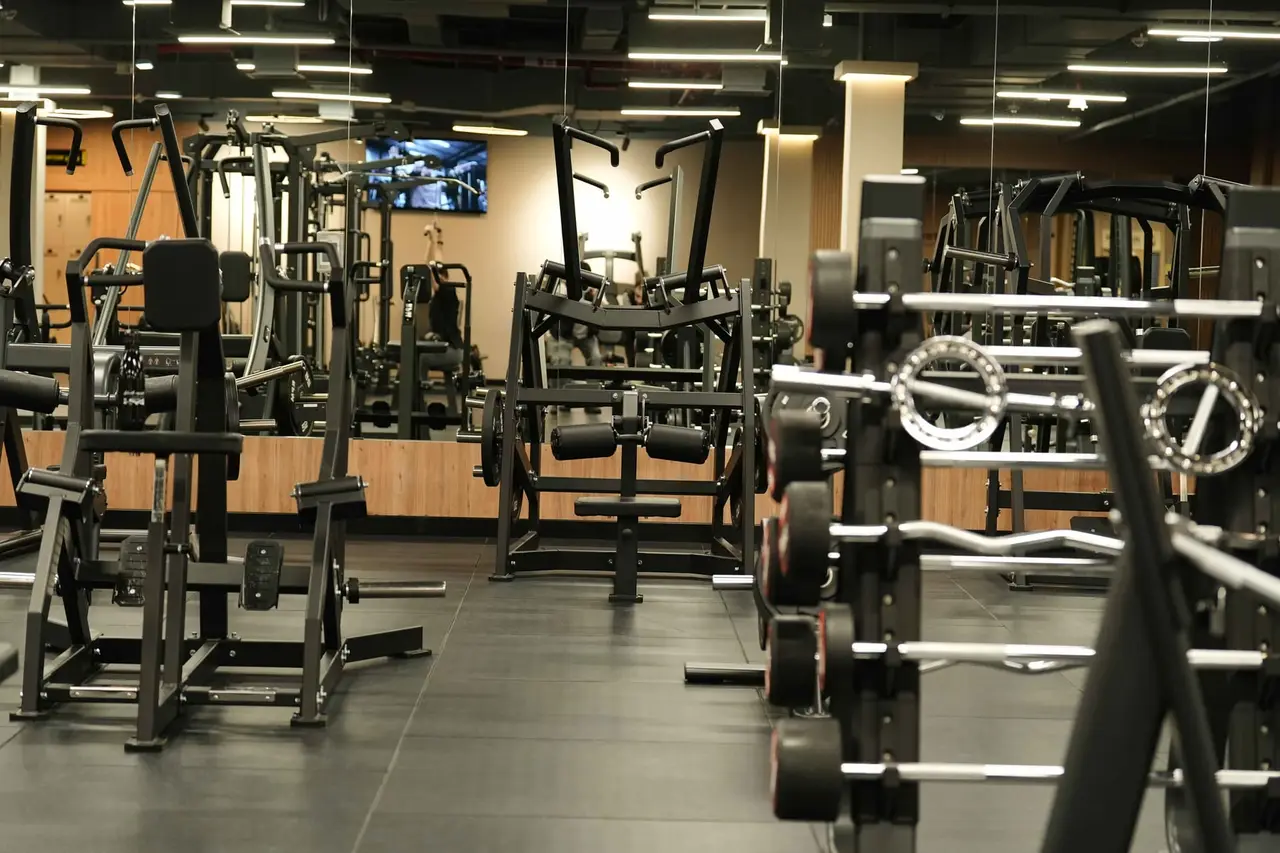
RPM's floor photos show a rack of fixed barbells that includes EZ bars, a dumbbell rack and flat benches on the training floor in Al Manhal, so both the bar and dumbbell versions are covered. Whether a bench inclines or declines is not shown, so ask on your free tour. A personal training session is a good way to learn the arm angle and the lowering with a coach watching.
Questions, answered.
What muscles do skull crushers work?
All three heads of the triceps, on the back of the upper arm. The long head works in a fairly stretched position because the upper arms point slightly back, and the forearms and grip work lightly to hold the bar.
Skull crusher or overhead tricep extension?
Both train the whole triceps. The overhead extension stretches the long head further; the skull crusher takes a heavier load and is easier to keep strict. One of each across the week covers the muscle well, and the overhead tricep extension page covers the seated and standing versions.
EZ bar or straight bar for skull crushers?
The EZ bar's angled grips keep the wrists closer to a natural position, which is why most people use it. A straight bar trains the same muscles and lets you set the grip a little wider or narrower, but it bends the wrists back more. Use whichever your wrists and elbows tolerate.
Is the skull crusher the same as a French press?
The names overlap. In many gyms a French press means an EZ-bar extension with the arms overhead, seated or standing, and the lying version is the skull crusher; others use French press for both. Describe the position, lying or overhead, and the confusion goes away.
Skull crusher, close-grip bench or JM press?
The close-grip bench and the JM press are presses: they move heavier loads with the chest and shoulders helping. The skull crusher isolates the triceps. A common plan uses one press and one isolation exercise; the close-grip bench press page also explains the JM press.
What can I do instead of skull crushers?
With dumbbells, the dumbbell version or a one-dumbbell overhead extension; on a cable, a rope overhead extension or pushdowns; at home, close-hand push-ups or a band extension. Pick an overhead version if you want the stretch, a press if you want heavier load.