What dips train, and who is ready for them
A dip moves your whole body past your hands. The triceps straighten the elbows, the lower fibres of the chest and the front of the shoulder drive the upper arm down and forward from behind your body, and the muscles around the shoulder blade hold you steady over the bars. Because you lift most of your bodyweight from the first rep, dips behave more like a heavy press than an isolation exercise, and programmes file them under chest or triceps depending on how you hold your body.
That load is why they are rated intermediate. The bottom of the rep takes the shoulder into a position few other exercises load, with the upper arm behind the body, and it carries your full weight there. A reasonable readiness test is holding yourself still at the top of the bars, arms straight and shoulders down, for about twenty seconds, plus a set of solid push-ups. If either is hard, start with the assisted versions further down. In a session, dips work as the main press on a bodyweight day or as the second press after a bench. The triceps guide shows how they fit with pushdowns and overhead work.
Setting up on the bars
- Pick the width. Parallel bars about shoulder width apart let your elbows track straight back; much wider bars push the elbows out and load the front of the shoulder more. On a station with angled bars, take the part where your hands sit just outside your hips.
- Grip with your palms facing in and the bar running across the middle of your palm, under the wrist rather than in the fingers.
- Step up onto the platform, or jump lightly, and press to straight arms. That support position is where every rep starts.
- Set your shoulders: pull them down away from your ears and slightly back, as if making your neck long. Brace your stomach, then either bend your knees and cross your ankles or let your legs hang straight under you.
- Start with bodyweight only. If you cannot do five clean reps to the depth described below, use slow lowering reps or an assisted version until you can.
How to do a rep
- From the support position, bend your elbows and let your body lower, with the elbows travelling back rather than out to the sides.
- Choose your lean before you start and keep it: an upright torso for triceps work, or your chest tipped forward over the bars for more chest.
- Lower until your upper arms are about level with the floor, or a little above if your shoulders tell you to stop sooner. If the shoulders rise towards your ears or roll forward, you have gone past your depth.
- Pause for a moment at the bottom without relaxing.
- Press back up through your palms until your elbows are straight and your shoulders are pushed down again. Your legs stay quiet; no kicking.
Lower over about two seconds while breathing in, then breathe out as you press. The depth cue matters more than the tempo: stop where you can still feel your shoulder blades held down. A deeper rep that lets the shoulders slump forward is not a better rep.
Mistakes to fix first
| Mistake | What it looks like | The fix |
|---|---|---|
| Sinking too deep | The shoulders roll forward and the upper arms drop well below level | Stop when the upper arms are level with the floor, and film a set from the side to check |
| Shrugging | The shoulders creep up towards the ears as the set goes on | Push the bars away and keep the neck long; rest, or switch to assisted reps, when the shrug starts |
| Elbows flaring | The elbows point out to the sides on the way down | Use bars closer to shoulder width and steer the elbows back |
| Kicking and swinging | The legs drive the rep and the body swings between the bars | Cross the ankles, brace, and slow the lowering |
| Short reps at the top | A small bend of the elbows, then straight back up | Use assistance so you can reach full depth instead of shortening the rep |
Dips load the front of the shoulder and the area around the breastbone more than most presses. A pinch or sharp pain at the front of the shoulder, or pain around the chest bone, is a reason to stop, not to push through. Have it checked by a doctor or physiotherapist before you dip again.
Chest or triceps dips, bench dips, machines and adding weight
One movement, several questions: which way to lean, what to do before you can dip your own bodyweight, and how to keep progressing once you can.
Chest dip or triceps dip: lean forward or stay upright?
Tipping your chest forward over the bars, with the elbows drifting slightly out, brings in more of the lower chest and front shoulder. Staying tall with the elbows tucked behind you shifts more of the work to the triceps. Both versions work all three muscles, and most people settle somewhere in between, which is fine as long as the lean stays the same through the set.
Bench dips
Put your hands on the edge of a bench behind you, fingers forward, with your feet on the floor in front. Lower by bending the elbows, back close to the bench, until your upper arms are about level, then press up. You move less of your bodyweight, so it suits beginners, but the shoulders finish in a deep backward position with the arms turned in, which many people find uncomfortable. Keep the depth modest. Bent knees make it easier; straight legs, or feet on a second bench, make it harder.
Assisted dip machine
You kneel or stand on a pad that a counterweight pushes upward, so the stack takes part of your bodyweight. Unlike most machines, more weight on the pin means more help and an easier set. Progress by reducing the assistance one step at a time. A thick resistance band looped across the bars does a similar job, and slow lowering reps from the top, three to five seconds each, build the same strength.
Seated dip machine
Some gyms have a seated machine where you push two handles down beside your hips. It copies the pressing half of a dip with your back supported and nothing to balance, and it is easy to load in small steps. It trains the triceps well, but it is not the same skill as moving your own body between bars.
Weighted dips
Once you can do about twelve to fifteen clean reps, add load with a dip belt and a plate hanging from its chain, or a dumbbell held between your feet. Add small amounts, keep exactly the same depth, and expect your reps to drop back to six or eight.
If there is no dip station, the close-grip bench press gives the triceps similar heavy work, and the decline bench press reaches the lower chest from a similar angle.
Sets, reps and progression
| Goal | Sets × reps | How hard |
|---|---|---|
| Building up to bodyweight dips | 3–4 × 3–6 slow lowering or assisted reps | Stop while every rep is still controlled |
| Building muscle | 3–4 × 6–12 | One or two reps left in each set |
| Strength with added weight | 3–5 × 4–8 | A small added load, one or two reps left, the same depth every rep |
Rest about two minutes between sets; dips move a lot of weight even with no plate attached. The rest-between-sets calculator gives a starting point.
Count dips as one of the week's presses rather than an extra on top of everything. If you bench press heavy on the same day, dip second and keep the sets lower. Once or twice a week is plenty. Progress in this order: more reps at bodyweight until every set reaches the top of your range, then a small added weight, then build the reps again. On the assisted machine the same logic runs in reverse: take a little help away each time the sets feel clean.
Dips at RPM
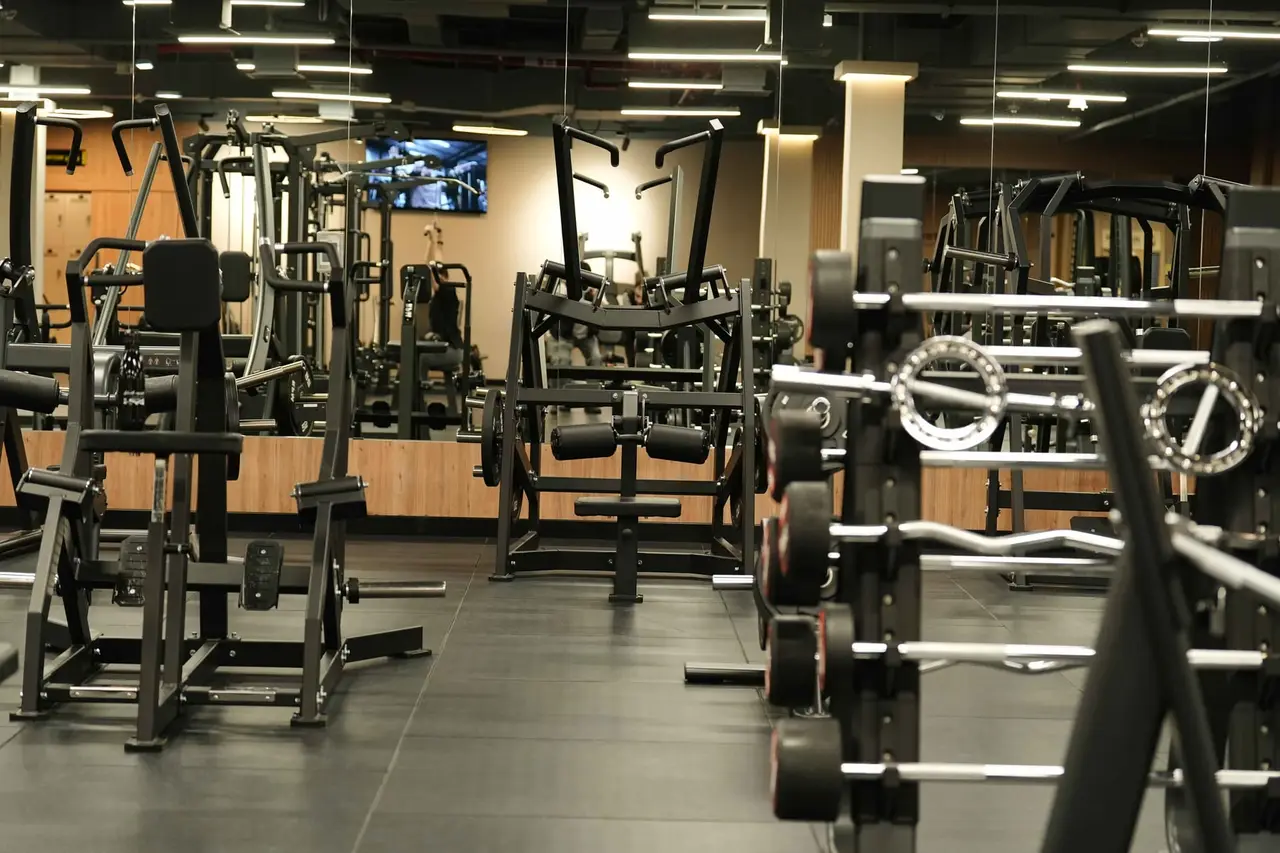
RPM's floor photos show flat benches, which is all bench dips need, but they do not show a dip station or an assisted dip machine, so ask on your free tour what the floor has for dipping. If you want a coach to judge your depth and shoulder position before you add weight, book a personal training session.
Questions, answered.
What muscles do dips work?
The triceps, the lower part of the chest and the front shoulders, with the muscles around the shoulder blades holding you steady. Leaning forward favours the chest; staying upright favours the triceps.
Dips or push-ups: which is better?
They train the same muscles. Dips lift more of your bodyweight and take the shoulder through a deeper range, so they are harder and easy to load with a belt; push-ups are kinder to the shoulders and simpler to scale down. Learn push-ups first and add dips once your shoulders are comfortable with the depth. The push-up guide covers the build-up.
Are dips better than the bench press for the chest?
Not better, different. The bench press lets you add load in small steps and works the whole chest; dips lean towards the lower chest and the triceps and need no rack. Many programmes use the bench as the main press and dips as the second.
Dips, pushdowns or skull crushers for the triceps?
Dips load the triceps heavily along with the chest and shoulders; pushdowns and skull crushers isolate the triceps and are easier to adjust. A balanced plan uses one heavy press, such as dips, plus one or two isolation exercises like the skull crusher.
What can I do instead of dips at home or with dumbbells?
At home, push-ups with your hands close together come nearest, and bench dips on a sturdy chair are an option if your shoulders are comfortable with them. With dumbbells, a close-grip press with the palms facing works the triceps and chest together, and a lying dumbbell extension isolates the triceps. On a cable station, the tricep pushdown is the usual swap.