Same muscle, a different lever
In a lateral raise the arm stays long, with only a soft bend at the elbow, and swings out to the side. The weight sits far from the shoulder, so a light dumbbell or a low pin on the stack is enough, and the side deltoid is the muscle that ends the set. In an upright row the elbows bend and lead the weight up the front of your body, so the hands stay close and the lever is short. The same side deltoid can then handle far more weight, with the upper trapezius lifting the shoulder blades and the biceps bending the elbows.
So the lateral raise is an isolation exercise and the upright row a small compound one. Each exercise's own page covers its technique; this page helps you decide which belongs in your week, or how to use both. The shoulder exercise guide shows where they sit beside the presses.
How they compare
| What differs | Lateral raise | Upright row |
|---|---|---|
| Arm shape | Long, with a soft, fixed elbow bend | Elbows bend and lead; hands stay close to the body |
| Main muscles | Side deltoid | Side deltoid and upper traps |
| Helpers | Upper traps near the top | Front deltoid, biceps and forearms; middle traps as the elbows travel back |
| Typical load | Light | Much heavier |
| Implements | Dumbbells, a cable, or a machine where a gym has one | Barbell, EZ bar, dumbbells, or a cable with a bar or rope |
| Where the rep ends | Upper arms level with the shoulders | Elbows level with the shoulders, bar around the lower chest |
| Upper arm at the top | Out to the side, turned slightly forward | Lifted while turned inward, which some people find uncomfortable |
| Steps between loads | Large at the light end of the dumbbell rack | Small with plates on a bar or pins on the stack |
| Common fault | Shrugging and swinging | Pulling to the chin with the hands close together |
| Level | Beginner | Intermediate |
The comfort question
Most people can do lateral raises without trouble, and many can do upright rows too, but the two put the shoulder in different positions at the top. In an upright row the upper arm rises while it is turned inward, and with a narrow grip and a high pull some people feel a pinch at the top or front of the shoulder. The lateral raise keeps the elbows lower and the arm turned less, so people who dislike the upright row's top position often have no complaint about the raise. Neither exercise is right or wrong for everyone; how your own shoulder responds is the guide.
If you want to keep the upright row, two adjustments change it most: hold the bar at least shoulder width apart, or use dumbbells or a rope so the hands can drift apart, and stop when the elbows reach shoulder height instead of pulling to your chin. A 2013 study of the barbell upright row also found more deltoid and trap activity, and less biceps activity, as the grip widened. The upright row page covers the grip in detail.
If either exercise pinches, end the set and swap it: the lateral raise for the upright row, or a cable lateral raise for the dumbbell one. If the pain persists, see a doctor or physiotherapist before you train the shoulder again.
Which one, for whom
Choose the lateral raise if…
You want the side deltoid on its own, with nothing else tiring first; you are new to shoulder training; you already shrug, deadlift or row heavily, which works the upper traps; or the upright row's top position does not suit your shoulders.
Choose the upright row if…
Your shoulders are comfortable with it; you want the side deltoids and upper traps in one movement when time is short; you like a lift that loads in small steps with a bar; or you find the side shoulders easier to feel in a heavier, shorter pull.
If you can fit only one
Take the lateral raise. It covers the side deltoid by itself, suits nearly everyone and works with dumbbells or a cable. The upper traps get work from many other lifts; the side deltoid gets it from few.
Loads and progression
Expect very different numbers. Because the hands stay close to the body in an upright row, most people move much more weight than on a lateral raise; do not compare the two or try to close the gap. The upright row also progresses more smoothly: a bar takes small plates and a cable stack moves a pin at a time, while the step from one light dumbbell pair to the next can be a large share of a lateral raise.
For the lateral raise, build reps, pauses and a slower lowering before moving up a pair. For the upright row, keep reps at eight or more, because heavier sets tend to turn into a swing, and add the smallest load available once every set reaches the top of your range.
Using both in a week
| Plan | Lateral raise | Upright row |
|---|---|---|
| One shoulder session | 3 × 12–15 after the press | 2–3 × 10–12 to finish |
| Two upper-body days | Day A: 3 × 12–20 | Day B: 3 × 10–15, wide grip |
| Upright rows do not suit you | 2–3 sessions, 2–4 sets each | Leave it out; a shrug covers the upper traps |
Rest about a minute between sets and stop one or two reps short of failure. If you also shrug or deadlift, count those sets as upper-trap work too; the trap exercises guide shows how they add up.
Watch the overlap inside a set. A lateral raise whose elbows fold as you tire is turning into an upright row, and an upright row with straight arms and the hands drifting wide is turning into a raise. Decide which one you are doing and keep its shape. Both have cable versions at the low pulley, set out on the cable shoulder exercises page, and the front raise vs lateral raise comparison covers the other raise people weigh against the lateral.
Both at RPM
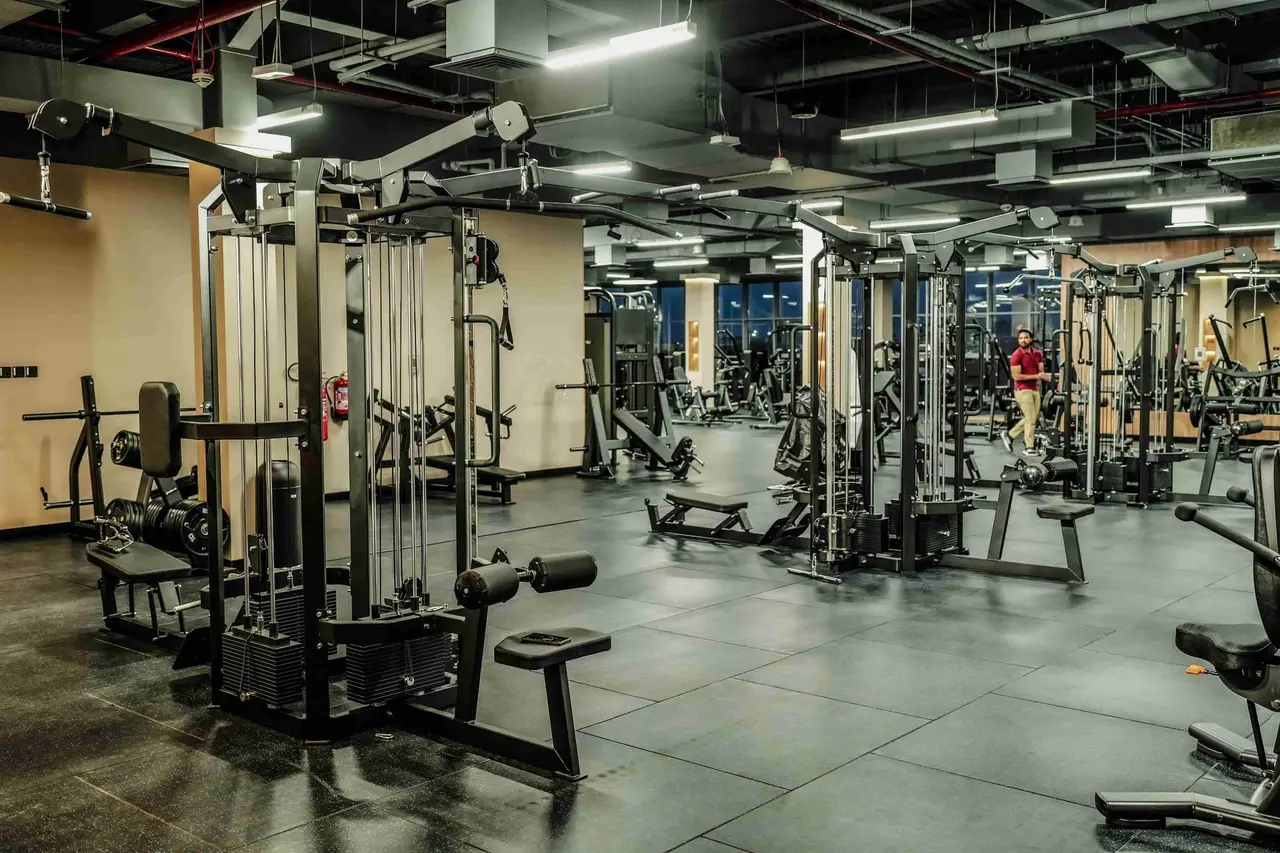
RPM's floor photos show a dumbbell rack, multi-station cable towers, squat racks with barbells and colour bumper plates, and a rack of fixed barbells that includes EZ bars on the training floor in Al Manhal, which covers every version of both exercises on this page. The photos do not show a lateral raise machine, so ask on your free tour. A personal training session can check your grip width and how high you pull.
Sources
Questions, answered.
Lateral raise or upright row: which is better for side delts?
For the side deltoid alone, the lateral raise, because it isolates the muscle and suits almost everyone. The upright row trains the side deltoid with heavier loads and adds the upper traps. If upright rows suit your shoulders, both have a place.
Are upright rows bad for your shoulders?
It depends on the person. Many train them without trouble, while some feel a pinch at the top, especially with a narrow grip and a pull to the chin. A wider grip and a stop at shoulder height are the usual adjustments; if it still pinches, use lateral raises instead, and see a doctor or physiotherapist if pain persists.
Can the upright row replace lateral raises?
It can stand in on a day when time is short, since it trains the side deltoid, but most plans keep the lateral raise as the main side-shoulder exercise because it isolates the muscle. Use the upright row as an addition rather than a swap.
Which works the traps more?
The upright row. The upper traps lift and turn the shoulder blades as the elbows rise, under a heavier load. The lateral raise uses them only near the top, more if you lift too high or too heavy.
Cable lateral raise or cable upright row?
Both work from the low pulley. The cable lateral raise is done one arm at a time, side-on to the stack; the cable upright row uses a straight bar or a rope, facing the stack. The rope lets the hands drift apart at the top, which many people find more comfortable.