What the upright row trains, and the shoulder question
Two muscles share the work. The side deltoid, on the outside of the shoulder, lifts the upper arm out to the side, and the upper trapezius, between the neck and the shoulder, lifts the shoulder blade and turns it upward so the arm can keep rising. The front deltoid helps, the biceps and forearms bend the elbow, and the middle traps and rear deltoids join in as the elbows travel out and back. That is the reason to do it: one loaded movement for two muscles that a lateral raise and a shrug would otherwise train separately.
Is it hard on the shoulders? Honestly, it depends on the person and on how it is done. As the elbows rise with the hands close together, the upper arm turns inward while it lifts, and near the top some people find that position uncomfortable, often as a pinch at the top or front of the shoulder. Two adjustments change it the most: a wider grip, and a pull that stops when the elbows reach shoulder height. Many people who dislike the classic narrow, bar-to-chin version are comfortable with this one. Some are not, and for them the movement is optional.
If you have shoulder pain, a past shoulder problem, or a pinch that comes back even with a wide grip and a low pull, leave the upright row out and speak to a doctor or physiotherapist before you train it. A lateral raise and a shrug cover the same two muscles without the high elbows.
Grip width: the adjustment that matters most
A 2013 study of 16 weight-trained men measured muscle activity in the barbell upright row at three grip widths: half, one and two times the distance between the bony tips of the shoulders. As the grip widened, activity in the deltoids and traps went up and activity in the biceps went down. It was a short laboratory test, not a training study, so it says nothing about growth over months, but it points the same way as most coaching: the narrow grip is the weakest choice.
| Grip | Where the hands go | What changes |
|---|---|---|
| Narrow | Hands touching or a thumb's width apart | The elbows rise highest and the upper arm turns in most; the version most people find uncomfortable, with little reason to use it |
| Shoulder width | Hands roughly over the outside of the thighs | The usual starting point; still finish at shoulder height |
| Wide | About one and a half to two times shoulder width | More side-shoulder and trap activity in the study and less biceps; the elbows cannot travel as high, which keeps the pull shorter by itself |
| Independent hands | Dumbbells, or a rope on a cable | Each hand finds its own path and can drift outward at the top; many people find this the most comfortable |
A wide grip suits a straight barbell, which has room for it. On an EZ bar, hold the outer bends: that sets the hands wider and turns the wrists slightly in.
Setting up
- Lift the bar out of a rack set at about mid-thigh height, or take an EZ bar from the fixed-bar rack, rather than deadlifting it from the floor before every set.
- Hold it overhand at shoulder width or wider, so your forearms angle outward slightly when the bar hangs against your thighs.
- Stand tall with your feet about hip width apart, knees soft, ribs down and arms long. Let the shoulders sit naturally rather than pinning them down; the shoulder blades are meant to move in this exercise.
- Choose a light load: one you could pull twelve times to shoulder height with a short pause at the top. That is usually well under what you row, and closer to what you would curl.
How to do a rep
- Brace lightly and keep your torso still for the whole set.
- Lead with the elbows: pull them up and out towards the side walls, keeping the bar or handles close to your body.
- Stop when your upper arms are about level with your shoulders. With a wide grip the bar usually finishes around the lower chest, not under the chin.
- Keep the elbows above the wrists throughout, and pause for a moment at the top while the shoulder blades finish turning upward.
- Lower over two to three seconds to straight arms, and start the next rep from a still position.
Think about lifting the elbows, not the bar. The old cue of pulling the bar to your chin drives the arms into the highest, most turned-in position and adds little. Breathe out as you pull and in as you lower. A burn in the side shoulders and upper traps is normal; a pinch inside the joint means end the set, widen the grip and stop lower next time.
Mistakes to fix first
| Mistake | What it looks like | The fix |
|---|---|---|
| Pulling to the chin | The elbows climb well above the shoulders at the top | Stop with the upper arms level with the shoulders |
| Hands too close | The hands touch in the middle of the bar | Move them to shoulder width or wider |
| Wrists leading | The hands rise above the elbows, as in a curl | Let the elbows lead and keep the wrists below them |
| Swinging | The hips and knees kick to start each rep | Go lighter and start every rep standing still |
| Shrugging first | The shoulders jump to the ears before the arms move | Lift the elbows first and let the traps finish the rep |
| Bar drifting away | The bar travels out in front of the body as it rises | Keep it close enough to brush your shirt |
Barbell, EZ bar, dumbbell and cable versions
Every version trains the same two muscles. They differ in how much the hands can move and where the load feels hardest.
Barbell or EZ bar upright row?
A straight barbell takes the widest grip and loads in small steps, which makes it the easiest version to progress. An EZ bar sets the wrists at a slight angle that many people find kinder, but its bends limit how wide you can hold it, so use the outer ones.
Dumbbell upright row
Hold a dumbbell in each hand in front of your thighs and pull the elbows up and out, letting the dumbbells drift apart as they rise so they finish wider than they started. Each arm moves on its own, which shows up a weaker side, and you can also train one arm at a time.
Cable upright row
Attach a straight bar or a rope to the low pulley and stand close to the stack. The cable keeps tension at the bottom of the rep, the stack moves in small steps, and with the rope your hands can separate at the top, which makes it the most comfortable version for many people.
On a busy day there is usually a low pulley open on the cable machine, and the dumbbells page explains how the rack is laid out.
Who it suits, and who should pick something else
- It suits lifters whose shoulders are comfortable with it and who want the side shoulders and upper traps in one movement, for example at the end of a shoulder or upper-body session when time is short.
- Pick something else if the shoulder pinches even with a wide grip and a low finish, or if you have shoulder pain: the lateral raise and the shrug cover the same ground, and a doctor or physiotherapist should look at the pain.
- For the middle and lower traps it does little. Face pulls and rows do that job, and the trap exercises guide shows how the parts of the muscle fit together.
Sets, reps and progression
| Goal | Sets × reps | How hard |
|---|---|---|
| Learning the movement | 2 × 12–15 | Light; a pause at shoulder height on every rep |
| Building muscle | 3–4 × 10–15 | One or two reps left, strict, no swing |
| Cable or dumbbell finisher | 2 × 15–20 | Continuous reps with a slow lowering |
Rest about a minute between sets. Once or twice a week is enough, usually after the main press of a shoulder or upper-body day.
Progress with reps before load, then add the smallest plates or the next step on the stack. Sets of fewer than eight reps add little here, because heavy loads start to be swung. If you also shrug and deadlift in the same week, count those sets too: two or three sets of upright rows may be all the upper traps need.
Upright rows at RPM
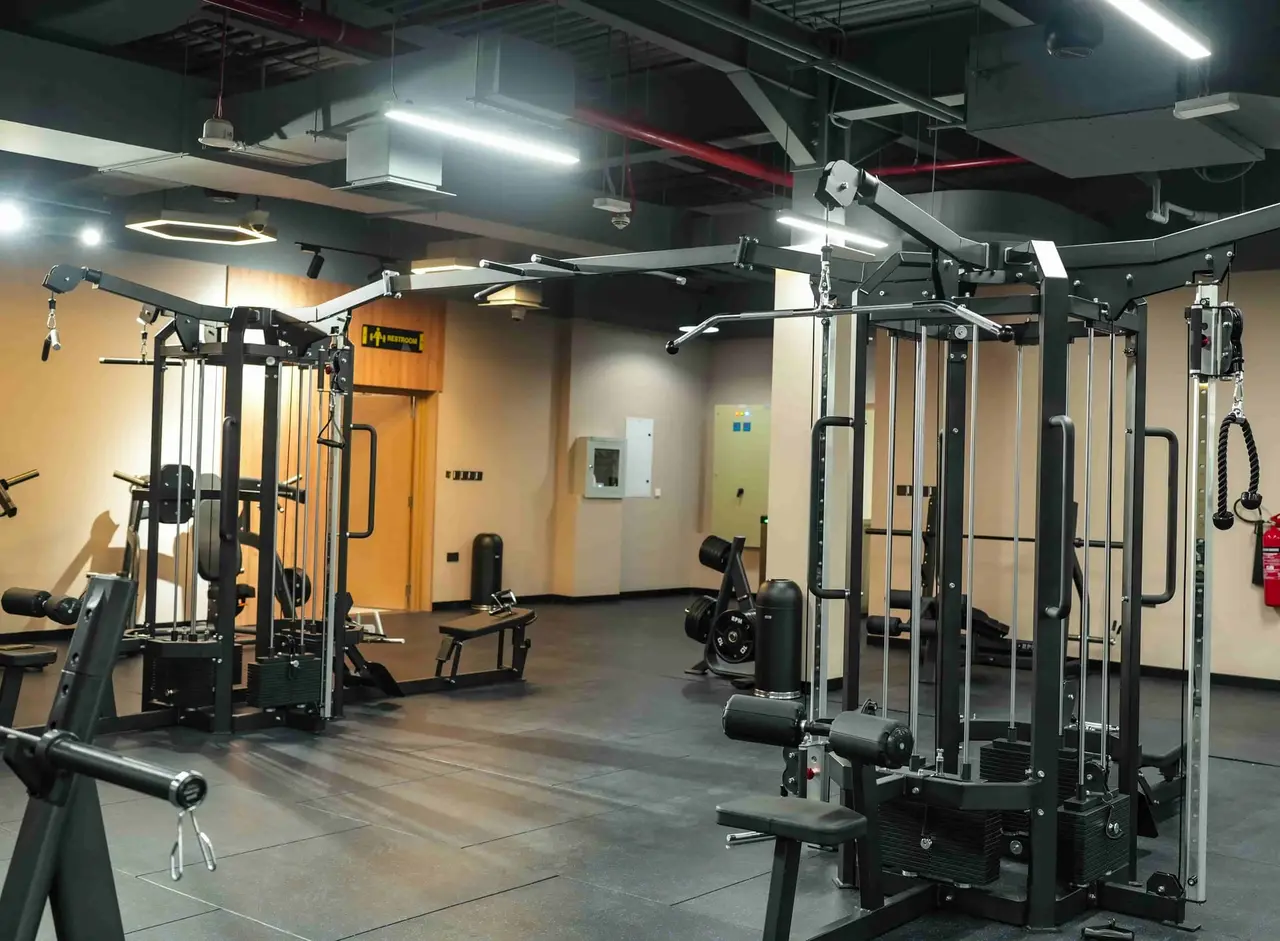
RPM's floor photos show barbells with colour bumper plates, a rack of fixed barbells that includes EZ bars, a dumbbell rack and multi-station cable towers, so every version on this page can be done on the training floor. The trap exercises guide and the shoulder exercise guide show where the upright row fits in a week. If you want a coach to check your grip width and how high you pull, book a personal training session.
Sources
Questions, answered.
What muscles do upright rows work?
Mainly the side deltoids and the upper trapezius. The front deltoids, biceps and forearms help, and the middle traps and rear deltoids join in as the elbows travel out.
Are upright rows bad for your shoulders?
Not for everyone, but not everyone is comfortable with them. A wider grip and a stop at shoulder height are the usual adjustments. If it still pinches, or you have shoulder pain, choose another movement and speak to a doctor or physiotherapist.
Wide or narrow grip on the upright row?
Wide, or at least shoulder width. In a 2013 study, wider grips brought more deltoid and trap activity and less biceps activity than a narrow one, and most people find the wide grip more comfortable at the top.
Upright row or lateral raise for the side shoulders?
The lateral raise isolates the side deltoid with a long arm and a light weight. The upright row adds the upper traps and takes a heavier load. If upright rows suit your shoulders, use both; if not, the lateral raise does the side-shoulder job on its own.
Upright row or shrug for the traps?
The shrug trains the upper traps with the arms simply hanging, so the shoulder position is simpler; the upright row adds the side shoulders. The shrug page compares the two.