How the traps work
The trapezius is a broad, flat, diamond-shaped muscle across the upper back. It runs from the base of the skull and the spine, down to the middle of the back, out to the collarbones and the top of each shoulder blade, and its fibres run in three directions, each with its own job. The upper fibres, from the neck to the shoulder, lift the shoulder blades and help turn them upward. The middle fibres run straight across and pull the shoulder blades together. The lower fibres angle up from the middle of the back, draw the shoulder blades down and also help them turn upward.
Those jobs overlap when you move your arms. Raising an arm overhead needs the shoulder blade to rotate upward, and the upper and lower traps share that work with the serratus anterior on the side of the ribs. That is why overhead pressing trains the traps a little, and why the lower traps matter to anyone who presses overhead. The rhomboids under the middle traps and the levator scapulae beside the upper traps help with the same movements. You cannot isolate any of them completely, but you can choose which part does most of the work.
This page is the traps hub of the exercise library. The shrug page teaches the main upper-trap movement step by step; this one covers the whole muscle: what loads each part, how much to do and how to put it into a session.
What trains each part of the traps
| Part | Its job | Movements that load it | Worth knowing |
|---|---|---|---|
| Upper traps | Lift the shoulder blades and help turn them upward | Shrug, upright row, deadlift, trap bar deadlift, farmer's carry | Already worked hard by heavy pulling and carrying |
| Middle traps | Pull the shoulder blades together | Rows with a pause, face pull, reverse fly with a squeeze, face-down T raise | Hold the squeeze at the end of every rep |
| Lower traps | Draw the shoulder blades down and help turn them upward | Y raise, face pull finished high, overhead pressing | Light loads only; the upper traps take over when it gets heavy |
The library covers most of these movements. For the upper traps there is the shrug, the upright row, the deadlift and the trap bar deadlift, which puts the handles at your sides; the loaded carry guide covers farmer's walks. For the middle and lower traps, the face pull and the chest-supported row are the main tools. The rear delt fly page teaches you to keep the shoulder blades still for the rear shoulders; squeeze them together at the top instead and the middle traps take a bigger share.
An electromyography study of 30 healthy adults measured the three parts of the trapezius during ten exercises. The one-arm shrug produced the most upper-trap activity. For the middle traps, the highest readings came from raising the straight arm out to the side and back with the thumb turned up, and from raising it overhead in line with the lower fibres while lying face down; that face-down overhead raise, the Y raise, also produced the most lower-trap activity. It measured activity, not growth over months, but it is a sensible guide to which movement reaches which part.
Dumbbells, cables or machines?
Each tool can train the traps, and none is essential.
- Dumbbells: a rack and a bench cover every part of the muscle, as the FAQ below lists; the dumbbells page explains the rack.
- Cables: tension at the bottom of every rep and small steps on the stack, for shrugs, upright rows, face pulls and Y raises; the cable machine page covers attachments and heights.
- Barbell and trap bar: the heaviest shrugs and deadlifts. A trap bar puts the handles at your sides, so it takes the heaviest shrug loads with the palms facing in.
- Machines: some gyms have a plate-loaded shrug machine, and a Smith machine fixes the bar for heavy or behind-the-back shrugs. They do the same job as free weights with less to balance.
So which machine trains the traps? A shrug machine or a Smith machine for the upper traps, where a gym has one, and the cable station for the middle and lower traps. None beats a well-done shrug and a row with a squeeze.
How much, and how often
Start by counting what you already do: deadlifts, heavy rows and carries load the upper traps hard, and every row and face pull works the middle traps. As a rough starting point, add about four to eight hard sets a week of direct upper-trap work, such as shrugs or upright rows, and make sure two or three of your weekly back or shoulder movements finish with the shoulder blades squeezed together or the arms overhead. If you deadlift heavy every week, two or three sets of shrugs may be all the upper traps need. The hypertrophy volume calculator helps you add up direct and indirect sets.
The traps take higher reps well. Most shrug and upright-row sets work between 10 and 20 reps with a pause at the top; Y raises and reverse flies suit 10 to 15 slow reps with a light weight. Spread the work over two sessions, after the big lifts of the day.
Two sample sessions
Session A: pull day with every part of the traps
Built from library pages: the trap bar deadlift or the deadlift, the chest-supported row, the face pull and the shrug, finishing with a carry from the loaded carry guide.
| Exercise | Sets × reps | Notes |
|---|---|---|
| Trap bar deadlift or deadlift | 3 × 5 | The heavy pull of the day |
| Chest-supported row | 3 × 8–12 | Pause with the shoulder blades squeezed together |
| Face pull | 3 × 15 | Pull high and hold the finish for a second |
| Dumbbell shrug | 3 × 10–12 | One-second hold at the top |
| Farmer's carry | 3 × 30–40 seconds | Walk tall with the shoulders level |
Session B: a short traps and upper-back block
For the end of a shoulder or upper-body day, using the upright row and the rear delt fly with two lighter movements. It takes about fifteen minutes.
| Exercise | Sets × reps | Notes |
|---|---|---|
| Upright row, wide grip | 3 × 10–12 | Stop at shoulder height |
| Rear delt fly with a squeeze | 3 × 12–15 | Draw the shoulder blades together at the top |
| Y raise, face down or bent over | 2 × 10–12 | Very light; thumbs up, arms in a Y |
| Cable shrug | 2 × 12–15 | Slow on the way down |
Use one session a week, or alternate them. Without a trap bar or an adjustable bench, a seated cable row and bent-over raises do the same jobs. The workout split calculator helps you decide which day the trap work goes on.
Bigger traps, the neck and the shoulders
The upper traps are the part you see from the front, where the neck meets the shoulders, and they grow with heavy pulling, shrugging and carrying. If you want a bigger upper back, that is the work to add. If you would rather not build them much, as some women and some athletes prefer, keep shrugs light or leave them out and give most of your trap work to the middle and lower parts through rows, face pulls and raises. Size changes slowly either way.
People often say their traps feel tight or that they carry tension in the neck. Strength training is not a treatment for that, and these exercises are not offered as one. If you have neck pain, headaches that start in the neck, or pain, numbness or tingling that spreads into an arm, see a doctor or physiotherapist rather than training through it.
Trap training mistakes
- Shrugs only. They train the upper traps and leave the middle and lower parts to whatever rows you happen to do.
- Short, heavy shrugs. A big load moved a few centimetres trains less than a moderate one lifted to full height and held.
- Heavy Y raises. Past a light weight the upper traps take over and the shoulders creep up; use the lightest dumbbells and a slow tempo.
- Rowing without the squeeze. If the shoulder blades stay apart at the end of a row, the arms and lats do the work; finish each rep with them drawn together.
Training the traps at RPM
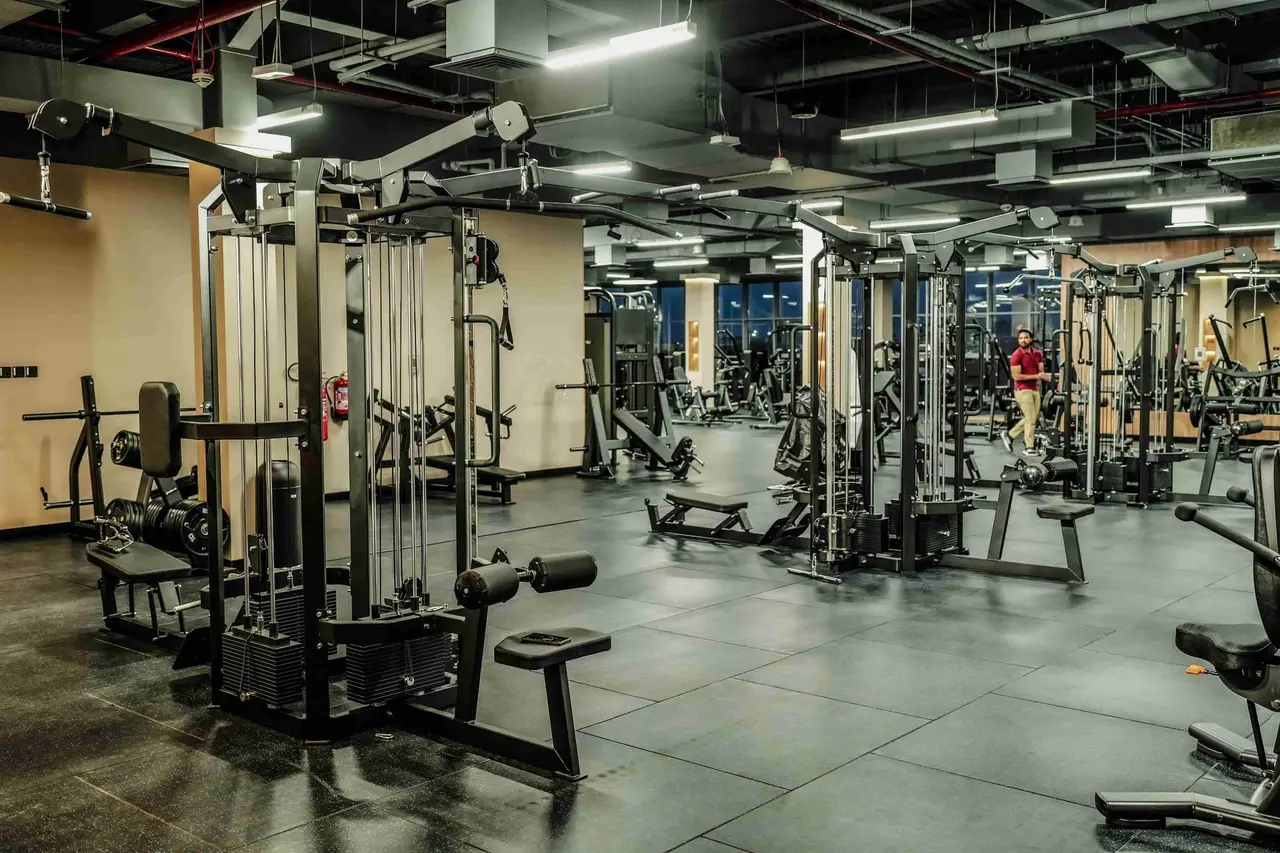
RPM's floor photos show a dumbbell rack, barbells with colour bumper plates, a rack of fixed barbells, flat benches and multi-station cable towers on the training floor in Al Manhal, which covers shrugs, upright rows, deadlifts, face pulls, reverse flies and cable shrugs. A trap bar, an adjustable bench for face-down Y raises, a Smith machine and a shrug machine are not in those photos, so ask on your free tour what is on the floor. For a programme that balances the traps with your back and shoulders, see personal training; the shoulder exercise guide covers the deltoids.
Sources
Questions, answered.
Which exercises train the traps the most?
The shrug and heavy pulls such as the deadlift for the upper traps, rows and face pulls finished with a squeeze for the middle traps, and the Y raise for the lower traps. One from each group covers the muscle.
Can I train my traps with only dumbbells?
Yes. Dumbbell shrugs, upright rows, bent-over reverse flies with a squeeze, Y raises and farmer's carries train all three parts. A bench to lean on helps with the raises.
Which cable exercises train the traps?
Cable shrugs between two low pulleys, the cable upright row, the face pull and a Y raise from crossed low cables. The cable keeps tension where dumbbells go light.
How do I train the lower traps?
With light raises where the arms go overhead and the shoulder blades are drawn down, such as the Y raise lying face down on an incline bench or bent over, and with face pulls finished high. Keep the load light enough that the shoulders stay away from the ears.
Do deadlifts train the traps enough?
For the upper traps, heavy deadlifts do a lot, and many lifters need little extra. They do much less for the middle and lower parts, which still need rows and raises.
Are trap exercises suitable for women?
Yes. The muscle works the same way in everyone. Women who do not want bigger upper traps can keep shrugs light and put most of the work into rows, face pulls and Y raises. You can ask for a female personal trainer if you prefer.