What the cable crunch trains
Bending the trunk forwards is the main job of the rectus abdominis, the long muscle down the front of the stomach, and the obliques at your sides help. A floor crunch trains that job with bodyweight, which soon becomes too easy to build much strength. The cable crunch adds a load you can raise a pin at a time, so it works like any other weighted exercise: sets of moderate reps taken close to failure.
That makes it a good fit once bodyweight crunches have stopped being a challenge. It slots into the end of a session as the trunk-bending part of a core block, next to an exercise that resists movement, such as the plank or the Pallof press; the core training guide explains why both kinds belong in a programme. Like any ab exercise, it builds the muscle without removing fat from your stomach.
Most people's first cable crunches are really hip hinges: the bottom moves back, the back stays straight and the stack moves without the abs doing much. Learning to keep the hips still is the whole skill of this exercise.
Setting up
- Set the pulley at its highest position and clip on a rope.
- Put a mat down for your knees and kneel facing the stack, about a step back from it.
- Take one end of the rope in each hand and bring your hands beside your head, at your temples or just in front of your ears. They stay there for the whole set.
- Sit tall on your knees with your hips above them, not back on your heels, and lean forward slightly until the stack lifts off its rest.
- Pick a weight you can crunch twelve to fifteen times with your spine fully rounding. Stack numbers vary between stations, so judge by the reps.
How to do a rep
- Keep your hips where they are, over or just behind your knees.
- Breathe out and curl: tuck your chin slightly and bring your ribs down towards your pelvis, rounding your back from the top down.
- Let your elbows travel towards the middle of your thighs. Your hands stay beside your head, so the arms do not pull.
- Squeeze for a moment at the bottom, then uncurl slowly, one section of the spine at a time, until your back is long again. Stop before the plates touch.
- Keep the reps smooth; if you need a jerk to start one, the stack is too heavy.
Think of closing the gap between your ribs and your hips, not of bowing towards the floor. If your bottom moves back towards your heels as you crunch, the hips are doing the work: lighten the pin and try again with the hips fixed. If the exercise causes pain in your neck or lower back, stop and get it checked by a doctor or physiotherapist.
Cable crunch mistakes
| Mistake | What it looks like | The fix |
|---|---|---|
| Hinging at the hips | The bottom sits back towards the heels and the back stays flat | Fix the hips over the knees and curl the spine instead |
| Pulling with the arms | The rope moves away from the head as the hands drive it down | Keep the hands pinned beside your head; the trunk moves the rope |
| Cranking the neck | The chin jams into the chest and the neck strains | Tuck the chin only slightly and look at the floor in front of your knees |
| Too heavy | The stack yanks you upright and each rep starts with a jerk | Lower the pin until every rep is smooth |
| Short reps | The spine never lengthens between reps | Uncurl until your back is long, with the plates still off the rest |
Oblique and standing versions
Both keep the same curl of the spine; one adds a twist, the other does away with kneeling.
Oblique (twisting) cable crunch
From the same kneeling position, curl down and across, bringing one elbow towards the opposite knee, then return to the centre. Either alternate sides or do all the reps to one side before switching. The obliques work harder, and you will need a lighter weight than for the straight version. Keep the hips facing the stack throughout; the twist comes from the ribs.
Standing cable crunch
Stand facing away from a high pulley with the rope over your shoulders, or facing it with the rope held at your forehead, knees soft. Curl your ribs towards your hips as you would kneeling. It spares your knees and needs no mat, but keeping the hips still is harder, so most people learn the kneeling version first.
If the cable stations are full, an ab crunch machine, where a gym has one, does a similar job seated, and a floor crunch with a plate or dumbbell held on your chest adds load without a station.
Sets, reps and progression
| Goal | Sets × reps | How hard |
|---|---|---|
| Learning the movement | 2 × 12–15 | Stop with three reps left; hips still on every rep |
| Building the abs | 3 × 10–15 | One or two reps short of failure |
| Muscular endurance | 2–3 × 15–20 | Last set close to failure at a lighter pin |
Rest about a minute between sets. Log the station as well as the pin, since stacks feel different from one machine to the next.
Two sessions a week is plenty, with the cable crunch as one exercise among two or three in a core block. Add reps until every set reaches the top of the range with the hips still, then move the pin down one plate. If that jump costs you form, add a two-second squeeze at the bottom before you move up again.
Cable crunches at RPM
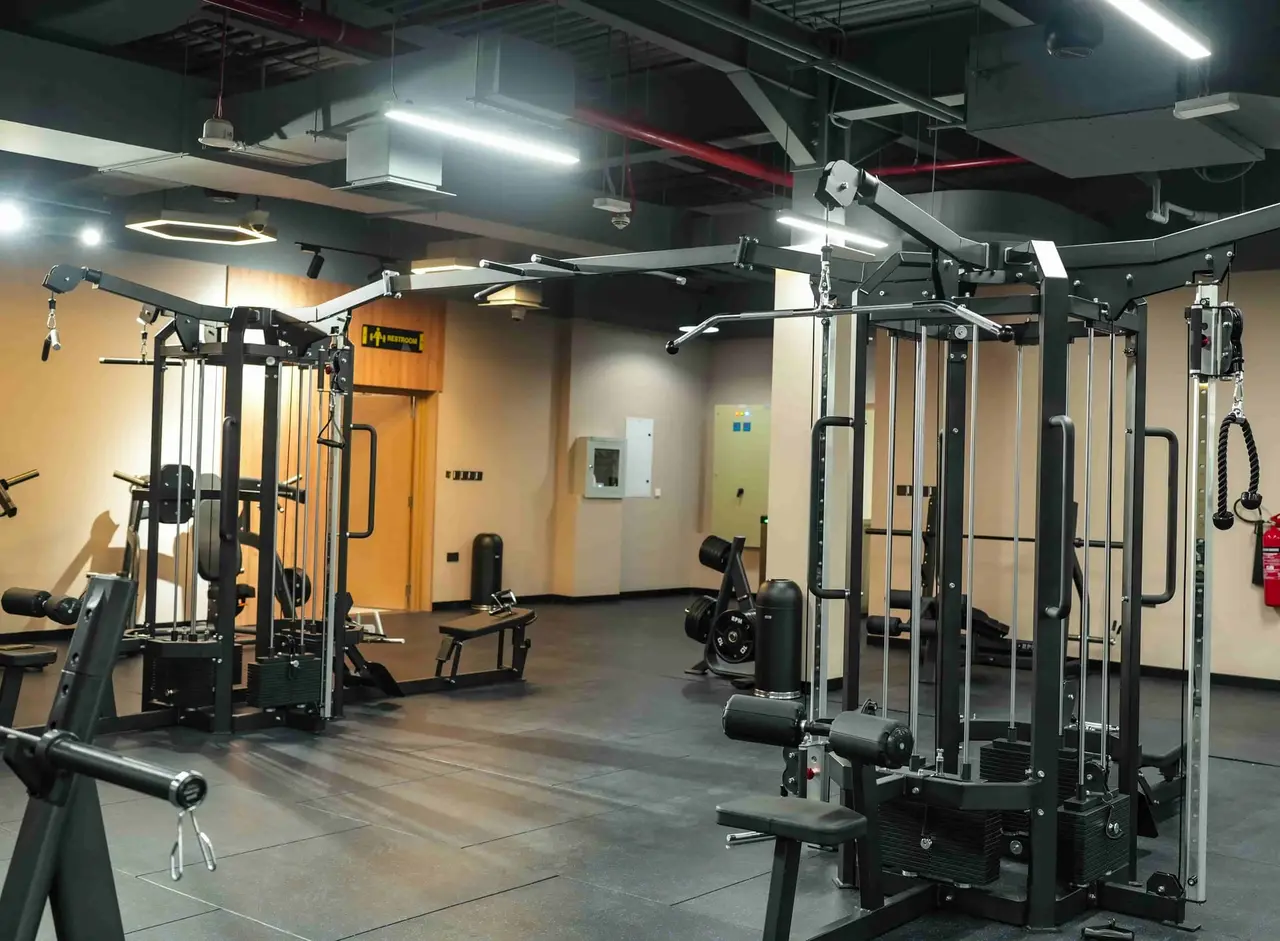
RPM's floor photos show multi-station cable towers with a pulldown seat on the training floor in Al Manhal, and the high pulley on a station like that is what this exercise uses. Whether a rope is on the station, where the mats are, and whether the gym also has an ab crunch machine are worth checking on your free tour. A personal training session is a quick way to learn the difference between curling and hinging.
Questions, answered.
Cable crunch vs ab crunch machine: which should I use?
Both load the same forward curl with a weight stack. The machine fixes the path and supports you in a seat, so it is quicker to learn; the cable crunch leaves the path and range to you. Use whichever your gym has and you can do without hinging at the hips.
Cable crunch vs hanging leg raise?
The cable crunch brings the ribs towards the pelvis and is easy to load. The hanging leg raise brings the pelvis towards the ribs, needs a pull-up bar and a strong grip, and works the hip flexors hard as well. Many programmes use one of each.
Cable crunch vs weighted crunch or decline sit-up?
All three load the front of the trunk. The cable crunch is the easiest to load in small steps; a weighted floor crunch needs only a plate; a decline sit-up adds a lot of hip-flexor work and needs a decline bench, which not every gym has.
How heavy should cable crunches be?
Heavy enough that the last two of twelve to fifteen reps are hard, light enough that your hips stay still and your hands stay by your head. Most people who go heavy end up hinging: the number goes up and the work on the abs goes down.
Why do I feel cable crunches in my arms or hips?
Usually because the arms are pulling the rope or the hips are bowing forward. Pin your hands at your temples and keep your hips over your knees, and the work moves back to the front of your stomach. A lighter pin makes both easier to fix.
Can I do cable crunches at home?
With a resistance band anchored high and secure, you can kneel and crunch in the same way. Without a band, a slow floor crunch with a pause at the top is the closest bodyweight version.