Why the grip turns at the top and the bottom
Hand position decides how three elbow flexors share a curl. Palms up, the biceps is at its strongest, because turning the forearm palm-up is one of its jobs. Palms down, the biceps tendon wraps around the forearm bone and loses leverage, so the brachioradialis, on the thumb side of the forearm, and the brachialis, beneath the biceps, take a bigger share. That is why a reverse curl, done palms-down, feels so much weaker than a normal one.
The Zottman curl uses both positions in one rep. Lifting is the weaker half of any movement and lowering the stronger: most people can lower under control a weight they could not lift. So you lift palms-up, where you are strongest, and lower palms-down, where you are weakest, and the forearm works against a load a reverse curl would not let you move. The curl is usually credited to George Zottman, a strongman of the late nineteenth century. The biceps guide and the forearm guide show where it fits in a week.
What the forearm gets from the palms-down lowering
A 2015 study recorded muscle activity in 16 healthy adults as they bent the elbow slowly with the palm facing down, facing in and facing up. Brachioradialis activity was significantly higher with the palm down than in either of the other positions, while biceps activity did not change significantly between the three. It measured slow elbow bends in a laboratory, not a loaded lowering or growth over months, so it supports the reasoning behind the grip rather than proving anything about the Zottman curl.
The forearm has a second job here. With the palm down, the dumbbell tries to pull your knuckles towards the floor, and the muscles on top of the forearm, the wrist extensors, have to hold the wrist straight. That is the burn most people feel along the outside of the forearm, and it is also what limits how heavy the exercise can go.
Getting ready
- Choose a pair of dumbbells by the lowering, not the lifting. You should be able to lower them palms-down over three seconds with straight wrists; for most people that is a pair or two lighter than their bicep curl.
- Stand tall with your feet hip width apart and your knees soft, or sit upright on the end of a flat bench so the hips cannot help.
- Let the dumbbells hang at your sides with your palms facing forward, elbows close to your ribs and shoulders back and down.
- Hold each handle in the middle with a full grip, thumb wrapped around. A loose grip lets the dumbbell tip as soon as the palm turns down.
One rep in four parts
- Lift: curl both dumbbells up with the palms up and the elbows still, until your forearms are close to upright.
- Turn at the top: rotate your forearms until your palms face away from you. The dumbbells stay near shoulder height and the elbows stay where they are.
- Lower: take about three seconds to bring the dumbbells down palms-down, knuckles in line with your forearms, until your arms are straight.
- Turn at the bottom: rotate the palms back to face forward, then start the next rep.
Turn only at the top and the bottom, never on the way. A grip that rotates gradually through the rep blends the two positions and loses the point of the exercise. Alternating arms works too, and lets you watch one wrist at a time. Breathe out as you lift and in as you lower.
Zottman curl mistakes
| Mistake | What it looks like | How to fix it |
|---|---|---|
| Choosing the weight by the curl | The lift is easy but the palms-down lowering drops | Pick the pair you can lower in three seconds; the lift should feel light |
| Rushing the lowering | The dumbbells fall back to the thighs in a second | Count three seconds down on every rep |
| Wrists drooping | With the palms down, the knuckles tip towards the floor | Keep the knuckles in line with the forearm, and go lighter if they will not stay there |
| Rotating on the way | The grip turns little by little through the whole rep | Turn only at the very top and the very bottom |
| Elbows lifting at the top | The elbows rise and drift forward while the palms turn | Turn the forearm, not the shoulder, with the elbows by your sides |
Zottman, hammer, bicep and reverse curls compared
All four bend the elbow with dumbbells. The grip, and when it changes, decides which muscle each one leans on.
| Curl | Grip on the way up | Grip on the way down | What it is for |
|---|---|---|---|
| Bicep curl | Palms up | Palms up | Loading the biceps in its strongest position |
| Hammer curl | Palms facing in | Palms facing in | More brachialis and brachioradialis, usually with a heavier weight |
| Reverse curl | Palms down | Palms down | The brachioradialis and wrist extensors, with a light weight |
| Zottman curl | Palms up | Palms down | The biceps on the lift, then a heavier-than-usual palms-down lowering for the forearm |
Technique for the others: bicep curl and hammer curl; the reverse curl is set out in the forearm guide.
Seated, or one arm at a time
Sitting on the end of a flat bench takes the hips out of the lift, and working one arm at a time, or alternating, lets you finish each turn cleanly and check the wrist. Both are good ways to learn it.
Zottman curl on a preacher bench
Bracing the arm on a preacher pad makes the lift stricter and the palms-down lowering harder, because the bottom of a preacher curl is already its toughest part. Use a clearly lighter dumbbell and one arm at a time.
Can you do it with a barbell or EZ bar?
Not as described here. A straight bar or an EZ bar fixes your hands, so the grip cannot turn during the rep. Dumbbells are the tool for this one.
Who it suits, and who should pick something else
- It suits lifters who want biceps and forearm work from one exercise, such as a single curl at the end of a pull session.
- It suits anyone whose reverse curls stall at a weight too light to feel much: the palms-down lowering lets the forearm handle more.
- If you are new to curls, learn the bicep curl first. The turns are easier once your elbows already stay still.
- If your aim is the heaviest possible biceps work, a bicep curl or hammer curl lets you load more, because the lowering does not cap the weight.
- If turning the palms down hurts your wrist or elbow, stop and speak to a doctor or physiotherapist before you carry on.
Sets, reps and where it goes in a session
| Goal | Sets × reps | How hard |
|---|---|---|
| Learning the turns | 2 × 8–10 | Light; a three-second lowering on every rep |
| Biceps and forearm size | 3 × 8–12 | One or two reps short of failure on the lowering |
| Grip and forearm endurance | 2 × 12–15 | Slow lowering; stop when the wrists start to droop |
Rest about a minute between sets, a little longer if your grip has not recovered.
Put it at the end of a pull or arm session. Rows, pulldowns and deadlifts already tire the grip, and a tired forearm should not limit them. Once or twice a week is plenty, and it can take the hammer curl's place on alternate weeks rather than adding a third curl. Add reps until every set reaches the top of the range with a controlled lowering, then move up one pair. Judge every jump by whether the wrists still stay straight.
Zottman curls at RPM
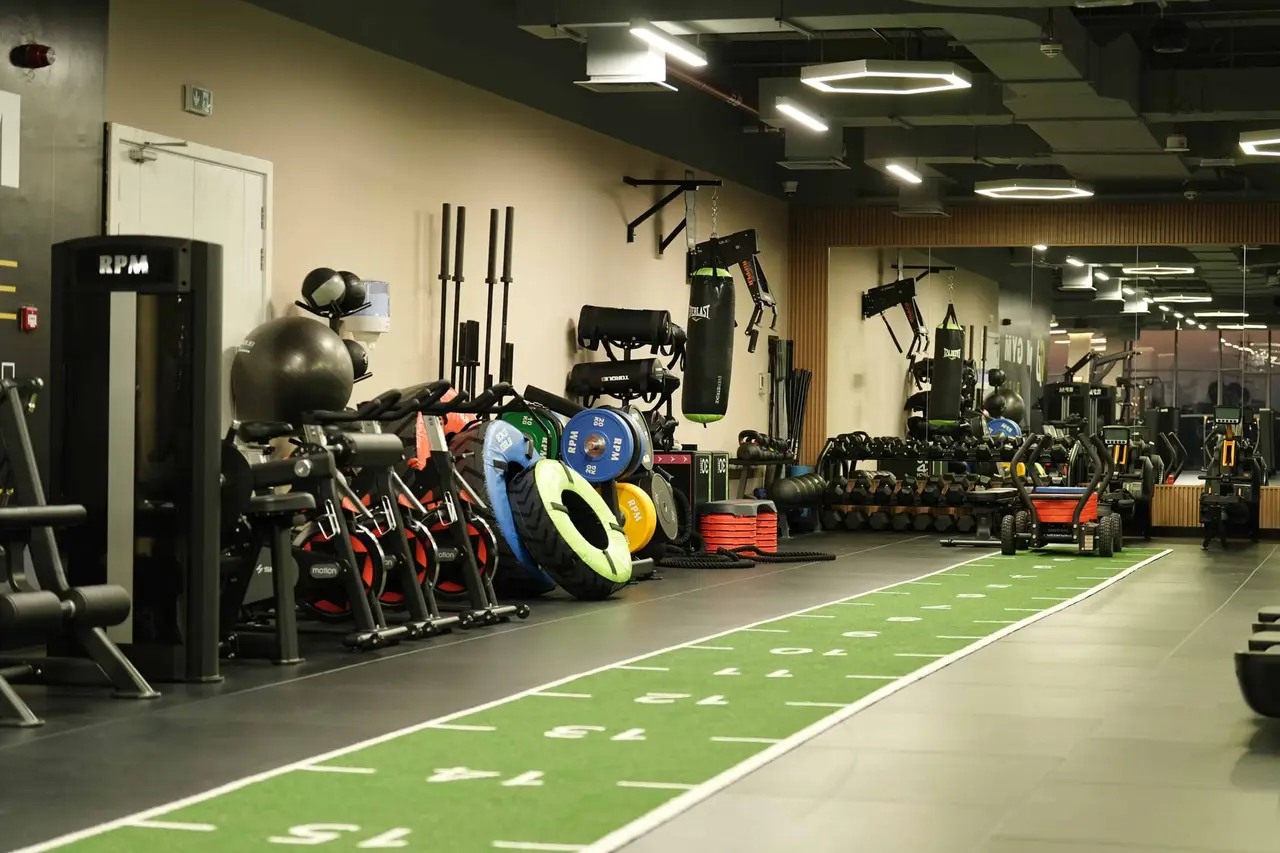
RPM's floor photos show a dumbbell rack and flat benches on the training floor in Al Manhal, which covers the standing, seated and alternating versions. A preacher bench is not in those photos, so ask on a free guided tour if you want to try the preacher version. A coach in a personal training session can watch your wrists through the lowering and set the weight with you.
Sources
Questions, answered.
What muscles does the Zottman curl work?
The biceps, the brachialis and the brachioradialis bend the elbow. The palms-down lowering adds the wrist extensors on top of the forearm, which hold the wrist straight, and the grip muscles work throughout.
Zottman curl vs hammer curl: which should I do?
The hammer curl keeps one neutral grip and usually takes more weight, so it is the simpler way to add brachialis and forearm work. The Zottman curl adds the palms-down lowering, which works the top of the forearm harder. Many people alternate them week to week.
Zottman curl vs bicep curl?
On the way up they are the same. The difference is the lowering: the bicep curl lowers palms-up and lets you use a heavier weight for the biceps, while the Zottman lowers palms-down, which caps the weight but brings in more forearm.
How heavy should Zottman curls be?
Heavy enough that the last palms-down lowerings are hard to control, light enough that your wrists stay straight. For most people that is a pair or two lighter than their bicep curl.
Are Zottman curls good for the forearms?
They are one of the more direct ways to train the brachioradialis and the wrist extensors alongside the biceps. Visible change comes from your whole programme and eating over time, not one exercise.
Should I do Zottman curls with a sore elbow?
Not until it has been checked. Pain at the elbow or wrist during curls is a reason to stop and see a doctor or physiotherapist, and once you are cleared to train they can tell you whether turning the grip suits you.