The answer in brief
A crunch makes a movement: the rectus abdominis shortens and curls your ribs towards your pelvis. A plank stops one: the same muscle, with the deep abdominal wall and the obliques, holds your trunk straight while gravity pulls your hips towards the floor. Coaches call the first flexion and the second anti-extension. Both work the front of the stomach; what differs is whether the muscle moves or holds, how you measure the work and what it carries over to.
Neither is the complete core exercise. The core training guide explains how holds, carries and the big lifts share the job, and the crunch vs sit-up comparison covers the choice between the two bending exercises.
Side by side
| What differs | Crunch | Plank |
|---|---|---|
| What the trunk does | Bends forwards through a short range | Stays straight and resists arching |
| Type of work | Moving reps | A hold, with nothing moving |
| Main muscles | Rectus abdominis, the front of the stomach | Rectus abdominis, the deep abdominal wall and the obliques, helped by the glutes and shoulders |
| How you measure it | Reps, then load once you add it | Seconds, and the version you hold |
| How it gets harder | Arm position, a plate, a decline, a cable stack | Feet together, elbows further forward, a plate on the upper back, fewer points of contact |
| How it breaks down | The neck takes over or the reps speed up | The hips sag or pike, or the breath goes |
| What it carries over to | Curling the trunk against resistance, as in a cable crunch or the top of a hanging leg raise | The brace under a bar, push-ups and carries |
| Body position | On your back | Face down, on forearms and toes |
| Kit | A mat; a plate or cable to load it | A mat; a partner for the weighted version |
Making a movement versus stopping one
In a crunch the rectus abdominis does what its shape suggests: it pulls the ribcage and pelvis towards each other and rounds the spine forwards a little. The range is small, but each rep moves the muscle against resistance, so you can load it like any other muscle-building exercise: once floor reps are easy, a plate or the cable crunch keeps it in a useful rep range.
In a plank the same muscle works without changing length. Gravity tries to drop your hips and arch your lower back; the front of the stomach, the deep muscle that wraps around your middle and the obliques at your sides tighten together to stop it, while the glutes hold the pelvis and the shoulders keep your chest from sinking. It is the brace you set before a heavy squat or deadlift, held on purpose, and the breathing and bracing guide shows how lifters learn to make it under a bar.
Your trunk does both jobs in the gym: it stays still under a bar and bends in exercises such as the hanging leg raise. That is why neither exercise cancels out the other.
Reps against seconds: the trap in each
How each one is counted shapes how it goes wrong. Crunches invite volume: sets of fifty, fast, with the neck doing the last thirty. Planks invite the clock: two- or three-minute holds where the second minute is spent with the hips sagging. In both cases the number grows while the exercise stops being the exercise.
The fix is the same idea applied two ways. For crunches, make each rep harder rather than the set longer: slow down, pause at the top, take the arms overhead, then add a plate. For planks, make the hold harder rather than longer: once three holds of about forty-five seconds feel easy, bring the feet together, walk the elbows slightly forward, or switch to side planks or shoulder taps, and go back to shorter holds. Beyond that, the ab wheel rollout is a plank that moves.
| Next step when… | Crunch | Plank |
|---|---|---|
| The basic version feels easy | 3 × 20 slow, paused reps | 3 holds of about 45 seconds with a clean line |
| First harder version | Arms reaching back beside the ears | Feet together, elbows slightly forward |
| Then | A light plate on the chest | Shoulder taps from a high plank, or side planks |
| Loaded and measurable | Cable crunch, 3 × 8–15 | A plate across the upper back, placed and lifted off by a partner, 20–30 seconds |
| The next exercise | The hanging leg raise, curling the pelvis at the top | The ab wheel rollout |
Which one to choose
Choose the crunch when
The abdominal muscles themselves are the goal, you already brace well in your heavy lifts, and you want a core exercise you can track in reps and load. It also suits anyone who finds planks uncomfortable on the elbows or shoulders, provided crunches feel fine.
Choose the plank when
You are new to training and need to learn to brace before anything heavy, your hips sag in push-ups, or you prefer exercises that keep the spine still. It needs no set-up, and a beginner can start from the knees or with the forearms on a bench.
Keep both when
You train two or three times a week and want a short core block that covers more than one job. A hold and a bending exercise together take under ten minutes, and the dead bug or a side plank can rotate in for variety.
One core block, three ways to run it
Core work usually goes at the end of a session, so your trunk is fresh for squats and deadlifts. Two or three sets of each exercise is enough: the aim is quality, not exhaustion.
| Layout | How it runs | Time |
|---|---|---|
| Paired circuit | Plank 30–45 seconds, rest 30 seconds, crunches 12–20 reps, rest 30 seconds; three rounds | About seven minutes |
| Alternating sessions | Front and side planks on one training day, loaded crunches on the next | Five or six minutes each |
| Beginner start | Knee or bench plank 3 × 15–20 seconds, then crunches with arms crossed 2 × 10 | About five minutes |
If your plank line or your crunch tempo falls apart by the third round, shorten the hold or cut the reps rather than pushing through.
Two or three blocks a week, after your main lifts, suit most people; neither exercise needs to be done daily. Log both, hold times with the plank version and reps with any load on the crunch, so you can see which one is actually progressing.
Crunches and planks at RPM
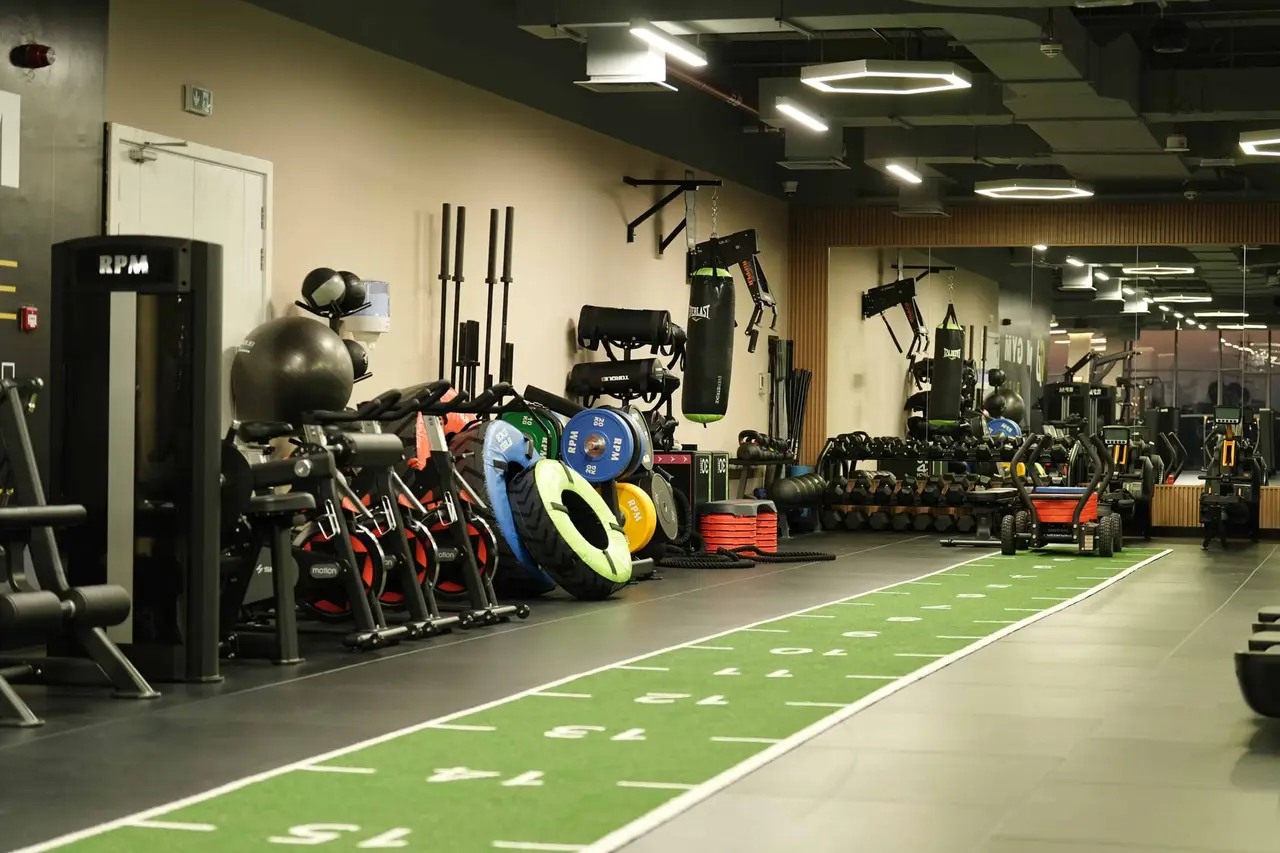
Both need nothing more than a mat and a clear patch of floor. RPM's floor photos show multi-station cable towers, where the cable crunch and the Pallof press are the next steps, and colour bumper plates for a weighted crunch or plank. An ab wheel, an ab crunch machine and a bar to hang from are not confirmed in the photos, so ask about them on your free guided tour. A personal training session is a quick way to have a coach check your plank line from the side and your crunch range from the front.
Questions, answered.
Is a plank better than crunches for a flat stomach?
No exercise takes fat off the stomach in particular, so neither wins on that. Both strengthen the muscles there; your waistline follows overall body fat, which responds to eating and activity rather than to the choice between these two.
Can planks replace crunches?
For many people, yes. If you plank, carry and lift, your trunk is well trained without a bending exercise. Keep crunches if you want the front of the stomach to work through movement too, or you like loading it.
How long should I plank, and how many crunches should I do?
Holds of 20–45 seconds with a clean line and sets of 12–20 slow crunches suit most people, two or three sets of each. Past that point, make the version harder rather than the number bigger.
Which should a beginner start with?
Usually the plank, from the knees if needed, because it teaches the brace you will use in every heavy lift. Crunches can join a few weeks later.
Should I do crunches or planks every day?
There is no need. Two or three short core blocks a week, after your main lifts, are enough for most people.
What if planks or crunches cause pain?
Stop, and speak to a doctor or physiotherapist first. During pregnancy or after giving birth, ask your doctor or midwife which core exercises suit you.