What a wall sit trains, and what it does not
A wall sit is an isometric exercise: the muscles work hard but nothing moves. Holding the knees bent against your bodyweight is the job of the quads, and they do nearly all of it, with the glutes and adductors helping to hold the hips. The wall takes care of balance and back position, so the only question is how long the front of your thighs can keep going. That is why the burn arrives so quickly, and why the wall sit is a favourite end-of-session finisher and a staple of home and pre-ski conditioning.
What it does not do is train you to move a load through a full range. Strength built in a hold tends to carry over mostly to positions close to the one you held, so use the wall sit alongside squats, presses and split squats rather than instead of them. The quad training guide covers the moving exercises it complements.
Setting up against the wall
- Find a smooth, flat wall with clear floor in front of it, and wear shoes that grip: socks on a smooth floor will slide.
- Stand with your back against the wall and your feet hip-width apart, about a long step out from it.
- Slide down until your thighs are parallel to the floor, or stop higher for your first attempts.
- Adjust your feet until your shins are upright and your knees sit directly above your ankles.
- Let your arms hang by your sides or cross them over your chest. Resting your hands on your thighs takes weight off the legs.
How to hold it
- Press your lower back, upper back and the back of your head gently into the wall.
- Spread your weight through your heels and the middle of each foot, toes relaxed.
- Keep your knees pointing the same way as your toes, neither pinched together nor flared apart.
- Breathe slowly and evenly, counting breaths if it helps you keep going.
- To finish, slide back up the wall or walk your feet in and stand, rather than dropping to the floor.
Do not hold your breath. Long holds tempt you to clench and strain, which only makes the effort feel worse; breathe steadily through the whole hold. A burning feeling in the thighs is expected and fades within a minute or two of stopping; sharp or lingering pain in or around the kneecap is a reason to stop and have it checked by a doctor or physiotherapist.
Mistakes to fix first
| Mistake | What it looks like | The fix |
|---|---|---|
| Feet too close to the wall | The knees push out past the toes and the heels feel light | Walk the feet out until the shins are upright |
| Feet too far out | You keep sliding down and the knees sit behind the ankles | Bring the feet in a little and set up again |
| Propping on your hands | The hands press on the thighs and the arms take some of the load | Cross the arms or let them hang |
| Holding your breath | Your face reddens and the hold ends in a gasp | Breathe steadily and count the breaths |
| Creeping upwards | The thighs rise above parallel as you tire | Hold a lower angle for less time, and match that angle next session |
Harder versions
Once a minute at parallel feels comfortable, make the hold harder rather than only longer: holds of several minutes test patience more than the quads.
Single-leg wall sit
From a normal wall sit, shift your weight onto one leg and lift the other foot just off the floor, or straighten that leg out in front. The working leg now carries everything, so start with holds of ten to twenty seconds and expect them to feel much harder than half a two-legged hold. Comparing sides also shows whether one leg tires first.
Ball squeezed between the knees
Place a medicine ball, a soft ball or a foam block between your knees and squeeze it for the whole hold. The inner thighs join in, and the squeeze stops the knees drifting apart. Press firmly enough to keep the ball in place, but not so hard that your hips shift off the wall.
Holding a plate on the thighs
Pick up a weight plate before you slide down, rest it flat across your thighs close to your hips rather than on your knees, and hold it with both hands. Add load in small steps and lift the plate off before you stand. A training partner can hand it to you once you are in position.
No clear wall? Hold the bottom of a goblet squat for time, or try a horse stance, a wide-legged hold from martial arts. To load the quads through a full range instead, the leg extension and the step-up are the closest gym options.
How long to hold, and how to progress
| Goal | Sets × hold | How hard |
|---|---|---|
| First attempts | 3 × 20–30 seconds | Stop while your position is still unchanged |
| Building endurance | 3–4 × 30–60 seconds | The last few seconds are hard, but the angle does not change |
| Finisher after leg day | 1–2 holds, as long as your form lasts | Close to your limit, still breathing steadily |
Rest about a minute between holds, and a little longer after a finisher.
Add five to ten seconds a week. Beyond about a minute, sit slightly lower or move to a single-leg or weighted version instead of chasing time. The wall sit test, a single hold timed until your position breaks, is a simple way to track quad endurance: repeat it every few weeks under the same conditions and compare only with your own previous result.
Wall sits at RPM
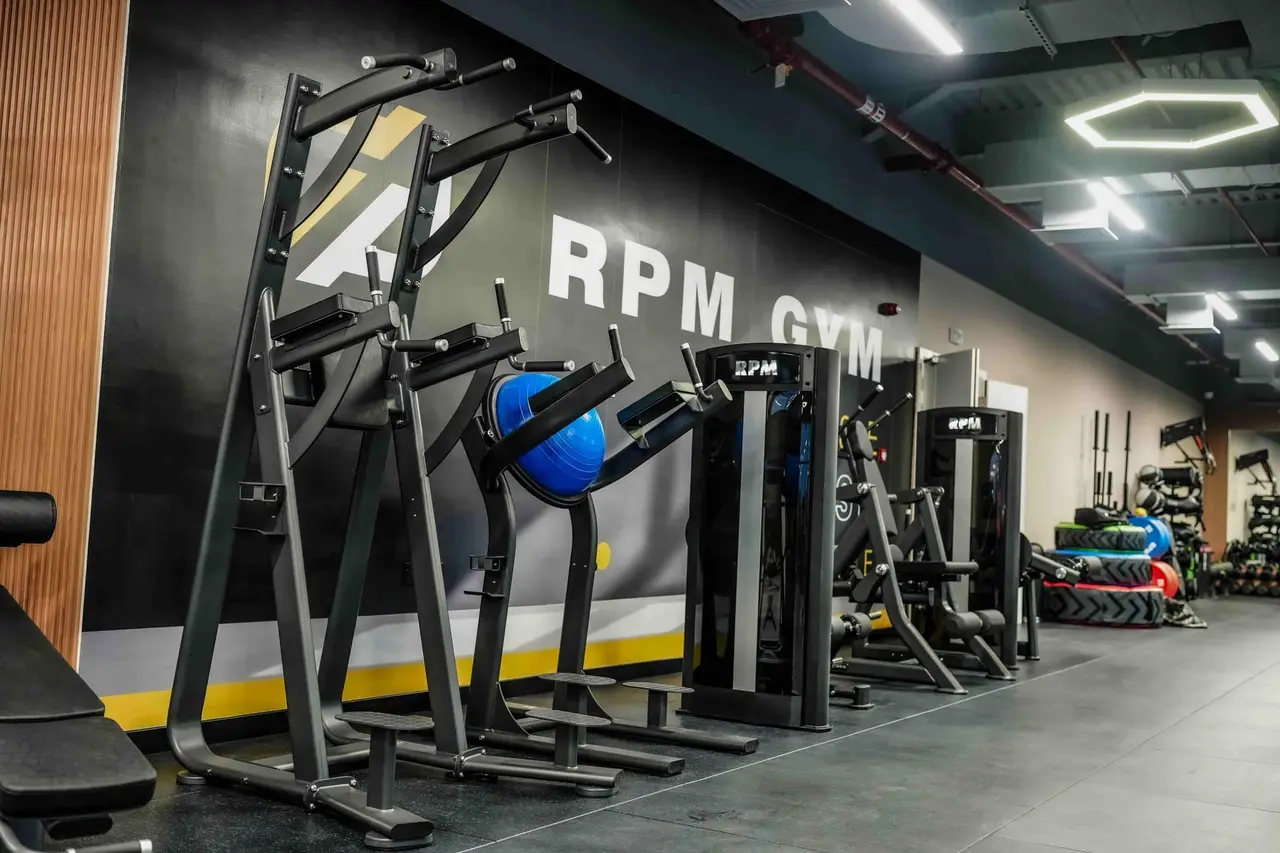
All you need is a clear stretch of wall, so ask the team where you can hold one without blocking the training floor. The colour bumper plates in RPM's floor photos work for the weighted version, and the medicine balls on the ball rack in the functional zone suit the squeeze version. For a full leg plan built around your goals, see personal training.
Questions, answered.
What muscles do wall sits work?
Mainly the quads, which hold the knees bent. The glutes and inner thighs help, and the calves and trunk work lightly to keep you in place.
How long should I hold a wall sit?
Start with three holds of twenty to thirty seconds and build towards a minute. Going much longer adds little; switch to a single-leg or weighted version instead.
Wall sit vs squat: which is better?
They do different jobs. A squat moves load through a full range and builds strength you can use elsewhere; a wall sit builds endurance at one angle with no equipment. Make squats the main exercise and wall sits the add-on; the back squat page covers the barbell version.
What are the benefits of wall sits?
They need no equipment, take seconds to set up, are easy to scale by changing the angle or the time, and give the quads a hard, measurable workout. They are not a shortcut to weight loss or a fix for knee problems.
Is a wall sit the same as a squat hold or a Spanish squat?
They are close relatives. A squat hold is the same position without the wall, so your trunk and balance work harder. A Spanish squat holds a similar angle with a heavy band looped behind the knees and anchored in front, letting you sit back with upright shins. All three load the quads without movement; the wall sit is the simplest to set up.