The answer in brief
Both machines are seated, both support your back and both guide the path, so they can look like two takes on the same exercise. The difference is what your elbows do. On the chest press machine your hands travel straight forward and the elbows open from bent to nearly straight, so two joints move: the shoulder and the elbow. On the pec deck the arms sweep round an arc while the elbows hold one angle, so only the shoulder moves. That single difference decides which muscles share the work, how much weight you can use and where each machine belongs in a session.
So the choice is rarely one or the other. It is a question of order, and of what your week is missing, which is how the chest training guide combines presses and flyes.
Side by side
| What differs | Chest press machine | Pec deck |
|---|---|---|
| Type of movement | A press: shoulder and elbow both move | A fly: only the shoulder moves |
| What the elbows do | Bend, then straighten as you push | Hold one angle throughout |
| Muscles working | Chest, with the triceps and front shoulders helping | Chest, with the front shoulders assisting and the triceps left out |
| Load you can use | Heavier: three muscle groups share it | Much lighter: the chest works on a long lever |
| What usually ends the set | The chest or the triceps, whichever tires first | The chest, since nothing else shares the work |
| Key settings | Seat so the handles meet mid-chest; start position; grip | Seat so the arms travel just below the shoulders; start position |
| Place in a session | First or second chest exercise | After the presses |
| If it is taken | Dumbbell bench press or a cable chest press | A chest-height cable crossover |
Why the elbow changes everything
The chest muscle attaches to the upper arm, not the forearm, so its job is the same on both machines: bring the upper arm forward and in. On the press, the triceps straighten the elbow at the same time, which lets your hands push a load with three muscle groups working together. That is why you can select far more weight on a chest press than on a pec deck, and why the press suits adding load steadily over months.
On the pec deck the triceps have nothing to do. The pads or handles sit far from the shoulder, so the same plate feels much heavier, and the whole effort falls on the chest and the front of the shoulder. That makes the fly a way to add chest work without adding triceps fatigue, which matters if presses, dips and triceps exercises already load the back of your arm several times a week.
Neither is the better chest exercise on its own terms. The press moves more weight and trains the pushing pattern; the fly gives the chest work it does not have to share. A week with both gets the heavy loading of one and the targeted work of the other.
Which goes first: what a 2007 study tested
Gym lore offers two orders. Pre-exhaustion puts the fly first, to tire the chest so that it supposedly works harder in the press that follows; the priority principle puts the press first, while you are fresh. A 2007 study tested exactly this pairing: 13 men with recreational training experience did one set of pec deck and one set of chest press, both at a load they could lift ten times, in each order.
Total reps and total work came out much the same either way, and chest activity on the pec deck did not change with its position. What changed was the press: done after the pec deck, it drew significantly more on the triceps, while the pre-tired chest was no more active. The authors concluded that pre-exhaustion was no more effective at activating the pre-tired muscle, and that the exercise you most want to perform well should come first in the session.
One set of each, in 13 men, with muscle activity read by electromyography, is a small window. Read it as a reason to put the press first by default, not as a rule that the fly can never lead.
Picking for the session in front of you
Choose the chest press machine when…
it is your main chest exercise of the day, you want to add load in measurable steps over the weeks, you are new and want to learn to press without balancing a bar, or you want heavier machine sets after a free-weight press.
Choose the pec deck when…
your presses are done and you want more chest work without more triceps work, your triceps give out before your chest on presses, or you want to take a set close to failure on a fixed path at the end of a session.
Only time for one?
Choose the press. It trains the chest together with the triceps and front shoulders, so it covers more in a single exercise; a fly on its own leaves the pushing pattern untrained.
A chest session that uses both
| Session | Press | Then the fly |
|---|---|---|
| Machines only | Chest press machine 3–4 × 8–12 | Pec deck 2–3 × 12–15 |
| Free weights first | Bench or dumbbell press 3–4 × 6–10, then chest press machine 2 × 10–12 | Pec deck 2 × 12–20, close to failure |
| One machine is busy | Dumbbell bench press 3 × 8–12 in place of the chest press | Cable crossover at chest height 2–3 × 12–15 in place of the pec deck |
Rest about ninety seconds after press sets and a minute after fly sets. Both machines fix the path, so they are reasonable places to take a set close to failure once your reps are smooth.
Note the seat and start-position settings for both machines beside your weights. The two numbers are not comparable: one load is shared by three muscle groups on a short lever, the other is carried by the chest alone on a long one, so expect the pec deck figure to be far lower and judge each only against its own log.
Chest press and pec deck at RPM
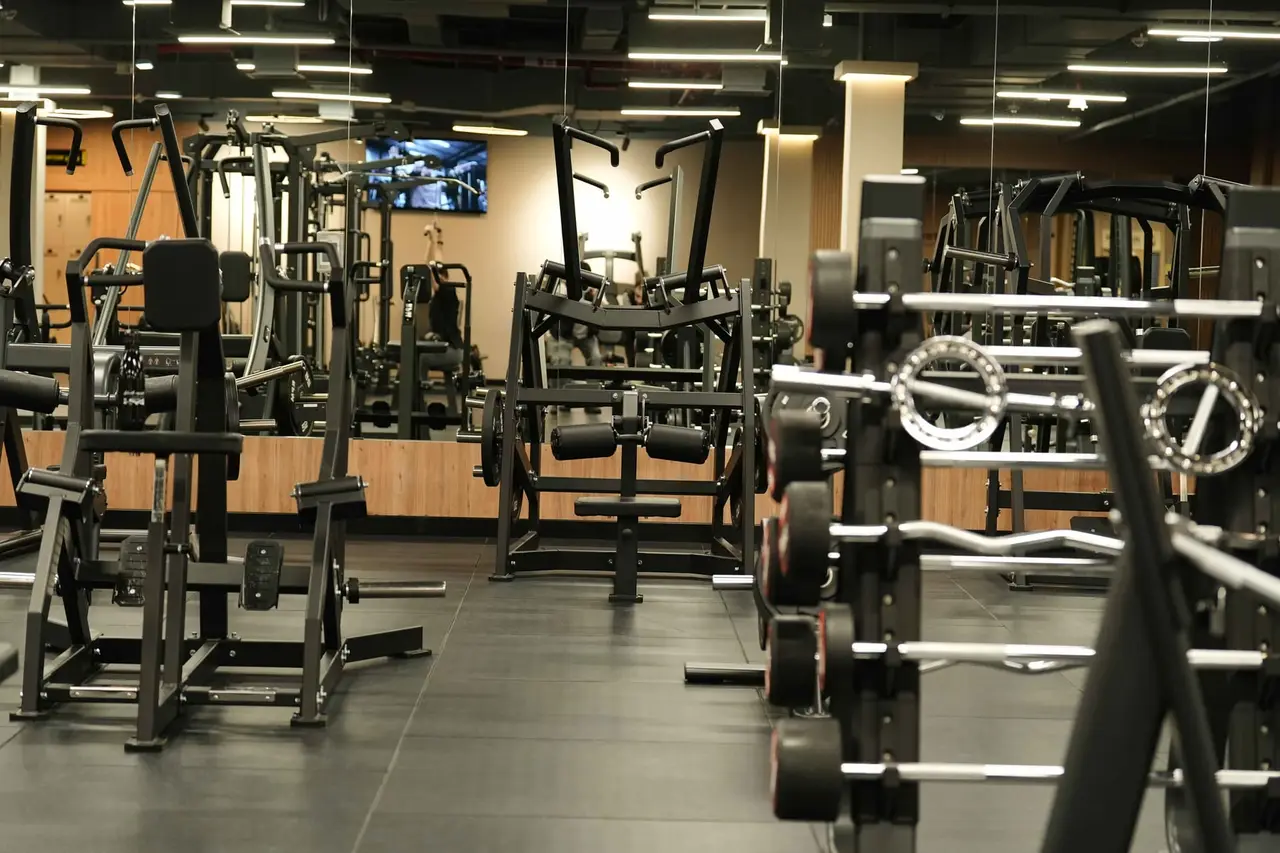
RPM's floor photos show plate-loaded machines and multi-station cable towers on the training floor in Al Manhal, but they do not confirm which models are there, so ask on your free tour whether there is a chest press machine and a pec deck. The cable towers in the photos can stand in for both: a cable chest press for the press and a cable crossover for the fly. A personal training session can set both seats for your build.
Sources
Questions, answered.
Is the pec deck a chest press?
No. A press straightens the elbows; the pec deck keeps them at one angle and sweeps the arms together. Both are chest exercises, but only the press uses the triceps.
Which builds more chest muscle, the chest press or the pec deck?
Either can, trained hard and consistently. The press lets you use far more load and trains the triceps as well; the pec deck adds chest work without them. That is why the chest training guide puts a press first and a fly after it.
Why can I lift so much less on the pec deck?
The pads or handles sit far from your shoulder, so the lever is long, and the triceps cannot help. A low number on a fly is normal and says nothing about your pressing strength.
Can I superset the chest press and the pec deck?
Yes, if you know what it does: going straight from one to the other tires the chest further, and the second exercise will need a lighter weight. If the press is your priority, keep it first.
Which should a beginner start with?
The chest press, because it teaches the pushing pattern every other press uses. Add the pec deck as a second chest exercise once the press feels settled; both are quick to learn, since the machine guides the path.
Pec deck or cable fly for the fly slot?
Either does the job. The dumbbell fly, cable crossover and pec deck comparison covers how the three flyes differ.