The answer in brief
Both exercises draw the upper arms back and out from in front of you, which is the rear deltoid's job. The rear delt fly does only that: the elbows keep a fixed, soft bend, the arms move as long levers and the shoulder blades stay wide, so the rear delts are the muscle that limits the set. The face pull adds three things on top: the elbows bend as the rope comes in, the shoulder blades squeeze together, and the upper arms rotate outward at the finish. Each addition brings in more muscles and spreads the work.
So the choice comes down to whether you want the rear delts isolated or trained as part of the whole upper back. The shoulder exercise guide shows where both fit beside presses and raises, and each exercise's own page covers its technique.
Side by side
| What differs | Face pull | Rear delt fly |
|---|---|---|
| What the arms do | Pull back and apart as the elbows bend, then rotate outward | Sweep out to the sides with a fixed, soft elbow bend |
| Shoulder blades | Draw together towards the finish | Stay wide and fairly still |
| Main muscles | Rear delts, the muscles between the shoulder blades and the rotator cuff muscles that turn the arm outward | Rear delts, with the upper back and traps helping |
| Body position | Standing upright, or kneeling or seated below the pulley | Bent over, seated and leaning forward, chest on an incline bench, or facing a machine |
| Demand on the lower back | Little | Holding the hinge in the bent-over version; none with the chest supported |
| Equipment | A cable with a rope, or a band | Dumbbells, two cables or a reverse pec deck |
| Where the effort peaks | At the finish, hands beside the ears | With dumbbells, at the top, arms level with the shoulders; cables keep tension through more of the arc |
| Load | Light, though usually more on the stack than a cable reverse fly | Very light: the long arm makes a small weight feel heavy |
| One arm at a time | Possible with a single handle, but the rope version uses both hands | Easy with a dumbbell or a single cable |
| Common fault | Elbows dropping so it becomes a row; no rotation at the end | Elbows bending so it becomes a row; standing up as you lift |
| Level | Beginner | Beginner |
Bent elbows, a squeeze and a rotation: what each one adds
Bending the elbows shortens the lever. In a fly the weight sits at the end of a nearly straight arm, far from the shoulder, so a light dumbbell is plenty; in a face pull the hands travel in towards the face, so the same muscles can handle more weight. The squeeze of the shoulder blades brings in the middle trapezius and rhomboids, which a fly deliberately leaves out by keeping the blades wide. And the outward rotation at the finish recruits the small rotator cuff muscles at the back of the shoulder, which the fly barely asks for.
Each of these differences can also blur one exercise into the other. Bend the elbows more and squeeze the blades on a fly, and it turns into a rear-delt row: a useful exercise, but a different one. Let the elbows drop and skip the rotation on a face pull, and it becomes a high row to the chest. Decide which exercise you are doing and hold its shape for the whole set; that matters more than which one you chose.
What neither exercise can promise
Face pulls in particular are often sold as a fix for rounded shoulders, and both exercises as shoulder-health work. This page makes neither claim. What they do, plainly, is give the back of the shoulder and the upper back direct work, which is worth having in a week full of pressing, where the front of the shoulder does much of the work. Neither is a posture treatment, and neither replaces a check when something hurts: if a shoulder is painful, or the face pull's finish position pinches, stop and see a doctor or physiotherapist before you carry on.
Who should pick which
The face pull suits you if…
You want one exercise to cover the rear shoulders and the upper back on a busy day; you like a couple of light sets before pressing, alongside the rest of your warm-up; holding a bent-over position tires your lower back; or a cable station with a rope is to hand.
The rear delt fly suits you if…
The rear shoulders are what you want to build and your upper back already gets plenty from rows; you train with dumbbells and a bench; you want to work one arm at a time; or a reverse pec deck is available, which makes the fly very easy to set up. Keeping the shoulder blades still also makes it easier for some people to feel the rear delts working.
If you can only fit one
Take the face pull if your week has few rows, because it covers more of the upper back. Take the fly if you already row and pull down several times a week: those exercises train the muscles between the shoulder blades, and the fly adds the rear-delt work they tend to leave short.
Fitting both into a week
Because they overlap only partly, the two pair well. Three ways to arrange them:
| Week | Face pull | Rear delt fly |
|---|---|---|
| Two upper-body days | Day A, after the rows: 3 × 15 | Day B, after the presses: 3 × 15–20 |
| Push, pull, legs | Push day: 2 × 15–20 before pressing, well short of failure | Pull day: 3 × 12–20 at the end |
| One shoulder session | Second: 2 × 15–20 with a one-second hold | First: 3 × 15–20, strict |
Rest about a minute between sets. Count both as rear-shoulder work, and remember that rows add some too; the hypertrophy volume calculator helps you add it up.
Both are small-muscle exercises, so progress them in reps, pauses and a slower lowering before you add weight. One step up the dumbbell rack can be a large jump on a fly done at arm's length; the cable versions of both move in smaller steps, which is a good reason to switch to the cable reverse fly when the dumbbells stall.
Swaps when the cable or the dumbbells are busy
- No cable available for the face pull: a band anchored at head height copies it. Without a band, a bent-over fly for the rear delts plus a wide-grip row for the upper back covers both halves.
- No dumbbells for the fly: a cable reverse fly with the cables crossed, or a reverse pec deck where the gym has one.
- Both busy: a wide-grip bent-over row, elbows flared and the bar pulled towards the upper chest, loads the rear shoulders and the upper back together.
- Want the chest supported: lie face down on an incline bench for the fly, which needs a bench that adjusts.
Face pulls and rear delt flies at RPM
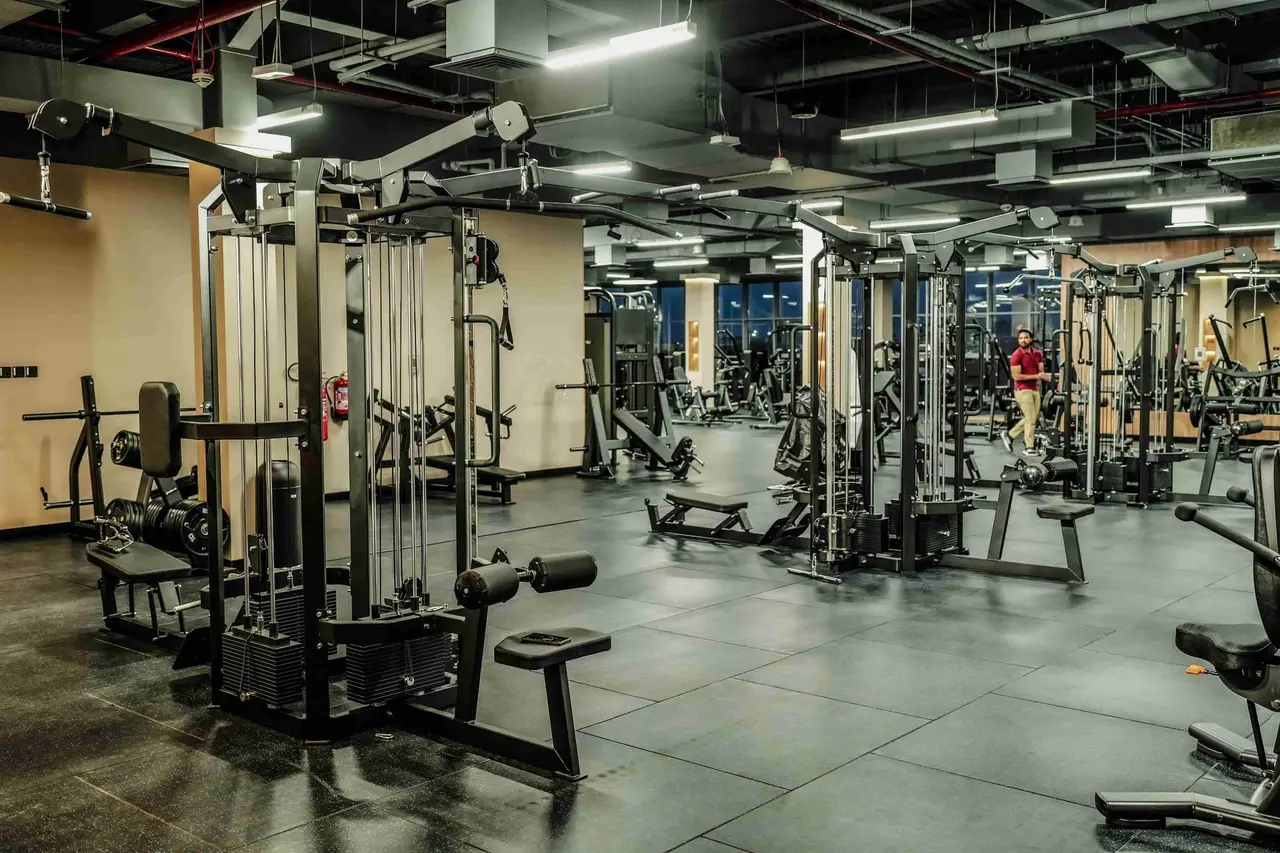
RPM's floor photos show multi-station cable towers, a dumbbell rack and flat benches on the training floor in Al Manhal, which covers the face pull, the bent-over and seated flies and the cable reverse fly. A reverse pec deck and an adjustable incline bench do not appear in the photos, so ask on your free tour what the floor has, and which attachments each cable station carries. A personal training session can check your elbow height on the face pull and your arm path on the fly.
Questions, answered.
Face pull or rear delt fly: which is better for rear delts?
For the rear delts on their own, the rear delt fly, because the long arm and still shoulder blades keep the work there. For the rear delts together with the upper back and the muscles that turn the arm outward, the face pull.
Do face pulls fix posture?
We do not make that promise. Face pulls train the rear shoulders and the muscles between the shoulder blades, which is worth doing in its own right, but they are not a posture treatment. If rounded shoulders come with pain or stiffness, see a doctor or physiotherapist rather than adding sets.
Can I do face pulls and rear delt flies in the same session?
Yes. Put the one that matters more to you first. Common pairings are a few sets of flies followed by face pulls, or light face pulls before pressing and flies at the end.
Face pull or rear delt fly for a beginner?
Either; both are rated beginner. The face pull is done standing upright with the cable guiding the path; the fly is simplest on a reverse pec deck, or seated with your chest towards your thighs. Keep both light enough to pause at the finish.
Is the reverse pec deck a face pull or a rear delt fly?
A rear delt fly. It sweeps the arms back in an arc with the chest supported and the elbows nearly straight, and it is the easiest version to load where a gym has one.
How heavy should face pulls and rear delt flies be?
Light. If you have to lean back on a face pull, or swing your torso on a fly, to finish a rep, the weight is too heavy. Expect to use noticeably more on the face pull than on a cable reverse fly.