The short answer
Both are cable pulls done seated, both use the lats and the biceps, and they often sit side by side on the same tower. The difference is direction. On the lat pulldown your arms start overhead and come down to your sides; on the seated cable row they start out in front of you and come back to your sides. That one change decides which muscles do the most work, how far each one travels and how much weight you can move.
It is also why coaches describe a back session as a vertical pull plus a horizontal pull, usually with a hinge. The back training guide builds the week around that idea. This page explains why the two pulls are not interchangeable, and how to arrange them.
Side by side
| What differs | Lat pulldown | Seated cable row |
|---|---|---|
| Direction | Vertical: from overhead down to the upper chest | Horizontal: from in front back to the stomach |
| Main muscles | Lats first; biceps, upper back and rear shoulders help | Upper back (middle trapezius, rhomboids) and lats; biceps and rear shoulders help |
| Shoulder blades | Drawn down | Drawn back together |
| What holds you | Thigh pads over your legs | Your feet on the platform and your own trunk |
| Lower back | Little demand | Holds you upright, more so if you rock |
| Learning curve | Low | Low, though a still torso takes practice |
| Typical load | Usually the lighter of the two | Usually the heavier |
| Carries over to | Pull-ups and other overhead pulling | Barbell, dumbbell and machine rows |
How each one loads the back
The lats attach to the upper arm and fan out down the back to the pelvis, so they work hard whenever the arm is pulled down or back towards the body. That is why they take part in both exercises. On the pulldown the arm travels from overhead down the side of the body, a path in which the lats are the prime movers, while the muscles between the shoulder blades mostly hold the blades down.
On the row the arm travels backwards from in front of you, and the shoulder blades squeeze together at the finish. That squeeze is the job of the middle trapezius and the rhomboids, so they carry a bigger share, while the lats contribute more the closer your elbows stay to your sides. A close neutral handle tucks the elbows and brings the lats in; a wide bar flares them and moves the work to the upper back and rear shoulders. On the pulldown, by contrast, grip width changes less than most people expect.
Why the numbers differ
Many people row noticeably more weight than they pull down, and that is normal. On the row your legs brace against the platform and your trunk holds you, the upper-back muscles are strong in that position, and the two stations may use different pulley set-ups. Keep each lift's numbers as a separate record: a gap between them says more about the machines and the angles than about your back, so there is nothing to fix by trying to make them match.
When to choose each
Lean on the pulldown when:
- You are working towards pull-ups and want to load the same direction of pull.
- The lats, the muscles that give the back its width, are your priority.
- You want your legs pinned and your trunk supported, for example when your lower back is tired.
Lean on the seated row when:
- You want more work for the muscles between your shoulder blades.
- You press a lot and want a pull in the opposite direction to balance it.
- You want a pull that carries over to free-weight rows such as the bent-over row.
Order, pairing and a sample week
Row or pulldown first? Put first the one you most want to progress, while you are freshest, and swap the order between sessions if you train your back twice a week. Neither order is wrong, as long as both get hard sets.
| Session | First | Then |
|---|---|---|
| Back day A | Lat pulldown, 3–4 × 8–12 | Seated cable row with a V-handle, 3 × 10–12 |
| Back day B | Seated cable row with a wide bar, 3–4 × 8–10 | Underhand or close-grip pulldown, 3 × 10–12 |
Rest about ninety seconds between sets. In a full-body plan, keep one pulldown and one row in each session at two or three sets each; the training volume calculator totals your weekly pulling sets.
Both at RPM
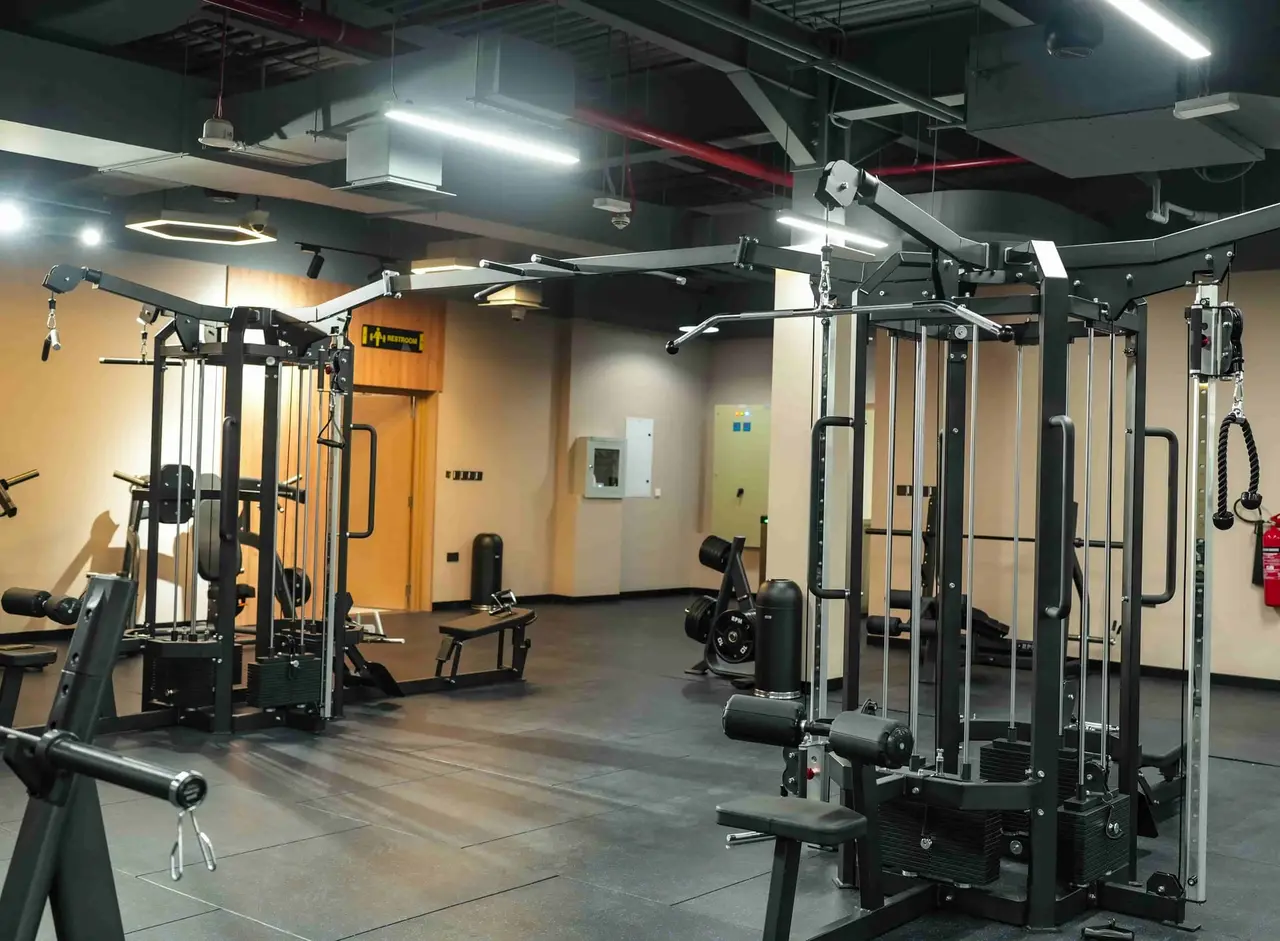
RPM's floor photos show multi-station cable towers with a pulldown seat and thigh pads on the training floor in Al Manhal. Which station is set up for low rows, and which handles are on the rack, is easiest to check on a free guided tour. To have a coach set your torso angle on both and choose your starting weights, book a personal training session.
Questions, answered.
Which is better for the lats, the pulldown or the row?
The pulldown, for most people, because its arm path makes the lats the main movers. A seated row with a close neutral handle and the elbows tucked comes close.
Is the lat pulldown or the seated row better for women?
Neither. The muscles and the exercises are the same for everyone, and most programmes, for women and men alike, include both.
Can I skip one of them?
Keep one pull in each direction rather than these two exercises in particular. If the pulldown is busy, a pull-up or the straight-arm pulldown covers the vertical side; if the row is busy, a dumbbell row or a chest-supported row covers the horizontal.
Lat pulldown or row machine?
A row machine with a chest pad is a horizontal pull, so it pairs with the pulldown exactly as the cable row does. The pad holds you, which suits heavy sets or the end of a session.
Why does my lower back feel the seated row?
Usually because you are rocking to move the weight. Lighten it, sit tall and hold one torso angle. If your lower back hurts during or after the row, stop and have it checked by a doctor or physiotherapist.