Why cross behind: what the curtsy lunge trains
In an ordinary lunge the front thigh points straight ahead. In a curtsy lunge the back leg crosses behind it, so the front thigh angles slightly inward relative to the pelvis. That small change matters. The gluteus medius and minimus, the muscles at the side of the hip that hold the pelvis level whenever you stand on one leg, now work from a lengthened position to stop the hip dropping and the knee falling inward. The front leg's gluteus maximus and quads still do the lifting, the inner thigh helps, and the trunk stops you twisting.
That is why it appears in glute-focused plans: it adds side-hip work to a lunge you can load with dumbbells, without a machine or a band. With bodyweight it is a beginner's exercise; with dumbbells it works as the second or third leg exercise of a session. It complements a heavy squat or hip thrust rather than replacing one. The glute exercises guide shows how side-hip work fits around the bigger lifts.
Setting up
- Clear a patch of floor about a stride long behind you and a little to each side.
- Stand tall with your feet hip width apart and your weight even. Fix your eyes on a point ahead: your hips should keep facing it for the whole set.
- Start with bodyweight and your hands on your hips, so you can feel whether the pelvis turns.
- When you add load, hold a dumbbell in each hand at your sides, or one dumbbell upright at your chest. Pick a weight you could use for twelve reps a side with two to spare; it is usually lighter than for a reverse lunge, because balance limits you sooner.
How to do a curtsy lunge
- Shift your weight onto the front foot. Step the other foot back and across behind it, landing on the ball of the foot behind and just outside the front heel.
- Lower straight down until the back knee is a hand's width above the floor. Both knees bend, the front shin stays close to vertical, and your torso stays tall or tips slightly forward.
- Keep the front knee pointing the same way as the front toes, over the middle of the foot, rather than drifting towards the big toe or across your body.
- Keep the hips square to the front. The crossing comes from the back leg moving across, not from the pelvis turning open.
- Push through the whole front foot, heel and midfoot, to stand and bring the back foot home. Finish all reps on one side, or alternate.
Picture the front foot at the centre of a clock face with twelve straight ahead. When the right leg crosses behind the left, the right foot lands at about seven or eight o'clock; when the left crosses behind the right, at about four or five. Cross too far and the hips twist and balance goes; not far enough and it is an ordinary reverse lunge. Breathe in as you step back and out as you drive up.
Curtsy lunge mistakes
| Mistake | What it looks like | The fix |
|---|---|---|
| Hips turning open | The pelvis rotates to face the side as the back leg crosses | Cross a little less and keep both hip bones pointing forward |
| Front knee falling inward | The knee drifts towards the big toe or across the body | Push the knee out over the middle toes; lighten the load if you need to |
| Crossing too far | The feet end up in line, as on a tightrope, and you wobble | Land the back foot just outside the front heel, not far beyond it |
| Front heel lifting | Your weight runs onto the toes of the front foot | Step further back so the front shin can stay upright |
| Leaning sideways | The shoulders tilt towards the front leg's side | Stand tall and keep the shoulders level |
| Back knee crashing down | The knee thuds onto the floor | Lower under control and stop just above it |
Bodyweight, goblet and dumbbell versions
Bodyweight curtsy lunge
Hands on hips or arms out in front. It works as a warm-up and as the place to learn the step; once you can do fifteen steady reps a side with level hips, add weight.
Goblet curtsy lunge
Hold one dumbbell upright at your chest. The load in front helps you stay tall and keep the hips square, so many people find this the steadiest loaded version.
Dumbbells at your sides
A dumbbell in each hand takes the most load and works your grip as well. Keep the arms long and let the dumbbells hang straight down rather than swinging across with the step.
Short on balance? Hold a rack upright with one hand while you learn the step, then let go. The lunge page covers the forward, reverse and walking versions, and the lateral lunge trains the side-to-side direction.
Curtsy lunge vs reverse lunge, lateral lunge and Bulgarian split squat
| Exercise | Direction of the step | What it emphasises |
|---|---|---|
| Curtsy lunge | Back and across, behind the front leg | Front-leg glutes, with extra side-hip work to hold the knee and pelvis in line |
| Reverse lunge | Straight back | Front-leg quads and glutes; the easiest to load and balance |
| Lateral lunge | Out to the side | The inner thighs, plus the quads and glutes of the bent leg |
| Bulgarian split squat | No step; back foot on a bench | Front-leg quads and glutes under the heaviest single-leg load |
A balanced leg week can include more than one direction. If you have room for only one single-leg exercise, the Bulgarian split squat or the reverse lunge takes more load; add the curtsy lunge when you want more side-hip work.
Who it suits, and who should pick something else
- It suits anyone who wants more glute and side-hip work from a lunge, from beginners using bodyweight to lifters adding it after squats or hip thrusts.
- Pick the reverse lunge first if you cannot yet keep your balance, or keep the front knee in line, in a straight-back step; the curtsy lunge is harder on both counts.
- If a knee or hip already hurts, or the crossing step brings on pain, stop and speak to a doctor or physiotherapist before you continue.
- For direct side-hip work without the balance demand, a hip abduction machine or a cable side raise isolates the gluteus medius.
Sets, reps and progression
| Goal | Sets × reps | How hard |
|---|---|---|
| Warm-up | 1–2 × 8 each side | Bodyweight, slow, hips square |
| Learning the movement | 2–3 × 8–10 each side | Bodyweight or a light goblet dumbbell |
| Building muscle | 3 × 10–15 each side | Dumbbells, one or two reps left |
Rest one to two minutes once both sides are done; switching sides needs no more than a few seconds.
Add reps first, then dumbbell weight. Because balance and the side of the hip limit the curtsy lunge before the legs do, it responds better to moderate weights and higher reps than to heavy sets. Once or twice a week is enough, usually after the main squat or hinge. Start each set with your weaker side and match its reps on the other.
Curtsy lunges at RPM
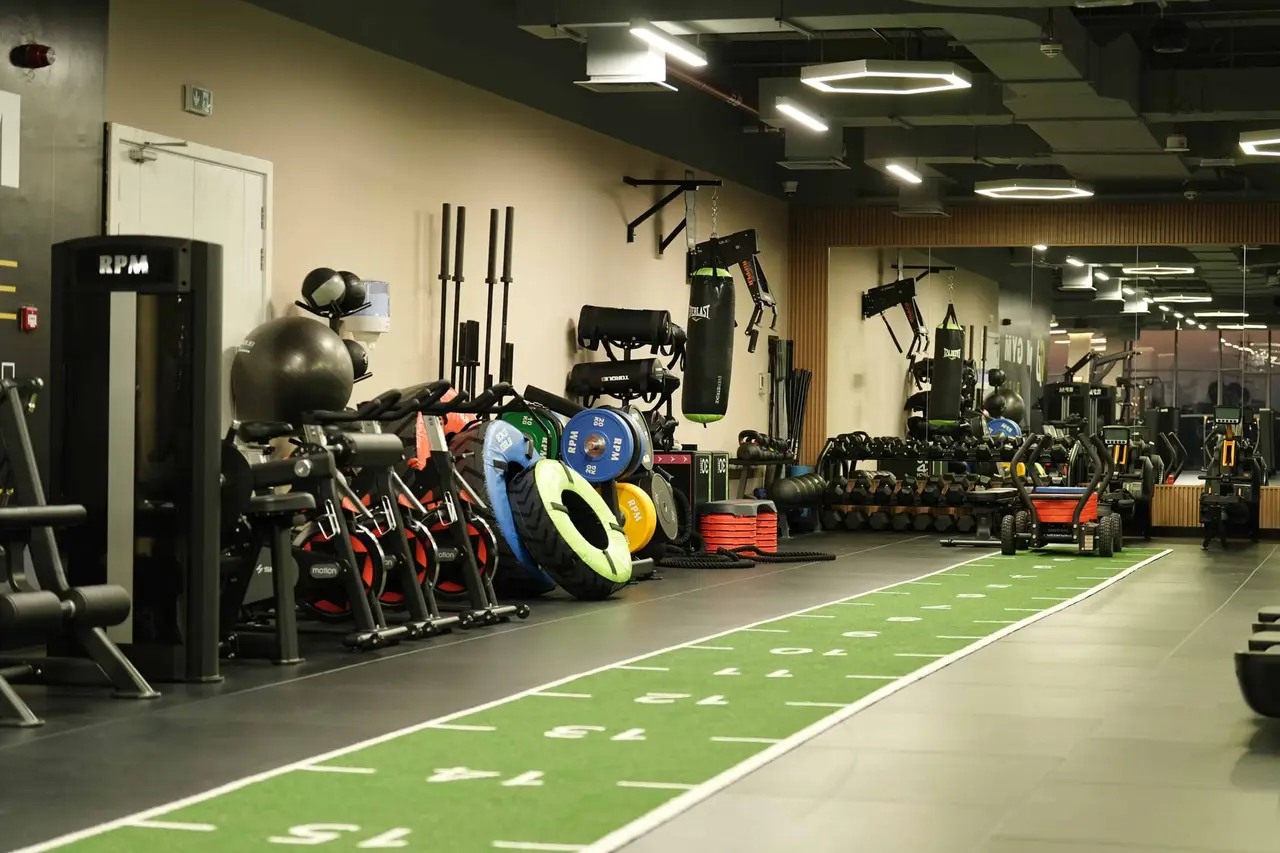
RPM's floor photos show a dumbbell rack and open floor around the turf lane in the functional zone, which is all a curtsy lunge needs. A hip abduction machine is not in the photos, so ask about one on your free guided tour if you want machine work for the side of the hip as well. A personal training session can check your step, your hip position and your knee line.
Questions, answered.
What muscles do curtsy lunges work?
The glutes and quads of the front leg, with the gluteus medius and minimus at the side of the hip working hard to keep the pelvis level and the knee in line. The inner thighs, hamstrings and trunk help.
Curtsy lunge vs reverse lunge: what is the difference?
Only the direction of the back foot. Stepping straight back lets you lift more and balance more easily; stepping back and across asks more of the side of the hip.
Where should my front knee point in a curtsy lunge?
The same way as the front toes, over the middle of the foot. Watch for it drifting inward as you push up; if it does, use less weight and cross slightly less.
Do curtsy lunges work the outer thighs?
They work the side of the hip, the gluteus medius and minimus, more than most lunges do. No exercise burns fat from one spot, so think of it as strength work for those muscles rather than a way to reshape a particular area.
How many curtsy lunges should I do?
Two or three sets of ten to fifteen reps a side, once or twice a week, suits most people building muscle. Use the lower end with dumbbells and the higher end with bodyweight.