Who does the work: the hip flexors, then the abs
The muscles that lift your legs are the hip flexors: the iliopsoas, which runs from the lower spine and the inside of the pelvis to the top of the thigh, and the rectus femoris at the front of the thigh. They do the visible part. The abdominal muscles do something less obvious. Because the iliopsoas attaches to the lower spine, every time it holds up straight legs it also pulls the pelvis forwards and the lower back towards an arch. The rectus abdominis, helped by the obliques and the deep abdominal wall, has to hold the pelvis still against that pull, and it is hardest where the legs are long and low, a few inches above the floor.
So without a hip lift, the movement itself is hip-flexor work, and the abs' part is a brace: holding the pelvis still. Add a small lift of the hips at the top of each rep and the abs also curl the pelvis towards the ribs, the action of a reverse crunch. That start at the pelvis is why it is sold as a lower-ab exercise. You will feel it low in the stomach, but the rectus abdominis contracts along its whole length; the leg raise simply loads it from that end.
It needs only floor space, suits beginners in its bent-knee form, and is the floor version of the hanging leg raise: the same movement done lying down, with no grip or shoulder limit. The core training guide shows how to balance it with holds and carries across a week.
Lying down to start
- Lie on your back on a mat with your legs straight and together and your arms by your sides, palms down. The hands press lightly into the floor to steady you; they are not levers.
- Breathe out and draw your ribs down towards your hips until your lower back rests heavy on the mat. You should feel light pressure under it, not a gap.
- Lift your legs to vertical, bending the knees on the way up if you need to. The set starts at the top, so your first rep is a lowering.
- Keep your head on the floor with your chin slightly tucked. Lifting your head to watch your feet tires your neck before your stomach.
- Pick your lever. If your back lifts as soon as straight legs start to lower, use the bent-knee version below until it stops.
A slow rep, top to bottom
- From vertical, breathe out and start lowering both legs together, straight, with your lower back pressed down.
- Take about three seconds. Stop when your heels are a few inches above the floor, or sooner, at the point your back starts to lift.
- Pause there for a moment without touching down.
- Lift the legs back to vertical in about two seconds, keeping the pelvis still rather than swinging.
- At the top, start the next rep, or add a hip lift: press your feet towards the ceiling so your hips rise an inch off the mat, then lower the hips slowly before the legs go down again.
Your lower back sets the range, not the floor. For many people the legs stop well above it at first, and that is the right rep. If you feel the effort mostly at the front of your hips while your back keeps arching, the abs are losing to the hip flexors: shorten the range or bend your knees.
Mistakes that move the work out of your abs
| Mistake | What it looks like | The fix |
|---|---|---|
| Back arching off the mat | A gap opens under the lower back as the legs go down | Stop higher, bend the knees, or drop back one step in the progression |
| Dropping the legs | The legs fall for the last part of the way | Three seconds down, and a pause before you stop or touch |
| Swinging up | The legs are thrown back up with momentum | Lift in about two seconds with the pelvis still |
| Pushing hard on the hands | The palms press or grip the floor to lever the legs up | Light pressure only; cross your arms on your chest to test yourself |
| Head and shoulders lifting | The chin pokes up to watch the feet | Head on the mat, eyes on the ceiling |
| Bouncing at the bottom | The heels tap the floor and rebound into the next rep | Hover and pause, or touch down lightly and reset |
If leg raises cause pain in your lower back or the front of your hips, stop the set and speak to a doctor or physiotherapist before you continue.
The floor progression, from bent knees to the bench
Leg raises get harder as the lever gets longer and the range gets bigger. Each version below is one rung; stay on it until three sets look clean, then move up.
Bent-knee leg raise
Keep your knees bent at about a right angle and lower your feet towards the floor, then bring them back over your hips. The shorter lever cuts the pull on your lower back sharply, so this is where most people should start. Tap your heels lightly at the bottom if you need to, and straighten your knees a little more as it gets easier.
Single-leg lowering
Hold one leg vertical and lower the other one, straight, towards the floor, then swap. Only half the weight is moving, and the raised leg helps hold the pelvis in place, which makes it a good bridge to lowering both legs together.
Straight-leg raise with a hip lift
The full lying leg raise above, with the small lift of the hips at the top of each rep. The hip lift is where the abs bend the trunk instead of only bracing it, as in the reverse crunch on the crunch page. Keep it small and slow, an inch or two, with no kick.
Bench leg raise
Lie on a flat bench with your hips near one end and hold the bench behind your head. Your legs can now lower to the level of the bench, a longer range than the floor allows, and your grip steadies you for the hip lift. Stop at bench height: going lower pulls the back into an arch. It is the last floor step before the bar.
Next comes the hanging leg raise, starting with hanging knee raises, where grip and shoulders join the challenge. If you would rather add load than leverage, the cable crunch works the same muscle against a weight stack. Flutter kicks, small alternating kicks with straight legs, keep you in the hardest part of the range for longer and suit the end of a set.
Sets, reps and when to do them
| Goal | Sets × reps | How hard |
|---|---|---|
| Learning, with bent knees | 3 × 8–10 | Three seconds down; back flat on every rep |
| Straight legs | 3 × 8–12 | Lower only as far as the back stays down; end the set when it lifts |
| With a hip lift, or on a bench | 3 × 6–10 | A visible pause at the top and a slow lowering |
Rest forty-five to sixty seconds between sets. Pair leg raises with an exercise that trains another job, such as a plank or a side plank, rather than more curling.
Two or three short core blocks a week suit most people, at the end of a session so the trunk is fresh for squats and deadlifts. Progress the range first, then the slower lowering, then the next rung. High reps add little here: once fifteen clean straight-leg reps are easy, a harder version will do more than twenty-five easy ones.
Leg raises at RPM
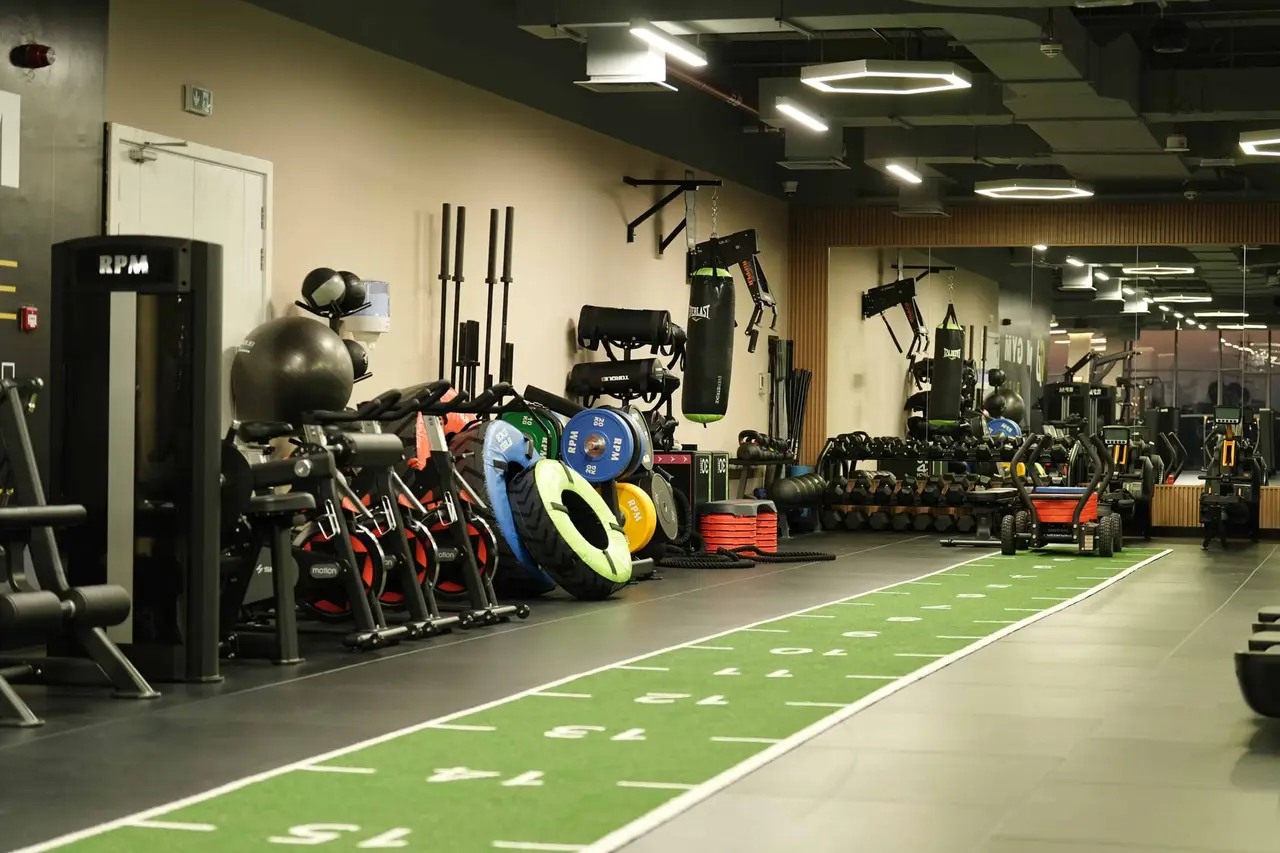
The floor versions need nothing but a mat and a patch of floor, in either section, and RPM's floor photos show flat benches for the bench version. Those photos do not confirm a pull-up bar or a captain's chair for the hanging progressions, so ask about them on a free guided tour. Not sure which rung to start on? A personal training session will place you and check that your back stays down.
Questions, answered.
What muscles do lying leg raises work?
The hip flexors lift and lower the legs, and the rectus abdominis, helped by the obliques and the deep abdominal wall, holds the pelvis still against them. A small hip lift at the top adds a curl of the pelvis, so the abs work through a movement as well as a hold.
Do lying leg raises work the lower abs?
You will feel them low in your stomach, because the load comes in at the pelvis end of the rectus abdominis. The muscle still works along its whole length, and leg raises do not burn fat from the lower stomach: how that area looks depends on overall body fat.
Lying leg raises or hanging leg raises?
Start on the floor. The lying version needs no bar and no grip, and it teaches you to keep the pelvis still. The hanging version is harder and adds grip and shoulder work; move to it once bench leg raises with a hip lift feel controlled.
Lying leg raises or sit-ups?
Both lean on the hip flexors. A sit-up moves the trunk towards the legs; a leg raise moves the legs towards the trunk and makes the abs brace against the pull on the lower back. The sit-up page explains when the full-range curl is worth doing.
Why do I feel leg raises in my hip flexors?
They lift the legs, so some of that is expected. If it is all you feel, your back is probably arching: shorten the range, bend your knees and keep your ribs pulled down towards your hips.