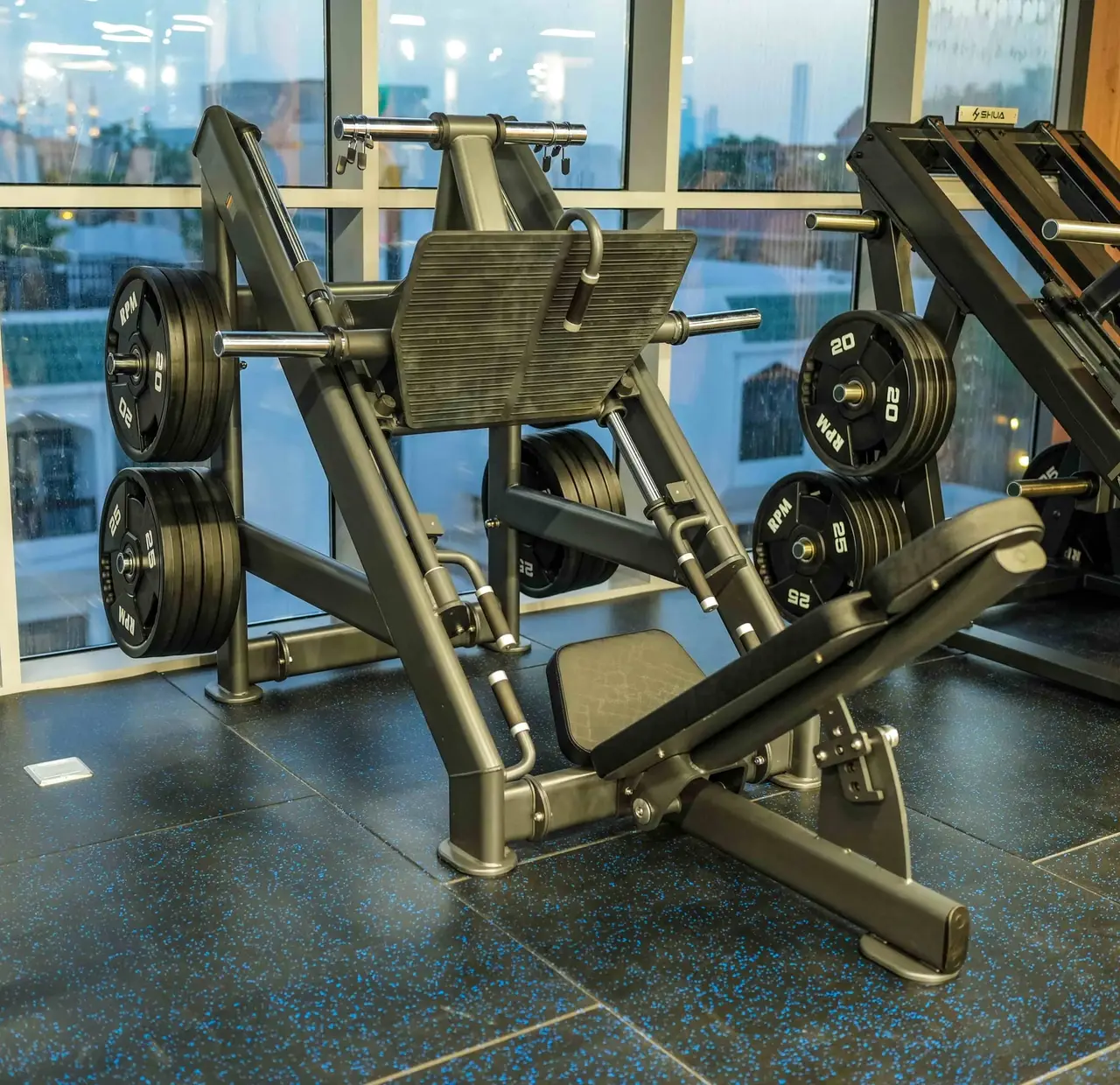
How the calves work
Two muscles make up the calf. The gastrocnemius forms the visible bulge at the top of the lower leg: its two heads start on the thigh bone, above the knee, and join the Achilles tendon at the heel. The soleus is a broader, flatter muscle underneath that starts on the shin bones, below the knee. Both point the foot and lift the heel, which is why a single movement trains them. The difference is the knee. Only the gastrocnemius crosses it, so bending the knee slackens that muscle and leaves the soleus to do the work.
The calves are also unusual in how much they already do. They lift you through every step you walk, and the soleus in particular is built for long, steady effort. Much of the spring in running and jumping comes from the Achilles tendon storing and releasing energy while the muscle holds the ankle stiff. That is why quick, bouncy reps feel easy and change little. To give the muscle a reason to grow, take the tendon out of it: a pause at the bottom and a slow lowering.
The muscle on the front of the shin, the tibialis anterior, is not part of the calf, but it is often trained alongside it because it does the opposite job and lifts the toes.
What trains the calves: machines, free weights and jumps
Nearly all direct calf training is a heel raise in one form or another. What changes is the knee angle and how the load reaches you, and each option has a job.
| Option | What it loads | Worth knowing |
|---|---|---|
| Standing calf machine | Both muscles, heavy, through pads on the shoulders | The spine carries the load, so brace as you would for a squat |
| Seated calf machine | Mostly the soleus, with the knees bent | A supplement to standing work, not a replacement |
| Leg press | Both muscles, heavy, with the back supported | Balls of the feet on the bottom edge; only the ankles move |
| Smith machine | Both muscles, standing, on a fixed bar path | Needs a step or plate under the bar that cannot slide |
| Dumbbells and a step | One calf at a time, standing | Single-leg work makes a light dumbbell go a long way |
| Jumps, hops and the sled | Spring and endurance more than size | Add them once raises feel comfortable |
People often ask which calf machine works hardest. The honest answer is whichever lets you reach a full stretch and a full rise with a pause, because range matters more than the machine. Make standing or leg press raises the base and add the seated machine to them.
The library covers each movement in detail. The calf raise page takes every standing and seated version step by step; the leg press page explains the seat and handles you need before a calf press; and the box jump teaches the landing that any jumping work depends on. For endurance, incline walking on the treadmill and sessions on the stair climber keep the calves working for long stretches, and a sled push drives you through the balls of the feet on every step.
How often and how many sets
Calves tolerate frequent training, and two or three short sessions a week work better for most people than one long one. As with the rest of the legs, a common coaching range is about 6 to 10 hard sets a week when you are new and 10 to 20 once you have trained for a while, where a hard set ends with one or two good reps left. Take that as a starting point, not a prescription. The first week of proper full-range work can leave the calves stiff and very sore, so begin at the low end.
Make straight-knee raises most of that total. In a 12-week training study, the leg trained with standing raises grew more overall than the leg trained seated, because the gastrocnemius barely grew in the seated position while the soleus grew similarly either way. Anything from about 8 to 20 reps works if the sets are hard; the range and the pause matter more than the number. The hypertrophy volume calculator helps you add up the week.
Two sample calf sessions
Session A: the end of a leg day
After the main lifts, such as the back squat and the Romanian deadlift, when the calves are all that is left to train.
| Exercise | Sets × reps | Coaching note |
|---|---|---|
| Standing calf raise, machine or Smith | 3 × 8–12 | Two-second pause in the stretch |
| Seated calf raise | 2–3 × 12–15 | Pad snug above the knees, slow on the way down |
| Toe raise with your back to a wall | 2 × 15–20 | For the front of the shin; no load needed |
Session B: leg press and dumbbells only
For a day when the calf machines are busy or there are none, built on the leg press and one dumbbell.
| Exercise | Sets × reps | Coaching note |
|---|---|---|
| Calf press on the leg press | 3 × 10–15 | Modest load, knees still |
| Single-leg dumbbell raise off a plate | 3 × 8–12 each leg | Start with the weaker side |
| Bent-knee bodyweight raise, holding a support | 2 × 15–20 | Knees bent throughout so the soleus works |
Each session takes about ten minutes. If you want spring for running or sport, add a few low box jumps before Session B, while you are fresh.
Calves for running and jumping
Runners load their calves with several times their bodyweight on every stride, and the soleus takes much of it. Heavy, slow raises build the strength; bent-knee raises give the soleus its share; single-leg work evens out the two sides; hops and jumps come last, once the slow work feels easy. The marathon strength guide shows how calf work fits around a running plan.
Achilles and heel pain are common in runners who add distance quickly. If the back of the heel hurts during calf work or the morning after it, stop, and get it checked by a doctor or physiotherapist rather than training through it.
Stretching, cramps and slimmer calves
Two stretches cover the calf. Lean into a wall with the back knee straight to stretch the gastrocnemius, then bend that back knee slightly and the stretch moves lower, to the soleus. Hold each for about thirty seconds after training. The deep stretch at the bottom of every calf raise already does part of this job.
Cramp during a calf set is common, especially in the first sessions, and usually eases if you stop and stretch gently. Cramp that keeps coming back, or calf pain that does not settle, is worth having checked by a doctor or physiotherapist.
No exercise burns fat from the calves alone. The size of the lower leg is mostly muscle and bone, and its shape follows genetics such as the length of the muscle. Training builds the muscle rather than shrinking it, and overall fat loss changes the whole leg, not one part. Light high-rep work will not slim the calves, and heavy work will not make them balloon quickly either.
Calf training mistakes
- Bouncing. Quick reps that spring off the Achilles tendon train its elasticity, not the muscle. Pause at the bottom.
- A heavy stack moved a few centimetres. A full range at bodyweight does more than a loaded machine moved through the middle of the range.
- Only one knee angle. Seated raises alone leave the gastrocnemius undertrained; most of your sets belong standing or on the leg press.
- Calves only when there is time left. Put them in the plan with sets and reps you record, like any other muscle.
- Jumping before the basics. Hops and box jumps load the Achilles hard; build up your raises first.
Calf training at RPM
RPM's photos of the Al Manhal training floor show the plate-loaded 45-degree leg press, a dumbbell rack, colour bumper plates and soft plyo boxes, which cover the calf press, single-leg dumbbell raises and low jumps. A standing or seated calf machine and a Smith machine are not in those photos, so ask which are on the floor in the Mixed and Ladies sections during your free tour.
This page covers the calves as a muscle; the calf raise page teaches the movement itself, and the leg training guide shows where the calves sit in a full leg week. For a programme written around your goal, see personal training.
Sources
Questions, answered.
What is the best calf exercise at the gym?
A standing calf raise, on a calf machine, a Smith machine or the leg press, done with a pause in the stretch. It trains both calf muscles; a seated raise is a useful addition, not a replacement.
How can I train my calves without a machine?
Stand on one leg on a step or a weight plate and hold a dumbbell on the same side. Single-leg raises with a pause at the bottom are hard enough for most people for months, and need nothing else.
How do I do a calf workout on the leg press?
Put the balls of your feet on the bottom edge of the platform, legs straight but not locked, and push with your ankles only. Keep the load modest and the knees still; the calf raise page covers the handles and foot position.
What are the benefits of calf exercises?
Stronger calves help you push off when walking, running and jumping, and steady the ankle on uneven ground. Many lifters also train them for size, so the lower leg keeps pace with the thighs.
Why are my calves not growing?
The usual reasons are bouncing reps, a short range, too few hard sets and too little patience, and genetics play a bigger part in calf size than in most muscles. Fix the range and the pause first, then add sets slowly and judge the result over months, not weeks.