What the pullover trains, and why chest and back both claim it
The pullover moves the upper arm from overhead to in front of your chest while the elbow stays still. Two large muscles can do that: the lats, which run from the upper arm to the lower back, and the lower part of the chest, which runs from the upper arm to the breastbone. Both work on every rep, helped by the long head of the triceps, while the trunk stops your ribs flaring and your lower back arching as the weight travels overhead.
That is why it appears on chest days and back days alike. It is a stretch-focused accessory, done with moderate weights after the main presses or pulls, and it is rated intermediate because it takes the shoulder into a deep overhead position. If raising your arms fully overhead is already uncomfortable or painful, choose another lat or chest exercise and get the shoulder checked by a doctor or physiotherapist. The back training guide shows where an accessory like this sits in a week.
Setting up on the bench
- Lie lengthwise on a flat bench with your head near the end and your feet flat on the floor. This is the steadier position to learn in.
- Take a single fixed-weight dumbbell and hold it vertically, cupping the top plate with both palms so your thumbs and fingers make a diamond around the handle.
- Press it up over your chest, arms nearly straight with a slight bend at the elbows.
- Draw your ribs down and let your lower back settle towards the bench, as you would to stop it arching.
- Choose a weight you can lower and return twelve times under full control. It is usually lighter than you expect, because the dumbbell spends most of the rep a long way from your shoulders.
Lowering and pulling back
- Breathe in and lower the dumbbell in an arc behind your head, keeping the elbow bend fixed.
- Stop when your upper arms are about level with your ears, or sooner if your ribs start to lift or your lower back arches.
- Pause briefly in the stretch.
- Pull the dumbbell back along the same arc by driving your upper arms towards your hips, breathing out as you go.
- Turn around when the dumbbell is above your eyes, before it is straight over your shoulders, so the muscles never get to rest.
The rep happens at the shoulders. If your elbows bend as the weight goes back and straighten as it returns, you are doing a triceps extension: lock the angle and take a lighter dumbbell. Lower over about three seconds, because the stretch is where this exercise does its work and where control matters most.
Mistakes to fix first
| Mistake | What it looks like | The fix |
|---|---|---|
| Lowering too far | The ribs flare and the lower back lifts off the bench at the bottom | Stop where your trunk stays still, even if that is short of ear level |
| Bending and straightening the elbows | The dumbbell drops behind your head as the arms fold, like a skull crusher | Hold a slight fixed bend and move only from the shoulders |
| Too heavy a dumbbell | The stretch is not controlled and the weight falls into the bottom | Use a weight you can lower over three seconds |
| Loose grip | The dumbbell tilts in your hands | Cup the top plate firmly with both palms and keep the handle vertical |
| Hips rising on the cross-bench version | Your hips drift up as the weight travels back | Keep the hips low and still, below the line of the bench |
| Bringing it right over the chest | The weight rests above the shoulders between reps | Turn around at about eye level to keep the tension on |
Across the bench, barbell versions, and chest or lats
The pullover can be done along or across a bench, with a dumbbell or a bar, and small changes tilt it towards the chest or the back.
Across the bench or lying lengthwise?
In the classic cross-bench pullover only your upper back rests on the bench, with your feet flat and hips low. It allows a longer arc and a bigger stretch, but your hips and trunk have to hold the position and it is easier to over-arch. Lying lengthwise supports the whole back, which is why it is the better place to start. Move across the bench once the movement is under control.
Barbell or EZ-bar pullover
Lying on the bench, hold a bar overhand at about shoulder width and lower it behind your head with your elbows slightly bent. The angled grip of an EZ bar is often kinder to the wrists and elbows. Two hands on a bar spread the load more evenly than one dumbbell, but the bar passes over your face on every rep, so start light and keep the arc identical each time.
Pullover for chest or for lats?
Both, and you cannot switch either off. A 2011 study of eight men doing the barbell pullover found the chest muscle more active than the lats, with the balance shifting as the bar moved further from the shoulder. Small changes may help you feel one more: keep the elbows in and think of pulling with them for the lats, or let them drift out slightly and focus on the stretch across the chest. If the lats are your main target, the straight-arm pulldown keeps the load on them near the hips, where the dumbbell goes light.
If every bench is taken, a floor pullover on your back with your knees bent works with a lighter dumbbell, and on the cables the straight-arm pulldown trains the same movement standing.
Sets, reps and where it goes
| Goal | Sets × reps | How hard |
|---|---|---|
| Learning the arc | 2 × 12 | Light, with three or more clean reps left |
| Lat or chest accessory | 2–4 × 10–15 | Stop one or two reps before the arc breaks down |
| Stretch-focused finisher | 2 × 12–15 | Three-second lowering and a pause at the bottom |
Rest a minute to ninety seconds. Expect it to feel harder than the number on the dumbbell suggests.
Put it after the main lift of the session: after the pulldown or a row on a back day, or after the presses on a chest day. Progress with reps first, then one step on the dumbbell rack; if that step is too big, lower more slowly or pause for a second in the stretch.
The pullover at RPM
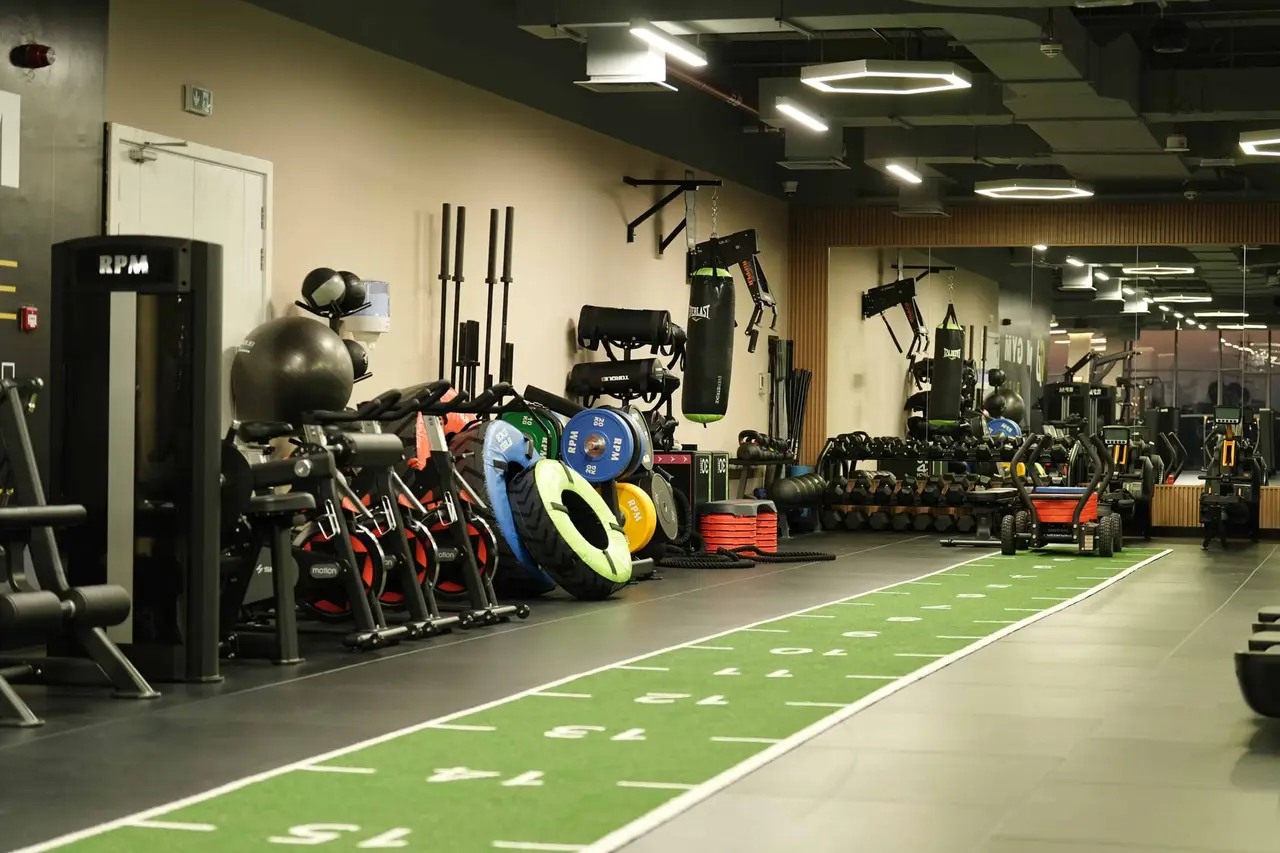
RPM's floor photos show a dumbbell rack, flat benches and a rack of fixed barbells that includes EZ bars, which covers every version on this page. A pullover machine does not appear in the photos, so ask about one on your free guided tour. For a second pair of eyes on your first sets, especially on how far to lower, book a personal training session.
Sources
Questions, answered.
What muscles does the dumbbell pullover work?
The lats and the lower part of the chest move the arm; the long head of the triceps assists, and the trunk braces to keep your ribs and lower back still.
Dumbbell pullover or skull crusher?
They look alike but move different joints. In the skull crusher the upper arms stay still and the elbows bend, which trains the triceps. In the pullover the elbows stay still and the shoulders move, which trains the lats and chest.
Dumbbell pullover or lat pulldown?
Use both for different jobs. The lat pulldown is the main vertical pull: heavier, with the elbows bending and the biceps helping. The pullover is a lighter accessory that works the lats in a long stretch without the biceps.
Can I do pullovers on the floor?
Yes. Lying on the floor, the arc stops where your upper arms touch the floor behind you, which shortens the stretch. That makes it a reasonable option without a bench, or while your overhead range is limited.
Does the pullover expand the rib cage?
That is an old bodybuilding idea. There is no good evidence that training reshapes an adult's rib cage; what changes is the muscle around it.
Dumbbell or cable pullover?
The dumbbell is hardest in the overhead stretch; the cable version, the straight-arm pulldown, stays hard near the hips. They suit the same slot in a session, so alternate them across training blocks. The back training guide shows how many accessory sets a week make sense.