The short answer
The real difference is direction. A stair climber moves you upwards: every step lifts your whole bodyweight the height of a stair, so the effort rises steeply even at a slow pace. A treadmill moves you forwards: on the flat, most of the work goes into travelling, and it only starts lifting you once you raise the incline. That is why ten minutes of climbing can feel harder than half an hour of walking, and why the treadmill is the one that prepares you for a run.
Both are good cardio, so the choice comes down to your goal, your knees and what you will keep doing. For technique on each machine, see the stair climber guide and the treadmill guide; to see what is on RPM's floor, look at the cardio area.
Side by side
| Stair climber | Treadmill | |
|---|---|---|
| How you move | Climbing revolving stairs, or pressing two pedals down | Walking or running on a moving belt, flat or tilted |
| Main muscles | Quads, glutes and calves, lifting you one step at a time | Calves, quads, hamstrings and hips; an incline adds glute and calf work |
| Impact | No landing, but the knee bends under your full weight on every step | A landing on every running stride; walking is far gentler |
| Effort at a slow pace | High from the first minutes | Low on the flat; it rises with speed or incline |
| How you set the effort | The level, usually steps per minute | Speed and incline |
| Learning curve | A few minutes to find the rhythm without leaning on the rails | None for walking; running takes a careful start |
| What it carries over to | Hiking, stairs and climbing efforts | Walking and running, including road races |
| Typical session length | Shorter, because the effort builds fast | Anything from short intervals to a long walk |
| The trap | Leaning on the handrails, which takes weight off your legs | The same, especially on a steep incline |
Stair climber or incline treadmill?
If you are choosing between climbing stairs and walking uphill, the gap is smaller. Both lift you a little with every step, both load the calves, glutes and thighs, and both stay well clear of running. On the stairs, each step is a separate lift from a bent knee, so the thighs work through a bigger range and the effort arrives sooner. On an incline, your foot stays on the slope and the lift is spread across a longer stride, which is easier to hold for a long walk and easier to adjust in small steps.
So use the stair climber for short, hard sessions and the incline for longer ones, or for days when your knees prefer a smaller bend. The incline walking guide builds the slope up in stages, and the treadmill incline calculator turns a grade into the height you climbed, which you can set against the floors a stair climber reports.
Weight loss, fat loss and calories
Minute for minute, a climb usually asks more of you than a flat walk at the same pace, which is why stair climbers rank highly in calorie comparisons. But energy use follows effort and time together: a brisk incline walk you can hold for forty minutes may use as much as a hard climb you abandon after ten. Fat loss then depends on what you do across weeks, eating included, rather than on which machine you picked.
The calorie readings will not settle the question. Each machine estimates from its own formula and the weight you enter, so a stair climber's figure and a treadmill's cannot be compared, and holding the rails inflates both. For a personal estimate, use the calories burned calculator.
Who should pick which
| If you… | Pick | Why |
|---|---|---|
| Are training for a running race | Treadmill | Running is the skill you need to practise |
| Want a hard session in 20 minutes without running | Stair climber | Slow climbing reaches a high effort quickly |
| Are new to cardio, or back after a long break | Treadmill, walking | Nothing to learn, and you can raise the effort in small steps |
| Are preparing for a hike or a trip with lots of stairs | Stair climber, plus incline walks | It practises lifting yourself step after step |
| Have knees that dislike stairs | Treadmill, on the flat or a gentle incline | Less knee bend under load on each step |
| Want long, easy sessions with a podcast | Treadmill walking | A steady effort is simple to hold for a long time |
| Find balance difficult | Neither at first: try the bike | Both ask you to stay upright on a moving surface |
If your knees, hips or back hurt on either machine, stop and have them checked by a doctor or physiotherapist rather than pushing on.
Sample sessions, and a week that uses both
Matched sessions, about 30 minutes each
Run the same structure on each machine and notice where you feel it.
| Part | Stair climber | Treadmill |
|---|---|---|
| Warm-up | 5 minutes at a low level | 5 minutes of flat walking |
| Main block | 20 minutes alternating 2 minutes at a moderate level with 1 minute a level or two higher | 20 minutes alternating 2 minutes at a moderate incline with 1 minute two steps steeper |
| Cool-down | 5 minutes at the lowest level, hands off the rails for the last two | 5 minutes of flat walking, slowing down |
| How it should feel | Short sentences on the moderate minutes, a few words on the harder ones | The same |
A week using both
| Day | Session | How hard |
|---|---|---|
| Day 1 | Treadmill: an easy walk or run of 30–40 minutes | Conversational |
| Day 2 | Strength training, lower body | As planned |
| Day 3 | Stair climber: the matched session above | Moderate to hard |
| Day 4 | Strength training, upper body | As planned |
| Day 5 | Treadmill: the incline version of the matched session, or intervals | Moderate |
Put the climbing day where your legs are freshest, and add time before you add levels. On strength days, step-ups train the same climbing pattern with a load you choose, and the heart rate zone calculator gives effort targets for both machines.
And the elliptical, bike or rower?
Searches often add a third machine. The cross-trainer removes the landing of running while keeping you upright, and is set against the treadmill in elliptical vs treadmill. The exercise bike takes your weight off your feet altogether, and the rowing machine adds a pull for the back and arms. For every machine matched to a goal, see the cardio machines guide. If your question is stair climber vs stepper or StairMaster, those are names for kinds of stair climber, and the stair climber guide linked above explains them.
Stair climbers and treadmills at RPM
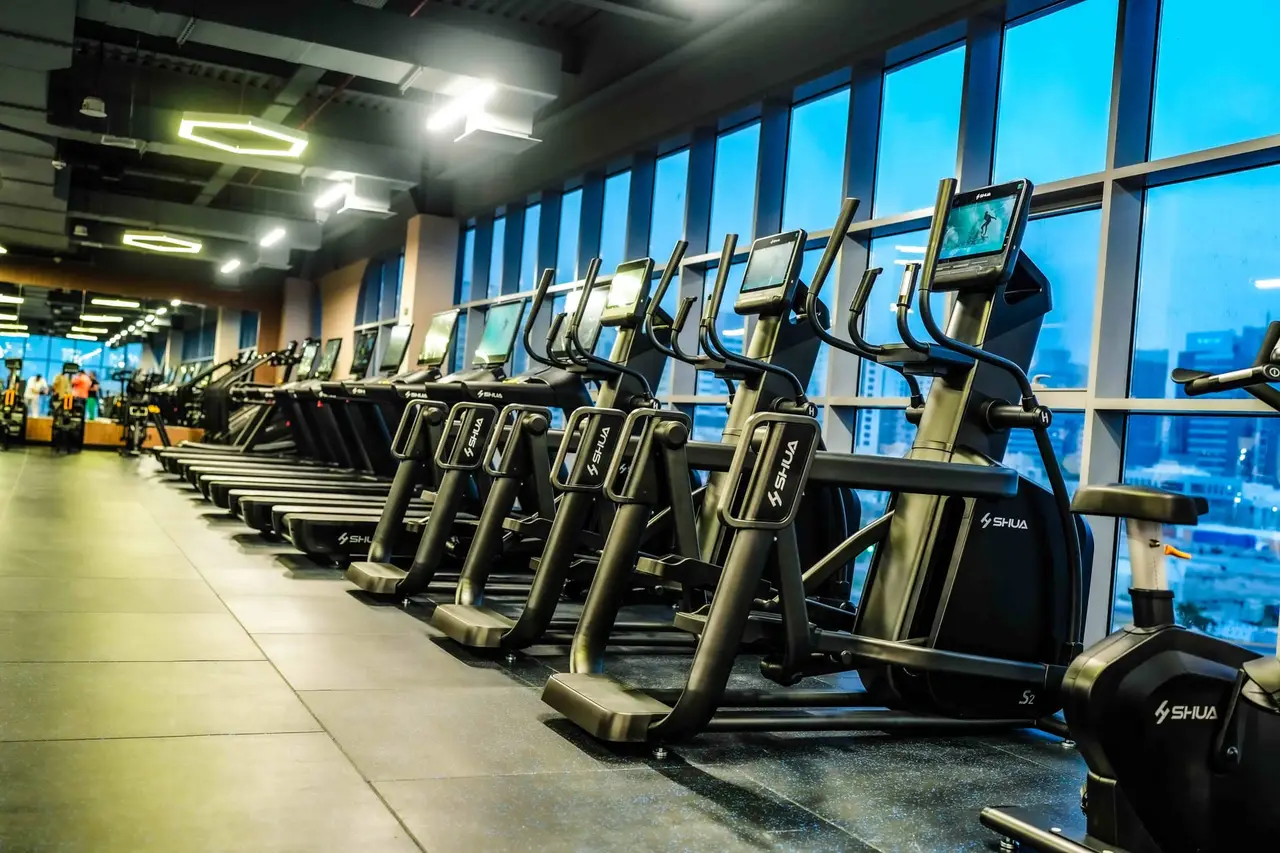
RPM's photos of its cardio area show treadmills along tall windows, with cross-trainers and an upright bike beside them, but no stair climber. Ask on a free guided tour whether one is on the floor in either section. Until you know, the incline version of the matched session and step-ups on strength days cover most of what climbing trains, and a coach in a personal training session can set up both.
Questions, answered.
Is the stair climber or the treadmill better for weight loss?
Neither has an edge on its own. Weight change follows your overall activity and eating over weeks, so pick the machine you will use three or more times a week at a challenging effort, and keep strength training alongside it.
Which burns more calories, the StairMaster or the treadmill?
Per minute at a slow pace, climbing usually costs more than flat walking. Running or a steep incline closes the gap, and over a whole session the total depends on how hard and how long you work. Console figures come from different formulas, so do not compare them across machines.
Is the stair climber harder than running?
It often feels harder at first, because your legs lift your bodyweight on every step and the thighs tire quickly. Running asks more of your breathing at speed and puts a landing into every stride. Many people find a slow climb and an easy run land at a similar effort.
Stair climber or elliptical?
The stair climber for short, hard, leg-heavy work; the elliptical for longer sessions with no landing and your arms joining in. Both suit people who do not want to run. The elliptical guide covers set-up and sessions.
Can the stair climber replace running?
For general fitness, it can carry a lot of your cardio. For running performance, it cannot, because it never practises the running stride or the landing. Runners use it as an extra or easy day, not instead of their runs.