What the renegade row trains, and what it does not
Two exercises share every rep. The rowing arm pulls a dumbbell towards the hip, which works the lats, the muscles between the shoulder blades and the rear shoulder, with the biceps bending the elbow. Meanwhile the other arm and both feet hold a high plank: the front of the trunk stops the hips sagging, and the obliques stop them turning as one hand leaves the floor. The supporting shoulder and chest hold you up, and the glutes keep the body in one line.
The trunk is nearly always the limit. Most people can row only a fraction of their bench-supported dumbbell row weight here before the hips start to rotate, so it makes a poor main back exercise. What it offers is the plank and the row in one movement with nothing but two dumbbells: useful in circuits, at the end of an upper-body day, or for anyone who wants the trunk to resist rotation without a cable station. It is rated intermediate because a steady plank comes first. The back training guide covers the heavier rows to build the week around.
Choosing the dumbbells
The dumbbells are part of the base you balance on, so their shape matters more here than in almost any other exercise.
- Use dumbbells with flat-sided heads, such as hexagonal ones, that sit still when you lean on them. Round heads can roll under your hand mid-set.
- Start light: a pair you could row twenty times on a bench is plenty. The weight that counts is the one you can row without your hips moving.
- Set the handles parallel, directly under your shoulders, palms facing each other, and keep each wrist stacked straight over its handle rather than bent back.
- Put them on a firm, level patch of floor where they cannot slide.
- Only round dumbbells on the rack? Do the one-dumbbell version: the supporting hand goes flat on the floor and only the rowing hand holds a weight.
Setting up the plank
- Place the two dumbbells on the floor about shoulder width apart, handles parallel.
- Kneel, take a handle in each hand, and set your shoulders directly above your hands.
- Step your feet back one at a time into a high plank, feet wider than your hips. A wide stance gives you a broad base; bringing the feet closer later makes it harder.
- Make one line from heels to head: glutes squeezed, ribs pulled down, neck long, eyes on the floor just ahead of your hands.
- Push the floor away through both dumbbells so your chest does not sink between your shoulders.
Rowing each rep
- Shift a little weight onto your left hand and both feet, without the hips moving sideways or up.
- Press the left dumbbell into the floor and row the right one towards your hip, elbow close to your side, until the elbow is just past your ribs.
- Keep your hips level and square to the floor. A cue many coaches use: your belt buckle keeps pointing straight down.
- Lower the dumbbell under control and set it down quietly in the same place before shifting your weight to row with the other arm.
- Alternate sides and count one rep per arm, or finish all the reps on one side first if you prefer.
Breathe out as you row and in as you lower. Move slowly: about a second up, a short pause, two seconds down. The set ends when your hips start to rotate or sag, whatever the rep count says.
Mistakes to fix first
| Mistake | What it looks like | The fix |
|---|---|---|
| Hips twisting open | The hip on the rowing side lifts and turns towards the ceiling as the dumbbell rises | Widen your feet, go lighter and row only as high as square hips allow |
| Sagging middle | The lower back dips towards the floor between reps | Squeeze the glutes and pull the ribs down; rest when you can no longer hold it |
| Hips piked high | The backside rises to make the plank easier | Lower the hips until you are one line from heels to head |
| Feet too close | Every rep rocks the whole body from side to side | Start with a stance wider than your hips |
| Rolling or tipping dumbbells | The supporting dumbbell wobbles or the wrist folds back | Use flat-sided dumbbells and stack the wrist over the handle |
| Dropping the dumbbell | The weight lands with a bang and the body jolts | Lower it under control and place it |
If the plank position or the rowing hurts your wrists, shoulders or back, stop the set and have it checked by a doctor or physiotherapist before you try again.
Easier and harder versions, and how it compares
Renegade row vs bent-over row
The bent-over row is done standing in a hip hinge, with both arms and much heavier loads, and the lower back holds the position. The renegade row is lighter and one arm at a time, and the trunk's job is to stop rotation rather than to hold a hinge. Use the bent-over or one-arm dumbbell row to build the back, and the renegade row for trunk control beside it.
Renegade row vs gorilla row
A gorilla row is done in a deep, wide-stance hinge with two kettlebells or dumbbells on the floor between your feet, rowing them alternately. Your feet carry you, not your hands, so the back can take more load and the rotation challenge is smaller. The renegade row moves the base to your hands, and the trunk does more.
Is a plank row the same thing?
Usually, yes: plank row and dumbbell plank row are common names for the renegade row. Some coaches keep 'plank row' for the version with one dumbbell and the other hand flat on the floor.
Making it easier or harder
Easier: put your knees down, which shortens the plank, or widen your feet further. Harder: bring the feet in to hip width, pause for two seconds at the top of each row, or add a push-up between each pair of rows. Change one thing at a time.
Sets, reps and where it fits
| Goal | Sets × reps | How hard |
|---|---|---|
| Learning the position | 2–3 × 5 each arm | Wide feet, light dumbbells, a pause at the top of each row |
| Trunk control with some back work | 3 × 6–10 each arm | End the set when the hips first turn |
| In a circuit | 3 rounds of 8 each arm | The last round looks like the first |
Rest about a minute between sets. Twice a week is plenty, usually near the end of an upper-body or full-body session, after the heavier rows.
Progress the position before the dumbbells: narrower feet, then longer pauses, then the push-up version, and only then a heavier pair. A heavier pair that makes your hips turn is a step backwards. If the same session already has planks, count the renegade row as part of that trunk work rather than doing both.
Who should pick something else
- If you cannot yet hold a straight high plank on your hands for about thirty seconds, build that first.
- If the goal is a bigger, stronger back, a bench-supported dumbbell row or a chest-supported row lets the back work with heavier loads.
- If holding the plank on your hands bothers your wrists or shoulders, the Pallof press trains the same anti-rotation job standing, and a one-arm cable row covers the pull; if the discomfort persists, speak to a doctor or physiotherapist.
- If you are pregnant or postnatal, ask your doctor or midwife before plank-position exercises.
Renegade rows at RPM
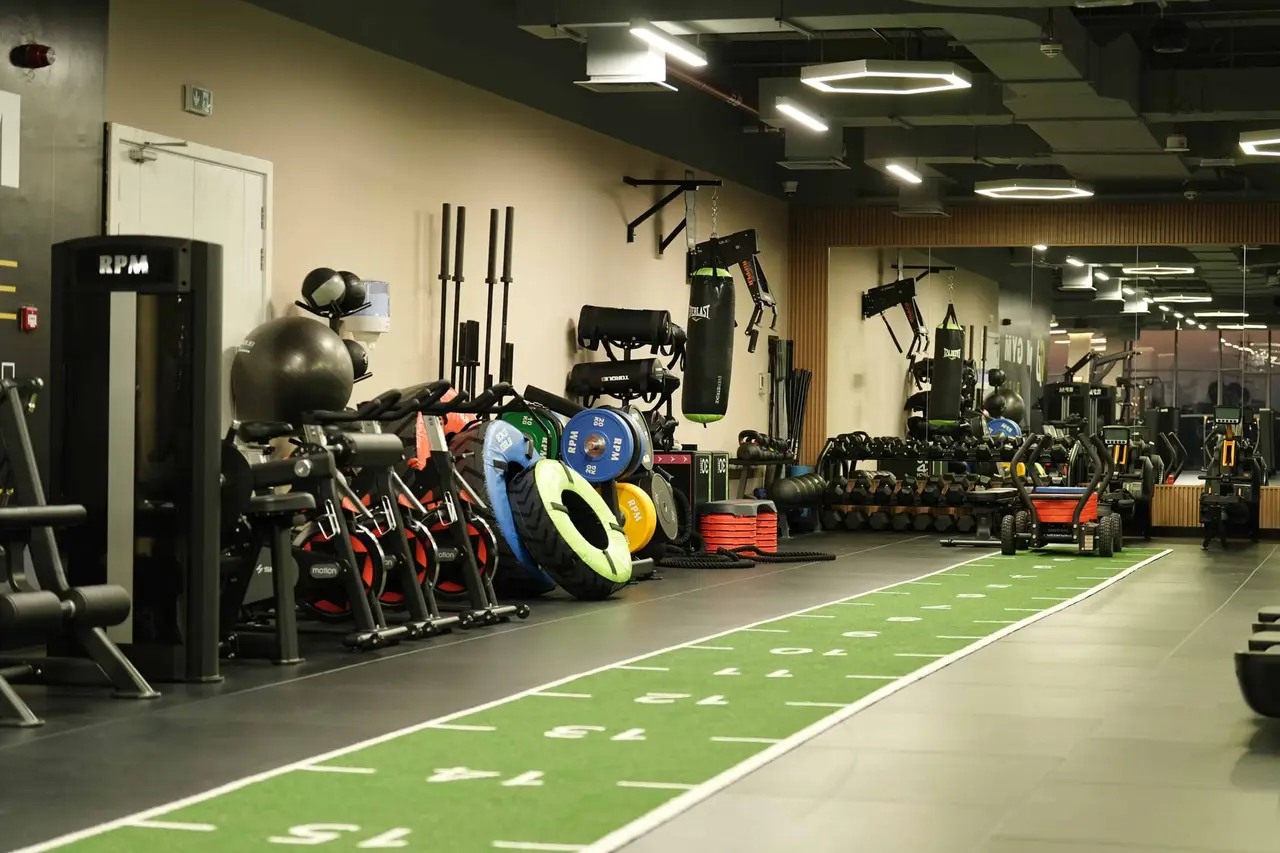
RPM's floor photos of the Al Manhal training floor show a dumbbell rack, which is the kit this exercise needs. The photos cannot show whether every pair has flat-sided heads, so on a free guided tour check which dumbbells stay still when you lean on them, and pick a clear patch of floor away from people walking past. The dumbbells guide explains how to use the rack. To have a coach watch your hips on the first sets, book personal training.
Questions, answered.
What muscles do renegade rows work?
The rowing arm works the lats, the upper back and the rear shoulder, with the biceps helping. The trunk works throughout: the front abdominal muscles hold the plank and the obliques stop the hips twisting, while the supporting shoulder, chest and arm hold you up.
Is the renegade row a back or a core exercise?
Both, but the trunk usually sets the limit, so it trains control more than back size. Pair it with a heavier row if building the back is the goal.
What is a good renegade row alternative?
For the trunk, the Pallof press or a high plank with slow shoulder taps; for the back, the one-arm dumbbell row. With no dumbbells at all, a plank with alternating arm reaches copies the position.
What weight should I use for renegade rows?
Lighter than you think: a pair you could row twenty times on a bench. If your hips turn as the dumbbell rises, the pair is too heavy for this exercise.
Can I do renegade rows with kettlebells?
It is possible, but a kettlebell's handle sits high above a small base and tips easily under a leaning hand, which is why most coaches use flat-sided dumbbells.
Are renegade rows good for beginners?
Once you can hold a steady plank, yes, for women and men alike. Start with wide feet and light dumbbells, or with your knees on the floor, and add difficulty slowly.