What a barbell does well and badly for the back
The barbell's strength is load. You can row and hinge with far more weight than a pair of dumbbells allows, add it in the smallest plate steps, and train the back to hold its shape under that weight as well as to pull it. A bent-over row and a deadlift between them work the lats, the upper back, the traps and the long muscles along the spine, which is most of what people mean by the back.
Its weaknesses are just as clear. Almost every barbell back exercise is done standing and bent forward, so the lower back works in nearly all of them and its fatigue adds up across a session. Both hands share one bar, so a weaker side can hide. And nothing in the barbell's catalogue pulls from overhead, the direction that trains the lats through their longest range. A session built on the bar needs a plan for both problems, which is what most of this page is about.
The back training guide sets out the weekly structure with any equipment: a vertical pull, a horizontal pull and a hinge, plus the research on rows and grips. Here the question is which of those jobs a bar can do, which lifts to choose, in what order, and how to keep the lower back from becoming the limit.
Loading the bar for back work
- Start rows from a rack, with the bar on the hooks at mid-thigh height, so you do not have to deadlift it off the floor before every set.
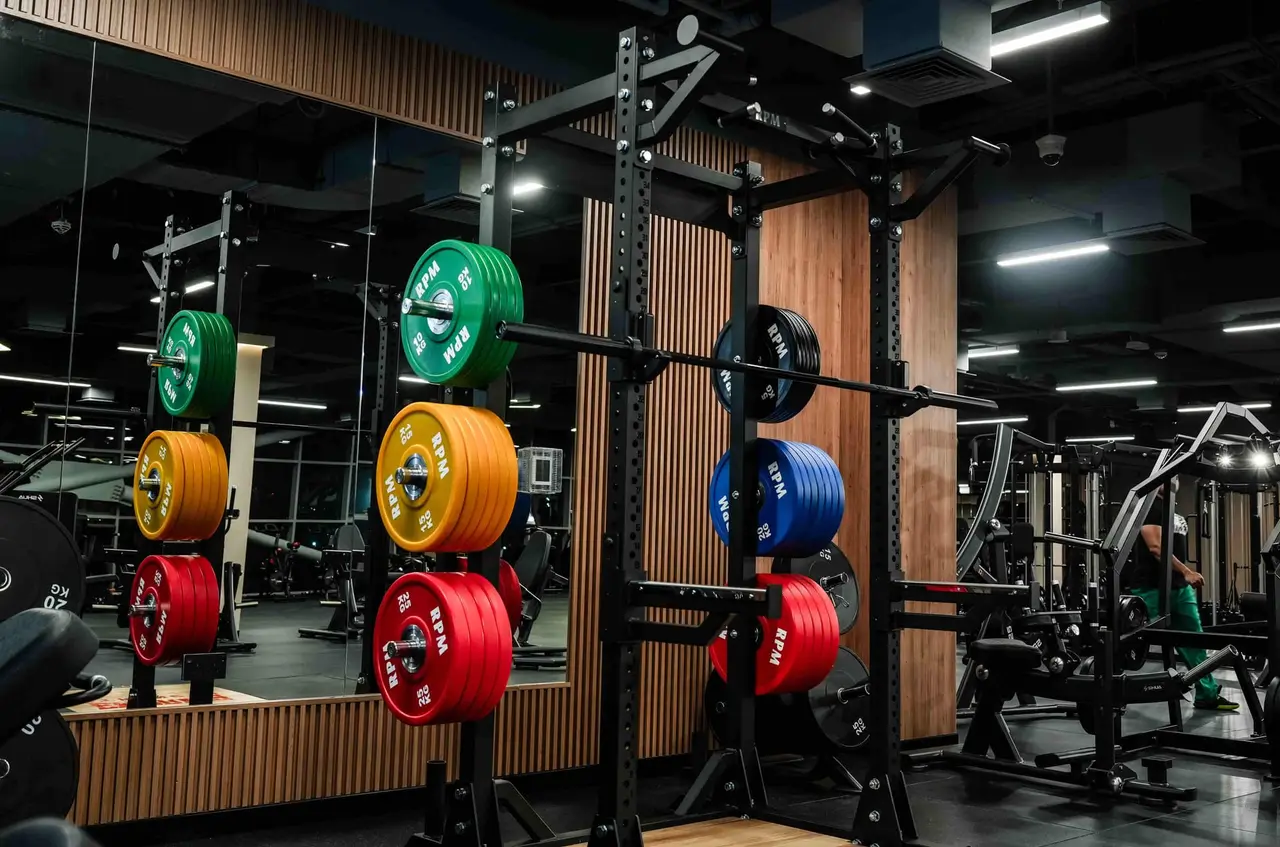
- Deadlifts start from the floor with full-size plates, which put the bar at the right height even when the total is light. Bumper plates help here, because the lighter ones are often full size too.
- Use collars on both ends. Plates creep along the sleeves during rows and Romanian deadlifts, and an uneven bar pulls you to one side.
- Fixed-weight barbells and EZ bars from the rack suit lighter rows, shrugs and pullovers with no loading at all.
- Add weight in the smallest steps the plates allow. A small jump you can row cleanly beats a big one that makes you stand up. The plate calculator does the arithmetic, and the barbell guide covers bar types and loading in full.
The barbell back exercises, by the job they do
A complete barbell back session takes one or two lifts from the first group and one from the second, then adds whatever the week is missing.
- Rows for the upper back and lats: the bent-over row, whose page also covers the Pendlay and Yates rows; the T-bar row or landmine row, with one end of the bar anchored so it travels in an arc; and the one-arm landmine row, which lets each side work alone. The seal row, lying face down on a high bench, takes the lower back out completely, but it needs a bench few gyms have.
- Hinges for the lower back, glutes and hamstrings: the deadlift, the Romanian deadlift, the wide-stance sumo deadlift, and the good morning, with the bar across the upper back. Here the spine muscles work by holding the back still under heavy load.
- A bodyweight pull under the bar: the inverted row, with the bar set on the hooks of a squat rack. It is the one row in the group that loads the lower back very little.
- The traps: the barbell shrug, and rack pulls from just below the knee for lifters who already deadlift well.
- A long arc for the lats: the barbell or EZ-bar pullover, lying across a flat bench with the bar travelling from over the chest to behind the head. Keep it light; the shoulders, not the lats, set the limit.
Can you train the lats with only a barbell?
Partly. Underhand rows with the elbows tucked to your sides, Pendlay rows pulled to the lower stomach and pullovers all work the lats, and the inverted row adds more. What is missing is the vertical pull. If the gym has a pulldown or a pull-up bar, one vertical pull a week beside the barbell work closes the gap.
Barbell exercises for the lower back
The deadlift, the Romanian deadlift and the good morning train the muscles along the spine by making them hold the back flat under load, the same job they do when you lift anything heavy in daily life. Count them as the heavy part of the session and keep their volume moderate: two or three hard hinge sets are plenty when rows are also in the plan.
Sparing the lower back across a session
Because the lower back holds position in nearly every lift above, the main planning job is to spread its work. Three rules cover most of it.
- One heavy hinge per session. Pair a heavy deadlift with lighter rows, or heavy rows with a lighter Romanian deadlift, rather than pushing both.
- Put the hardest hinge first. A deadlift after bent-over rows is a deadlift with a tired back; the reverse order costs a little row strength, which matters less.
- Add a row that rests the back. The inverted row, or a chest-supported landmine row where a gym has the bench, adds back volume without another hinge.
Watch the shape, not the rep count. When your torso rises on rows or your back starts to round on a hinge, the set is over even if the reps are not. Effort and fatigue in the lower back are part of this training; pain is not, and pain that is sharp, spreads into a leg or lasts should be checked by a doctor or physiotherapist.
Two barbell back sessions
Session A: row day
Built around the bent-over row, with a lighter hinge and a back-friendly pull under the bar. A barbell, a rack and a flat bench.
| Exercise | Sets × reps | Coaching note |
|---|---|---|
| Bent-over row | 4 × 6–8 | Torso angle fixed from the first rep to the last |
| Romanian deadlift | 3 × 8–10 | Moderate weight; hamstrings stretched, back flat |
| Inverted row, bar in the rack | 3 × 8–12 | Body straight; lower the bar a notch when 12 is easy |
| Barbell shrug | 3 × 10–12 | Straight up, one-second hold at the top |
| EZ-bar pullover | 2 × 12 | Light; stop where the ribs start to flare |
Session B: deadlift day
The deadlift comes first and heaviest; the rows after it are deliberately lighter.
| Exercise | Sets × reps | Coaching note |
|---|---|---|
| Deadlift | 3–4 × 3–5 | Two reps left on every set; reset between reps |
| Pendlay row | 3 × 6–8 | The bar comes to a dead stop on the floor each rep |
| Landmine row, or underhand bent-over row | 3 × 8–10 | Anchored end fixed; pull towards the hip |
| Inverted row | 2 sets, stopping two reps short | Hips stay in line with the shoulders |
Run the two sessions on different days, at least two days apart. Add one vertical pull, such as the lat pulldown, to either day if the gym has one.
Mistakes with barbell back training
- Standing up to finish the row. The torso rises a little each rep until the row turns into a shrug; lighten the bar and hold the angle.
- Two heavy hinges on one day. Heavy deadlifts and heavy bent-over rows together make the lower back the hardest-working muscle in the session.
- Never pulling vertically. Rows and hinges alone leave the lats short of their longest range.
- Deadlifting the bar into position for every set of rows. Rack it at mid-thigh instead.
- Refusing straps. When grip ends a set of Romanian deadlifts or rows before the back does, straps keep the back as the limit.
- Big plate jumps. A large plate added to a row that is barely clean turns every set into a heave.
Barbell back training at RPM
RPM's photos of the Al Manhal floor show squat racks with barbells and colour bumper plates, a rack of fixed barbells including EZ bars, and flat benches. That covers every row, hinge, shrug and pullover above, plus inverted rows in a rack, and the cable towers with a pulldown seat supply the vertical pull. A T-bar station, a landmine attachment, a pull-up bar and a Smith machine are not in those photos, so ask about them on your free tour. A personal training session is the quickest way to have your hinge and row checked before the plates go on.
Questions, answered.
Which barbell back exercises should I start with?
The bent-over row and the Romanian deadlift. Together they cover the upper back, the lats and the hinge, and both are lighter and easier to learn than the deadlift, which you can add once your hinge is solid.
What are the main barbell back exercises called?
Bent-over row, Pendlay row, Yates row, T-bar or landmine row, seal row, deadlift, Romanian deadlift, sumo deadlift, good morning, rack pull, shrug, pullover and the inverted row under a bar.
Can I do barbell back exercises without a bench?
Yes. Every row and hinge here is done standing, and the inverted row needs only a rack. You need a bench for the pullover and, where a gym has the kit, for the chest-supported landmine row.
Barbell or dumbbells for the back?
Use both if you can. The barbell carries more load and trains the hinge; dumbbells let each arm pull on its own path and suit supported rows. The dumbbell back exercises page covers that half.
Can I train my back with a barbell at home?
Rows, Romanian deadlifts and shrugs need only a bar, plates and some floor. Deadlifts need a floor that can take plates being set down, and the inverted row needs a rack or a sturdy bar fixed at hip height.
Can I do these exercises on a Smith machine?
Rows, shrugs and inverted rows all work on a Smith bar, which runs on fixed rails and can be set at any height. It removes the balancing but not the hinge; the Smith machine guide covers the set-up.