What a rack pull trains, and what it leaves out
A full deadlift has two halves: the bar breaking from the floor, with the knees and quads doing much of the work, then the hips driving forward once the bar is past the knees. The rack pull keeps the second half, or most of the lift if the pins are low. With the hips starting higher, the glutes and hamstrings do the bulk of the work, the muscles beside the spine hold the back still, and the traps, upper back and forearms carry a load often heavier than anything you can pull from the floor.
That gives it specific jobs: extra work for a deadlift that slows around the knees or at the lockout, heavy holding work for the grip and upper back, and a few weeks of hinging with a heavier bar. It skips the start from the floor, so it does not replace the deadlift, and it is not a beginner's lift: learn the Romanian deadlift and the deadlift first. The hamstring exercises page shows how hinges fit across a week.
A shorter range does not mean a lighter load for your back: rack pulls are usually done heavier than deadlifts, and the back has to hold its position under that weight. If you have back pain, or a rack pull brings it on, stop and speak to a doctor or physiotherapist before you pull again.
Choosing the pin height
The pin height decides how much of the deadlift you train. Lower pins keep more of the full lift; higher pins let you hold more weight over a shorter range. Pick one height for a block of training and keep it, so your numbers mean something from week to week.
| Pin height | Where the bar starts | What it trains |
|---|---|---|
| Low | Just below the knee, around mid-shin | Most of the deadlift, with a moderate overload; the closest match to the full lift |
| Knee height | Level with the kneecap | The middle of the pull, where many lifters slow down |
| Above the knee | A few centimetres above the kneecap | The lockout only; the heaviest version, mostly hips, upper back and grip |
Rack holes are spaced in steps, so write down the hole number you used. Both pins or safety arms go in the same hole, or the bar sits tilted.
Setting up in the rack
- Set the pins or safety arms at your chosen height on both sides. In a full power rack you pull inside the frame; on a half rack, check the arms reach far enough forward to sit under the bar where you will stand.
- Load the bar on the pins, put the collars on and roll it until it sits centred and still. Do not pull from the J-hooks: they are made for unracking a bar, not for lowering a loaded one onto.
- Stand with your feet about hip width apart and the bar over the middle of your feet. With the pins at or above the knee, the bar touches your thighs and your shins stay close to vertical.
- Hinge to the bar: push your hips back with a slight knee bend and grip just outside your legs. Your hips sit much higher than in a deadlift and your torso leans further over the bar.
- Flatten your back, bring your shoulders slightly in front of the bar and tighten your lats so the bar presses into your legs. Start with a double overhand grip; straps are reasonable here, because the load soon outgrows most people's hands.
Pulling a rep from the pins
- Breathe in, brace, and pull the slack out of the bar until it presses up against the plates and your whole body tightens.
- Drive your hips forward and push your feet into the floor. The bar slides up your thighs without leaving them.
- Finish standing tall: glutes squeezed, knees straight, ribs down. Stop at upright; leaning back adds nothing.
- Push your hips back to lower the bar under control and set it on the pins softly. Let it settle, brace again and pull the next rep from a dead stop.
A loaded bar dropped onto metal pins is loud and can damage the pins and the bar's knurling, so lowering it slowly is part of the exercise, not an extra. Where a gym prefers it, the same lift can be done as a block pull, with the plates resting on blocks or stacked plates instead of the bar resting on the pins.
Rack pull mistakes
| Mistake | What it looks like | The fix |
|---|---|---|
| Leaning back at the top | The lower back arches and the shoulders finish behind the hips | Finish with the glutes, stand straight and stop there |
| Hitching | The bar stalls on the thighs and you bounce it up in small jerks with your knees | Lighten the load until it rises in one smooth movement |
| Squatting the bar | The hips drop and the knees push forward into the bar | Keep the hips high and push them back, as in a Romanian deadlift |
| Bar away from the legs | A gap opens between bar and thighs and the back takes over | Tighten the lats and drag the bar up your legs |
| Too heavy, too soon | The first session becomes a max attempt and the back rounds | Start near your deadlift working weight and add load in small steps |
Rack pull vs deadlift, Romanian deadlift and block pull
Rack pull vs deadlift
The deadlift trains the whole lift from the floor; the rack pull trains the top of it with more weight. In a 2023 study of 18 college wrestlers, the average one-rep max from a power rack, with the bar about 2.5 cm above the kneecap, was 226.0 kg, against 191.7 kg from the floor, and the two maxes were closely related. Most programmes use the rack pull to support the deadlift, not to replace it.
Rack pull vs Romanian deadlift
Both work the top half of the range, differently. The Romanian deadlift starts standing and lowers first with the knees nearly fixed, so the hamstrings work through a long stretch at a moderate load. The rack pull starts from a dead stop and is lifted heavy, training the hips, back and grip to finish a pull. The RDL is the usual choice for hamstring size, the rack pull for the lockout.
Rack pull vs block pull
A block pull raises the plates instead: they sit on blocks or stacked plates, so the bar starts higher without resting on anything. It feels closer to a deadlift, because the plates leave the blocks as they would leave the floor, and it puts nothing on the rack. The rack pull is quicker to set up and easier to adjust in small steps.
If heavy pulling is not what you need, shrugs train the upper traps directly with the bar simply held, and the trap-bar deadlift is a more upright pull from the floor.
Who should use rack pulls, and who should wait
- They suit intermediate and advanced lifters who deadlift with consistent technique and want extra work for the top of the pull, the grip or the upper back.
- Wait if you are new to hinging. The Romanian deadlift teaches the hip hinge with a load you can control, and the deadlift comes next.
- If mobility stops you reaching the floor with a flat back, a rack pull lets you train the hinge from a height you can reach while you work on it: a stop-gap, not a substitute.
- If the goal is bigger hamstrings rather than a heavier lockout, the RDL and the leg curl are a better use of the session.
Sets, reps and where it fits
| Goal | Sets × reps | How hard |
|---|---|---|
| Lockout strength | 3–4 × 3–5 | Heavy, one or two reps left; once a week |
| Upper back and grip | 3 × 6–8 | Moderate, with a one-second pause at the top of each rep |
| Deadlift practice from a height | 3 × 5 | Light to moderate, the same hinge as your deadlift |
Rest about three minutes between heavy sets. Rack pulls tire the whole body, so count them as a heavy hinge, not an accessory.
Put rack pulls first in a session, or on a different day from heavy deadlifts; many lifters run them for four to six weeks, then return to the full lift. Start around your usual deadlift working weight and add the smallest plates once every rep finishes upright without hitching. The deadlift 1RM calculator is built for full deadlifts, so keep rack-pull numbers on a separate line of your log.
Rack pulls at RPM
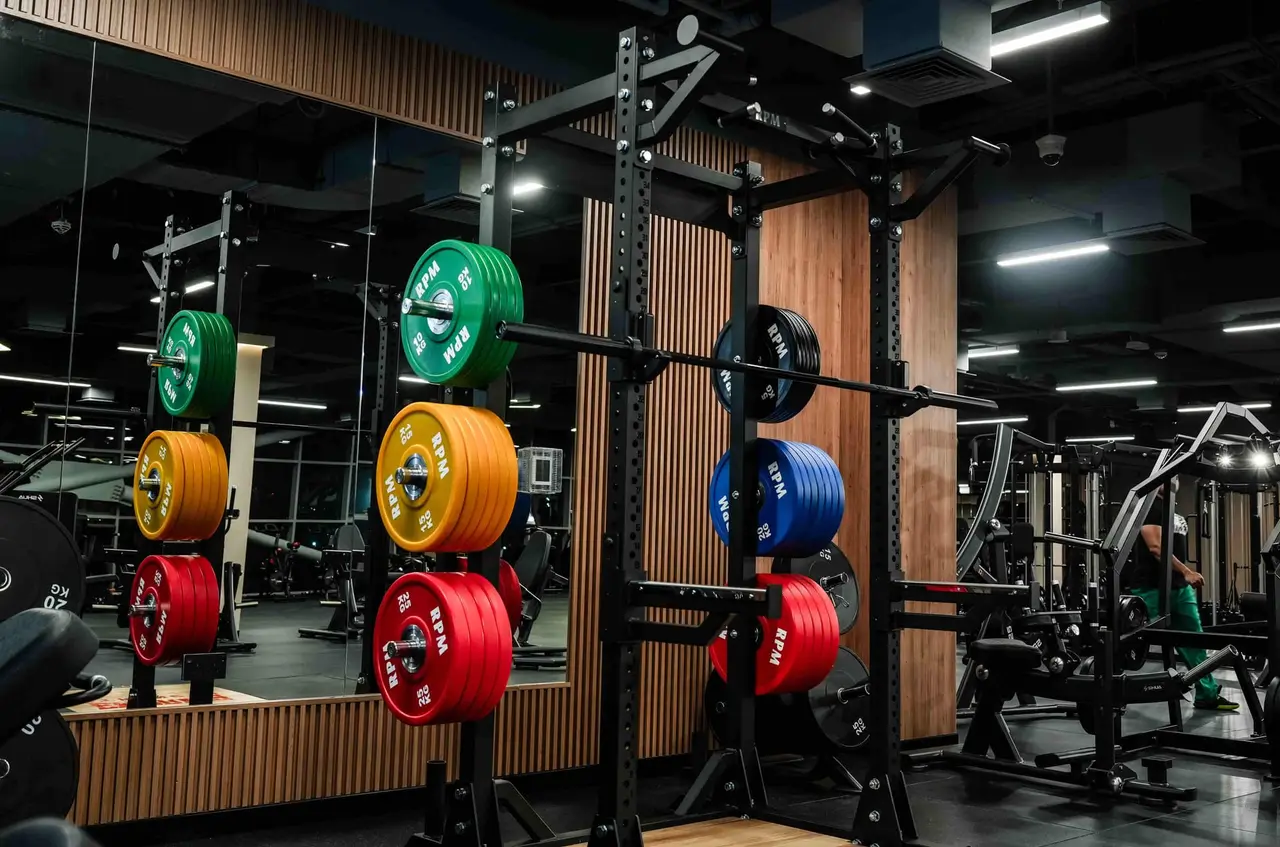
RPM's floor photos show squat racks with barbells and colour bumper plates. Whether the pins or safety arms on those racks can be set at knee height for pulls, and whether pulling from them is allowed, is not confirmed, so ask on your free guided tour. The squat rack guide explains the different safeties and how to set them, and a coach in a personal training session can pick a pin height that matches where your deadlift slows.
Sources
Questions, answered.
What muscles do rack pulls work?
The glutes and hamstrings straighten the hips, the muscles along the spine hold the back still, and the traps, upper back, lats and forearms hold the bar. The quads do much less than in a deadlift from the floor.
Are rack pulls easier than deadlifts?
The range is shorter, so the same weight feels lighter, but nobody keeps the same weight: rack pulls are usually done heavier. They are a different job, not an easier version.
How high should the bar be for a rack pull?
Choose by what you want to train: just below the knee for most of the deadlift, at the knee for the middle of the pull, just above the knee for the lockout. Keep the same height for several weeks.
Do rack pulls work the traps?
They load the upper traps and upper back heavily, because those muscles hold a heavy bar at arm's length. Shrugs train the traps more directly; the trap exercises page shows how the two combine.