A plan for women is simply a good plan
Women's muscles respond to training the way anyone's do: give them a load that feels hard, let them recover, and ask for a little more next time. There is no separate science behind this page. It is a three-day beginner plan written around the questions women actually search for, from where to begin to whether machines are enough on their own.
Two ideas shape it. The defined look people call 'toned' comes from having some muscle with less fat over it, so the plan builds muscle with weights that feel genuinely hard instead of tiny dumbbells for endless reps. And heavy lifting does not make anyone bulky by accident: putting on a large amount of muscle is a slow project of years, built on deliberate training and a diet that supports it. For how a longer block is put together, read strength training for women; for choosing a place to learn, see the guide for women new to strength training.
It sits with the other fixed plans in the workout plans library and follows the same rules as the 3-day gym workout plan, with more machine work at the start and a third day led by the glutes.
If you are pregnant or have recently given birth, speak to your doctor or midwife before starting or continuing this or any training plan.
Your three days
Choose three days with a gap between each. The sessions run in order, so if one is missed, do it next time instead of jumping ahead.
| Day | Session | Built around |
|---|---|---|
| Monday | Day 1 | Goblet squat, pulldown, dumbbell press |
| Tuesday | Rest or a walk | — |
| Wednesday | Day 2 | Romanian deadlift, cable row, leg press |
| Thursday | Rest | — |
| Friday or Saturday | Day 3 | Hip thrust, dumbbell row, lunges |
| The other days | Rest | — |
Any three days work. Sunday, Tuesday and Thursday suits a Monday-to-Friday office week equally well.
Begin on the bike or cross-trainer for around five minutes, until you feel warm, then rehearse the first exercise with one or two easy sets before the counted sets begin. Those easy sets teach the movement as much as they prepare your body.
Day 1: squat, press and pull
The goblet squat leads because holding one dumbbell at your chest teaches a deep, upright squat with almost nothing to set up. The cable and bench exercises after it adjust in seconds while you are still learning.
| Exercise | Sets | Reps | Rest | Notes |
|---|---|---|---|---|
| Goblet squat | 3 | 10–12 | 90 sec | Main lift: add load here first |
| Lat pulldown | 3 | 10–12 | 90 sec | Bar to the top of your chest |
| Dumbbell bench press | 3 | 8–12 | 90 sec | Flat bench |
| Step-ups | 2 | 10 each leg | 60 sec | Low plyo box or a bench |
| Face pull | 2 | 12–15 | 60 sec | Rope at face height |
| Dead bug | 2 | 8 each side | 45 sec |
Count only the sets after your warm-up. If step-ups feel wobbly, use a lower box and no dumbbells for the first few weeks.
Day 2: hinge and row
The Romanian deadlift teaches you to bend from the hips with a long back, the same movement you use to pick anything up from the floor. Keep to dumbbells until it feels natural.
| Exercise | Sets | Reps | Rest | Notes |
|---|---|---|---|---|
| Romanian deadlift | 3 | 10–12 | 2 min | Main lift: start with dumbbells |
| Seated cable row | 3 | 10–12 | 90 sec | |
| Leg press | 3 | 12–15 | 90 sec | Feet hip-width, mid-platform |
| Shoulder press | 2 | 10–12 | 60 sec | Seated on a flat bench |
| Cable kickback | 2 | 12–15 each leg | 45 sec | Needs an ankle strap: ask, or swap for glute bridges |
| Pallof press | 2 | 10 each side | 45 sec |
Lower the dumbbells only as far as your back stays flat, which for most beginners is just below the knee. Sharp or lasting pain is a reason to stop the exercise and have it checked by a doctor or physiotherapist.
Day 3: glutes and single-leg work
The barbell hip thrust is the plan's first barbell lift: it loads the glutes well and has little technique to master. Lunges and a one-arm row round out the full body. For glute training in depth, see the glute training guide.
| Exercise | Sets | Reps | Rest | Notes |
|---|---|---|---|---|
| Hip thrust | 3 | 8–12 | 2 min | Main lift: upper back on a flat bench |
| Dumbbell row | 3 | 10 each arm | 60 sec | |
| Lunges | 2 | 8 each leg | 60 sec | Reverse lunges to start |
| Lateral raise | 2 | 12–15 | 60 sec | |
| Overhead tricep extension | 2 | 12–15 | 45 sec | Cable rope or one dumbbell |
| Plank | 2 | 20–40 sec | 45 sec |
Put a pad or a folded mat under the bar. Begin with an empty or light fixed barbell and add plates once the sets feel easy.
Effort, progression and the first 12 weeks
End each working set while you could still do two or three more good reps. In the first week that will feel too easy, and it is meant to: you are learning. When every set of an exercise reaches the top of its rep range, move up to the next dumbbell or plate and start again at the bottom of the range. Three full-body days and small load increases once you pass your target reps are what the American College of Sports Medicine suggests for people new to resistance training; the 3-day gym workout plan explains this double progression in more detail.
| Weeks | Sets | What changes |
|---|---|---|
| 1–2 | Two of everything | Find starting weights; note seat and pin settings |
| 3–5 | As written | Reps first, then weight, session by session |
| 6–11 | As written, plus a third set on each main lift if you recover well between sessions | Optionally swap the goblet squat for a barbell back squat; a coach checking the first sessions helps |
| 12 | About half | An easier week, then repeat weeks 3 to 11 with your new weights |
Log every session on your phone: weights, reps and machine settings. Progress that feels slow usually shows up clearly on paper.
What women ask before starting
Machines or free weights first?
Both, from the first week. Machines and cables guide the path of the weight, so the leg press, pulldown and cable row let you work hard while you learn, and dumbbells teach balance and control. That is why every day here opens with one free-weight lift and fills in with machines. For a plan built on machines alone, see the machine-only workout.
Using the plan for weight loss
Keep the three sessions as written and walk briskly or cycle easily on two other days. Training holds on to your muscle and strength while you lose fat, but fat comes down mostly through eating slightly less over many weeks. The weight loss workout plan builds the cardio days in for you.
More glute work
Day 3 already opens with hip thrusts, and squats, lunges, step-ups and Romanian deadlifts all work the glutes too. If you want more, add a set to the hip thrust and another to the step-up rather than adding new exercises. The glute training guide covers weekly sets and exercise choice.
Nerves about the first week
Almost everyone has them. Save the session on your phone before you arrive, go at a quieter hour, do Day 1 with two sets of each exercise and leave when it is done. Asking a member of staff how a machine adjusts is an ordinary question. Many women book a few sessions with a female coach for the first weeks: see female personal trainers.
3, 4 and 5 day splits for women
They are the same plans for women as for anyone else. With two days, use the 2-day gym workout plan; with four, the 4-day gym workout plan splits upper and lower body; with five, the 5-day gym workout plan. Most beginners progress well on three days for the first few months, then add a fourth if they want more.
Starting after 40
The plan suits adult women of any age. Take a longer warm-up, stay at two sets for the first month and keep every rest day. The guide for women over 40 covers what to look for in a gym.
This plan at RPM
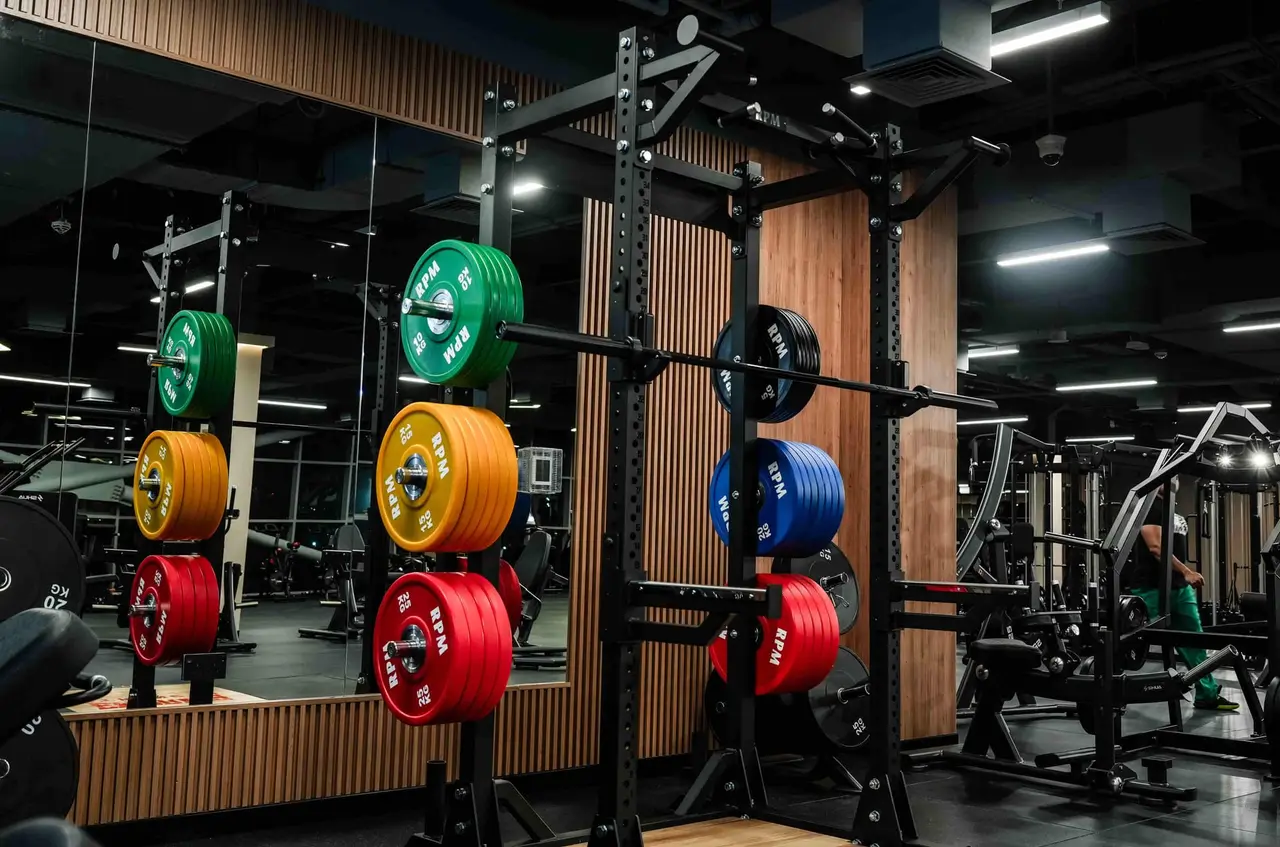
Every exercise above uses kit that RPM's own floor photos show: the plate-loaded leg press, cable towers with a pulldown seat, flat benches, dumbbells, fixed barbells and soft plyo boxes; the one item to ask about is an ankle strap for the cable kickback. RPM has a Mixed section and a women-only Ladies section, but it does not publish which equipment sits in the Ladies section, so ask on the free guided tour which of these exercises you can do there. If you would like a woman to coach your first weeks, see RPM's female personal trainers.
Sources
Questions, answered.
What is a good gym workout plan for a female beginner?
Three full-body sessions a week, each opening with one free-weight lift and finishing on machines, with every set stopped two or three reps short of failure. That is the plan on this page. Turning up three times a week for three months, and adding weight when the reps get easy, matters more than the exact exercises.
How many days a week should a woman go to the gym?
Two to four days of strength training suits most women, and three is a sound default because every muscle is trained more than once a week with rest in between. The World Health Organization advises muscle-strengthening activity on at least two days a week, alongside aerobic activity such as brisk walking.
Can I use this plan to gain weight?
Yes. The training stays the same: eat a little more than you need, with enough protein, and keep adding weight to your lifts. Once you are past the beginner stage, the muscle building gym program adds a fourth day.
Does the plan train the upper body?
Yes. Every day has a push and a pull for the upper body, and Days 2 and 3 add shoulders or arms. Upper-body strength is often the part women neglect, and it is what makes carrying shopping, luggage or a child feel easier.
Can I do this plan at home?
Only in part, because it relies on the leg press and cables. With a pair of dumbbells and a bench, the hotel gym workout gives a dumbbell-only week that works at home too.