Why machines suit a first plan, and what they leave out
A machine decides the path of the weight for you. That makes it easy to learn alone: sit down, set the seat, choose a load, and the movement is mostly right from the first rep. Changing the weight means moving a pin or adding a plate, and if a rep fails, you simply let the stack or the sled come back to rest. Beginners can therefore work close to their limit sooner, and hard sets are what make muscles adapt.
What machines leave out is balance and the skill of controlling a free weight: steadying a dumbbell, bracing under a bar, standing on one leg under load. Those come later, and this plan starts adding them in week six. If you would rather mix machines and free weights from day one, the beginner workout plan builds a first week around your days, and the other fixed plans are in the workout plans library.
Three full-body sessions a week, with a rest day between them, matches the frequency the American College of Sports Medicine suggests for people new to resistance training, and it covers the World Health Organization's advice to strengthen muscles on at least two days a week.
Set up any machine the same way
Machine names and shapes vary between brands, but the set-up logic does not. The gym equipment guide shows what each type looks like; these four checks apply to every one of them.
| Check | What to do | Sign it is wrong |
|---|---|---|
| Seat height | Set it first, so the handles or pads meet you where the exercise is built to load: mid-chest for a press, just above the heels for a leg curl pad | You reach up or down for the handles, or your back lifts off the pad |
| Pivot | Line up the joint that moves (knee, elbow or shoulder) with the machine's axis of rotation, often marked with a coloured dot | The pad slides along your arm or leg as you move |
| Range | Set the start position so you begin with a mild stretch, not at the very end of your flexibility | The plates clank together between reps, or a joint feels pinched at the start |
| Pin or plates | Choose a load you could lift about three more times than the set asks for; on a stack, move one plate at a time | Your form changes on the last reps, or you miss the bottom of the rep range |
Note the seat number and pin hole for each machine the first time you use it, then copy them next time instead of guessing.
The week
Three days with a rest day after each. Run the sessions in order, and the following week carry on from wherever you stopped.
| Day | Session | Lower body | Upper body and trunk |
|---|---|---|---|
| Day 1 | Session 1 | Leg press, leg curl | Chest press, cable row, cable lateral raise, cable crunch |
| Day 2 | Rest or a walk | — | — |
| Day 3 | Session 2 | Hack squat, hip abduction | Pulldown, pec deck, face pull, pushdown, Pallof press |
| Day 4 | Rest | — | — |
| Day 5 | Session 3 | Hip thrust machine, leg press, leg extension | Cable crossover, straight-arm pulldown, cable curl, ab crunch |
| Last two days | Rest | — | — |
Monday, Wednesday and Friday is the simplest fit for most office weeks.
Warm up for five minutes on a bike or cross-trainer, then do one light set on the day's first machine at roughly half your working weight. That set doubles as a check that the seat and pads are where you noted them.
Session 1: leg press, chest press, cable row
The plate-loaded leg press leads, because it lets you load your legs hard with no balance to manage. Any machine that RPM's photos do not show has a cable or leg-press swap in its note.
| Exercise | Sets | Reps | Rest | Notes |
|---|---|---|---|---|
| Leg press | 3 | 10–12 | 2 min | Main lift: add load here first |
| Chest press machine | 3 | 10–12 | 90 sec | Not in RPM's photos: standing cable press, handles at chest height |
| Seated cable row | 3 | 10–12 | 90 sec | |
| Leg curl | 2 | 10–12 | 60 sec | Not in RPM's photos: cable pull-through with the rope |
| Lateral raise | 2 | 12–15 | 60 sec | Low cable, one arm at a time |
| Cable crunch | 2 | 10–12 | 60 sec | Kneel facing the tower |
The rest times are approximate. Take the full rest after leg press sets; on cable exercises, start the next set once your breathing has settled.
Session 2: hack squat, pulldown, pec deck
A second squat machine and the vertical pull lead this session. Three of its machines are not in RPM's photos, so each has a swap on the leg press or the cable towers.
| Exercise | Sets | Reps | Rest | Notes |
|---|---|---|---|---|
| Hack squat | 3 | 10–12 | 2 min | Not in RPM's photos: leg press, feet lower on the platform |
| Lat pulldown | 3 | 10–12 | 90 sec | Wide or neutral grip |
| Pec deck | 2 | 12–15 | 60 sec | Not in RPM's photos: cable crossover |
| Hip abduction machine | 2 | 12–15 | 60 sec | Not in RPM's photos: side-lying leg raises on a mat |
| Face pull | 2 | 12–15 | 60 sec | |
| Tricep pushdown | 2 | 10–12 | 60 sec | |
| Pallof press | 2 | 10 each side | 45 sec |
If the session runs long, drop the Pallof press and keep two sets of everything else. Stop any exercise that causes sharp pain and have it checked by a doctor or physiotherapist.
Session 3: hip thrust machine, leg press, cables
The glutes and the fronts of the thighs get their own day here, while the chest, back and arms are trained on the cable towers.
| Exercise | Sets | Reps | Rest | Notes |
|---|---|---|---|---|
| Hip thrust machine | 3 | 10–12 | 90 sec | Not in RPM's photos: cable pull-through |
| Leg press | 3 | 12–15 | 90 sec | Feet high and wide on the platform |
| Cable crossover | 2 | 12–15 | 60 sec | Handles at shoulder height |
| Straight arm pulldown | 2 | 12–15 | 60 sec | |
| Leg extension | 2 | 12–15 | 60 sec | Not in RPM's photos: one more leg press set, slow on the way down |
| Bicep curl | 2 | 10–12 | 60 sec | Cable, straight bar |
| Ab crunch machine | 2 | 10–12 | 60 sec | Not in RPM's photos: cable crunch |
Feet high on the leg press shifts more of the work to the hips and the backs of the thighs; feet lower, as in session 2, shifts it to the front.
Progression, and when to add free weights
For the first fortnight, stop each set with three reps left while you learn the machines; after that, two or one. When every set of a machine reaches the top of its range, move the pin down one plate, or add the smallest plates to the leg press, and build the reps back up. Upper-body stacks often jump in big steps: if the next plate is too heavy, stay at your current weight and add a rep, or lower more slowly, until it is not.
| Weeks | What changes |
|---|---|
| 1–2 | Two sets of everything; write down every setting |
| 3–5 | Sets as written; add reps, then load |
| 6–8 | Replace one machine per session with a free-weight version: a goblet squat for the hack squat, a dumbbell bench press for the chest press, a dumbbell Romanian deadlift for the hip thrust machine |
| 9–11 | Do the free-weight lifts first in each session, machines after them |
| 12 | A lighter week at about half the sets, then plan the next block |
Once you are mixing the two, the guide to combining machines and free weights explains how to order a mixed session.
Questions this plan answers
Can you build muscle with machines only?
Yes. Muscle responds to hard sets and to doing a little more over time, and a machine provides both. What machines will not build is skill with free weights, so if you later want a strong barbell squat, you have to practise it. For anyone who simply prefers machines, they remain a fair long-term choice.
A machine-only split instead of full body
With four days, divide the same machines into upper-body and lower-body sessions and train each twice a week, as the 4-day gym workout plan does with mixed equipment. On three days, full body makes better use of the time, because every muscle is trained in each session.
Beginner machine workout for women and for men
The plan is the same for both. Women who want more glute work can add a set to the hip thrust machine and to the hip abduction; the gym workout plan for women mixes machines with free weights from the start.
What results to expect
In the first months, the clearest sign the plan is working is your loads and reps climbing on every machine. Changes in how you look arrive more slowly and differ from person to person, and no plan can tell you how long they will take. Your log will show progress well before a mirror does.
Machine training at RPM
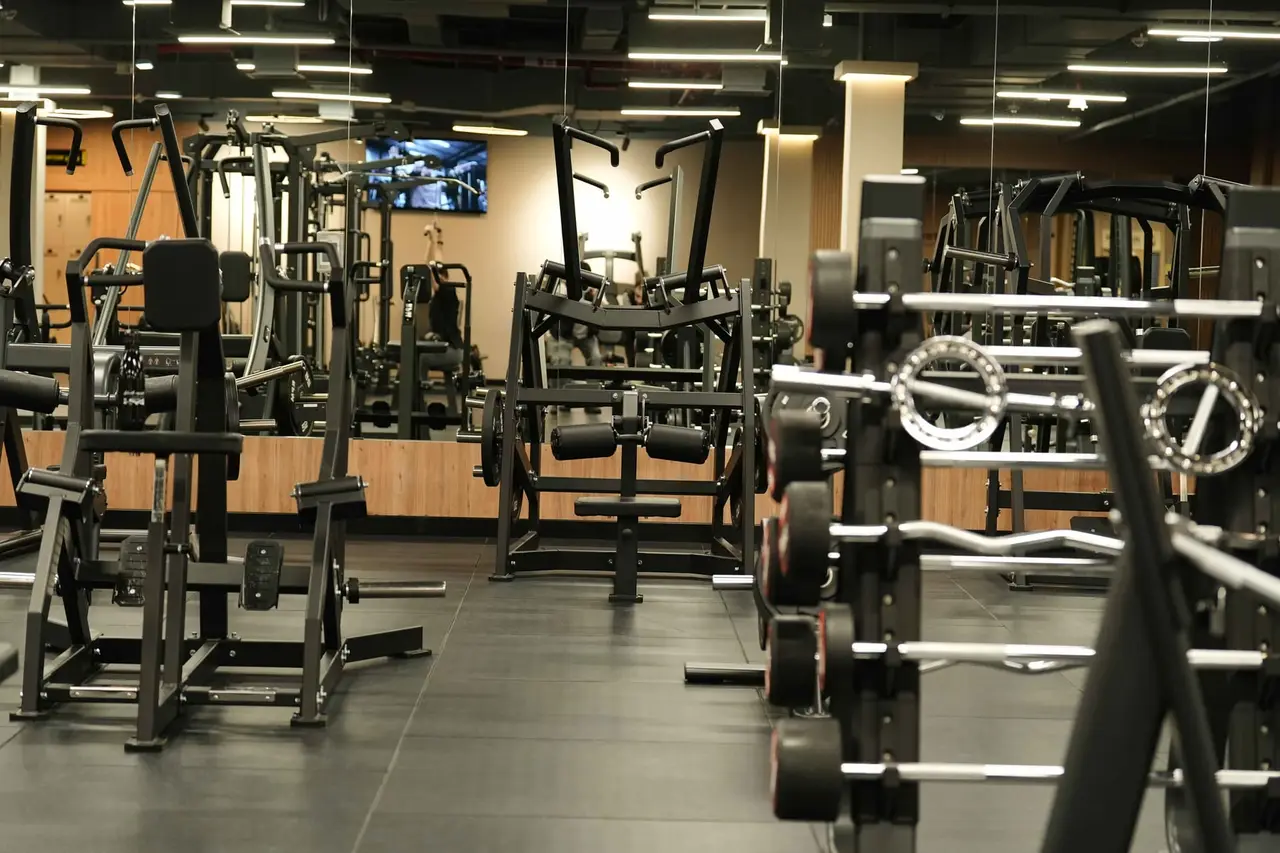
RPM's floor photos show cable towers with a pulldown seat, a plate-loaded 45-degree leg press and other plate-loaded machines, so the leg press, every cable exercise and every swap in this plan use equipment the photos show. The chest press, leg curl, leg extension, hack squat, pec deck, hip abduction, hip thrust and ab crunch machines named here do not appear in them, and the photos do not make clear which other plate-loaded machines there are. Ask on the free guided tour which machines are on the floor, and ask about personal training if you would like a coach to set up each one with you.
Sources
Questions, answered.
What machines should a beginner use at the gym?
Start with one machine for each big job: a leg press for the legs, a chest press or cable press for pushing, a pulldown and a cable row for pulling, and a cable exercise for the trunk. Those five cover the whole body. Add leg curls, lateral raises and arm work once the first five feel familiar.
How long should I stay on a machine-only plan?
Six weeks is a good point to start adding free weights, one exercise per session. There is no deadline, though: if machines suit you, you can keep training mostly on them for years and still progress.
How many exercises should a machine workout have?
Six or seven, as in these sessions, with two or three sets each. Beyond that, a beginner session runs past an hour and the last exercises get done half-heartedly.
Do I need a coach to use the machines?
No, but a short walk-through helps. Ask staff to show you the seat and pin on any machine you have not used, and copy the settings into your log. A coach is worth it if you want someone to choose your weights and check your range in the first weeks.
Can I do cardio on the same day?
Yes, after the machines rather than before, so your legs are fresh for the leg press. Ten to twenty minutes on a bike or cross-trainer is plenty on lifting days.