Do you need six days? The case for and against
Most people do not need six training days. Four or five sessions can hold the same weekly sets per muscle; what a sixth day mainly buys is shorter sessions and a daily habit. The cost is recovery: one rest day a week and very little slack when sleep, work or illness get in the way. The ACSM position stand lists four to six days a week as an option for advanced lifters, not as the next step for everyone.
Six days suits you if:
- You have trained consistently for a year or more and know how you recover.
- You would rather do six sessions of under an hour than four or five longer ones.
- Training most days is a habit you enjoy, not something you force yourself through.
- Your sleep and working week are steady enough to protect six slots.
Choose fewer days if:
- You are in your first year of lifting; three days will move you on faster than six.
- You also play a sport, run seriously or do hard classes.
- You often sleep badly, travel a lot or miss sessions.
- Your goal is general health, which two or three sessions already cover.
If you are not sure, start with a plan with fewer days from the workout plans library and come back here when it stops being enough.
The week: push, pull and legs, twice
| Day | Session | Leads with | Roughly |
|---|---|---|---|
| Monday | Push A | Bench press | 50–60 min |
| Tuesday | Pull A | Barbell row | 45–55 min |
| Wednesday | Legs A | Back squat | 55–65 min |
| Thursday | Push B | Overhead press | 45–55 min |
| Friday | Pull B | Lat pulldown | 45–55 min |
| Saturday | Legs B | Deadlift | 55–65 min |
| Sunday | Rest | Nothing structured | — |
Start on any day, but keep the order and the single rest day. The push pull legs split tool rebuilds the week around the days you have.
The A and B days are deliberately different. A days lead with the heavier barbell lift; B days change the main lift and most of the accessories, so no joint takes the same kind of loading twice in one week.
Push A and Push B
Push A: bench press first
A heavy bench press, then the Arnold press for the shoulders, a dumbbell fly, lateral raises and an overhead triceps extension.
| Exercise | Sets | Reps | Rest | Notes |
|---|---|---|---|---|
| Bench press | 4 | 5–7 | 2–3 min | Main lift |
| Arnold press | 3 | 8–10 | 90 sec | |
| Dumbbell fly | 3 | 10–12 | 60 sec | |
| Lateral raise | 3 | 12–15 | 45 sec | |
| Overhead tricep extension | 3 | 10–12 | 60 sec |
Leave two or three reps in reserve on the bench press; you will be pressing again in three days.
Push B: overhead press first
The standing overhead press is today's main lift, then a dumbbell bench press, cable crossovers, lateral raises on the cable this time, and rope pushdowns.
| Exercise | Sets | Reps | Rest | Notes |
|---|---|---|---|---|
| Overhead press | 4 | 5–7 | 2–3 min | Main lift, standing |
| Dumbbell bench press | 3 | 8–12 | 2 min | |
| Cable crossover | 3 | 12–15 | 60 sec | |
| Lateral raise | 3 | 15–20 | 45 sec | Cable this time |
| Tricep pushdown | 3 | 10–15 | 60 sec |
Pull A and Pull B
Pull A: barbell row first
A heavy barbell row, then pull-ups, face pulls for the rear shoulders, shrugs and EZ-bar curls.
| Exercise | Sets | Reps | Rest | Notes |
|---|---|---|---|---|
| Bent over row | 4 | 6–8 | 2 min | Main lift |
| Pull-up or chin-up | 3 | 5–8 | 2 min | No bar? Lat pulldown, underhand grip |
| Face pull | 3 | 12–15 | 60 sec | |
| Shrugs | 2 | 10–12 | 60 sec | Dumbbells or barbell |
| Bicep curl | 3 | 8–12 | 60 sec | EZ bar |
If you cannot yet do five pull-ups, use the pulldown and work through how to train for your first pull-up; chin-up vs pull-up explains the two grips.
Pull B: pulldown first
The lat pulldown leads, then inverted rows, a pullover, rear delt flyes and hammer curls. Keep the barbell row's lower-back work for Pull A.
| Exercise | Sets | Reps | Rest | Notes |
|---|---|---|---|---|
| Lat pulldown | 4 | 8–10 | 2 min | Main lift |
| Inverted row | 3 | 8–12 | 90 sec | Bar set in a rack |
| Dumbbell pullover | 2 | 10–12 | 60 sec | |
| Rear delt fly | 3 | 12–15 | 60 sec | |
| Hammer curl | 3 | 10–12 | 60 sec |
For the inverted row, set the bar in the rack at about hip height. The lower the bar, the harder the row.
Legs A and Legs B
Legs A: squat first
A heavy back squat, then single-leg Romanian deadlifts for the hamstrings and balance, the leg press, calves and Russian twists for the trunk.
| Exercise | Sets | Reps | Rest | Notes |
|---|---|---|---|---|
| Back squat | 4 | 5–7 | 3 min | Main lift |
| Single leg romanian deadlift | 3 | 8 each leg | 90 sec | |
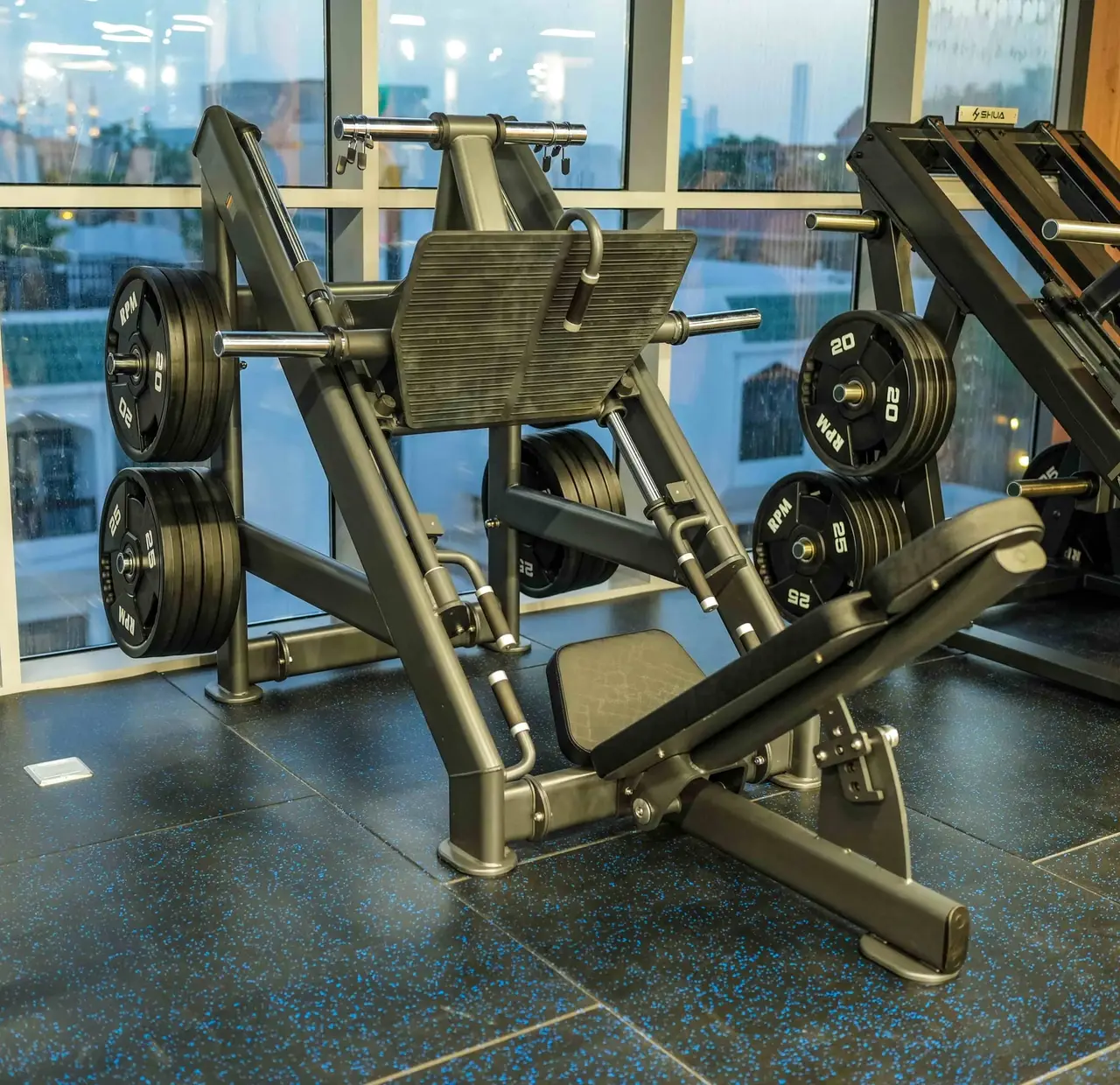
| Leg press | 3 | 10–12 | 2 min | |
| Calf raise | 3 | 10–15 | 60 sec | |
| Russian twist | 3 | 10 each side | 45 sec | Holding a medicine ball |
Legs B: deadlift first
Three heavy sets of deadlifts, then a lighter front squat, lunges, calves and a plank.
| Exercise | Sets | Reps | Rest | Notes |
|---|---|---|---|---|
| Deadlift | 3 | 4–6 | 3 min | Main lift |
| Front squat | 3 | 6–8 | 2 min | Lighter than Legs A |
| Lunges | 2 | 10–12 each leg | 90 sec | |
| Calf raise | 3 | 12–15 | 45 sec | |
| Plank | 3 | 40–60 sec | 45 sec |
Sharp pain in a knee or your back during any exercise means you stop it and have a doctor or physiotherapist assess it before you return to it.
Recovery rules for a six-day week
- One full rest day. Sunday, or whichever day you choose, has no lifting, no hard cardio and no sport. Walk if you like.
- Spread the hard sets. Each muscle gets two or three days between its two sessions, and no single session asks for more than about six to eight hard sets for one muscle. If a session runs long, cut sets from the last two exercises, not the first.
- Leave more in the tank. Stop the main lifts with two or three reps in reserve and the accessories with one or two. Six days of sets taken to failure is the quickest way to stall.
- A lighter week every sixth week: the same sessions with half the sets, or three sessions instead of six.
- Protect your sleep. Six sessions on short nights rarely work; if your sleep slips for more than a few days, train five times that week.
- Know the signs: lifts going backwards across a fortnight, aches that build from week to week, or feeling flat for days. Take the lighter week early, and get medical advice if you feel ill or have pain that will not settle.
Effort, progression and lighter weeks
Every exercise moves up the same way: build reps until all your sets hit the top of the range, then add the smallest load your equipment allows. On six days, expect loads to climb a little more slowly than on four or five, because each session is shorter and you are leaving more in reserve. The 3-day gym workout plan explains reps in reserve and double progression if they are new to you.
| Weeks | What changes | Reps in reserve |
|---|---|---|
| 1–2 | Three sets on the main lifts, two on accessories, at comfortable loads | 3 |
| 3–5 | Full sets as written; add reps, then load, on every exercise | 2–3 on main lifts, 1–2 on accessories |
| 6 | Lighter week: half the sets, same exercises | 4 or more |
| 7–11 | Keep progressing; add one set to the first exercise of each B day if you are recovering well | 2 on main lifts, 1–2 on accessories |
| 12 | Lighter week, then start the next block from week 3 | 4 or more |
In the 2017 Schoenfeld review, growth tended to rise with weekly sets, but only up to a point. This plan gives the chest, back and quads roughly 12 to 16 hard sets a week; adding more on six days usually costs more recovery than it returns.
Goal versions and plans with fewer days
For muscle gain
This plan already sits at the high end of weekly sets. Keep it as written, eat enough to support the training, and judge it over a full block. If you would rather build muscle on fewer days with more recovery, the muscle building gym program does it in four.
For fat loss, or with cardio
Keep the lifting and add easy cardio, such as 15 to 20 minutes on a treadmill or bike after the two Pull sessions, plus daily walking. Food drives fat loss; six lifting days do not need hard conditioning on top. For a ready-made cardio layout, try the weight loss workout plan.
Drop to five days
The 5-day gym workout plan keeps one push, one pull and one legs day and adds a heavier upper and lower day, with two rest days instead of one. It is the natural move if six days keeps slipping to five anyway.
Drop to four days
The 4-day gym workout plan trains upper and lower twice each. Every muscle is still trained twice a week, with three rest days to recover.
Six days at RPM
Most of the six sessions use equipment that RPM's floor photos show: racks with barbells and colour bumper plates, flat benches, the dumbbell rack, the cable towers with their pulldown seat, medicine balls and the plate-loaded leg press. A pull-up bar is not confirmed in the photos, so ask about one on a free guided tour; until then, swap Pull A's pull-ups for an underhand lat pulldown. If you want a coach to keep an eye on how you recover across six days, ask about personal training.
Sources
- American College of Sports Medicine, position stand: Progression models in resistance training for healthy adults (2009)
- Schoenfeld BJ, Ogborn D, Krieger JW. Dose-response relationship between weekly resistance training volume and increases in muscle mass: a systematic review and meta-analysis. Journal of Sports Sciences, 2017
Questions, answered.
Is a 6 day gym workout schedule too much?
For most people, yes. Four or five sessions hold the same weekly work with more rest. Six days suits experienced lifters who prefer short daily sessions and recover well; if your lifts stall or you feel run down, drop a day.
Is a 6 day split good for beginners?
No. Beginners progress faster on two or three full-body sessions and need the rest days to learn and recover. Start with the 3-day gym workout plan and consider six days, if at all, after a year or more of steady training.
Is a 6 day split good for muscle gain?
It can be, because it fits a lot of weekly sets into short sessions. But more days do not build more muscle by themselves; enough hard sets, steady progression, food and sleep do. Many lifters build muscle just as well on four or five days.
Can women follow a 6 day split?
Yes. The sessions and progression are the same for women and men; choose loads you can control and follow the recovery rules above. Newer lifters will do better starting with the gym workout plan for women or a three-day plan.
Can I do a 6 day workout plan with dumbbells only?
Most sessions convert: dumbbell presses for the barbell presses, one-arm rows for the barbell row, goblet squats and dumbbell Romanian deadlifts on the leg days. The leg days are the hard part, so use higher reps and a slower lowering phase to keep them challenging.